

Table of Contents
About one in four family trips now include three generations traveling together, and more than 40 percent of grandparents say they’re likely to take a multigenerational trip within the next three years, according to AARP’s 2026 travel research. If you’re one of them, you already know the appeal. You also probably already sense the risk.
Grandparents move at a different pace than they did a decade ago. Kids and grandkids have a boredom threshold that can turn a museum morning into a meltdown by 11am. And somewhere in the middle, whoever organized the trip is quietly doing math on a budget nobody has actually agreed to.
Here’s how to plan a multigenerational family trip that catches those problems before you book anything, using two free AI tools instead of another round of “let’s just talk about it later.” One handles the itinerary. The other handles the money. Together, they do the work that generic advice keeps telling you to do yourself.
Please note this page may contains affiliate links. If you purchase something through these links, I’ll receive a commission at no extra cost to you. Affiliate links help to support my website/blog and I only recommend products I love.
Why Multigenerational Trips Blow Up More Than Any Other Kind of Vacation
Most vacation planning advice assumes everyone traveling wants roughly the same thing. Multigenerational trips break that assumption immediately.
Grandparents are often managing mobility limits, medication schedules, or just a lower tolerance for 14,000 steps in a day. Parents are stuck translating between two other generations while trying to keep their own trip enjoyable. Kids and grandkids want less museum, more pool. None of this is a communication failure. It’s a scheduling and budget mismatch that communication alone doesn’t fix.
AARP’s research backs this up: nearly half of grandparents surveyed said they’d take more family trips if the logistics were easier to coordinate. The problem isn’t desire. It’s the planning itself, and specifically the two things that get glossed over until they blow up mid-trip: pace and money.
If you’ve ever traveled with a group that spans a cruise ship’s worth of different generations, you already know how much a single mismatched expectation can change the whole trip. It’s the same dynamic that shows up in group cruise dynamics, just compressed into a single itinerary instead of a shared ship.
How to Plan a Multigenerational Family Trip Everyone’s Pace Can Actually Handle
The fix here isn’t a longer group text about everyone’s preferences. It’s building the itinerary with an actual pace filter from the start.
A handful of free AI trip planners now let you flag a trip as lower-intensity or accessibility-friendly, and the itinerary comes back with real gaps built in instead of a checklist of attractions crammed end to end.
That single filter solves more of the “grandma needs to sit down” problem than any pre-trip conversation does, because it changes the plan itself instead of asking everyone to just push through.
If you’d rather not learn a new app, a plain ChatGPT prompt does almost the same job. Something like this works well:
“Build a 5-day itinerary for a family trip to [destination] that includes grandparents in their 70s, parents in their 40s, and kids ages [ages]. Include at least 2 hours of unscheduled downtime every day, flag any activity that requires more than 20 minutes of walking, and suggest a lower-intensity alternative for each one.”
That single prompt does what most competing advice only tells you to do in the abstract: it forces the schedule to account for three different energy levels instead of assuming everyone can keep up with the most energetic person in the group.
For readers who want more prompts like this for everyday planning, How to Use ChatGPT in Everyday Life has 25 more examples worth trying.
The AI Prompt That Gets the Money Conversation Out of the Way Early
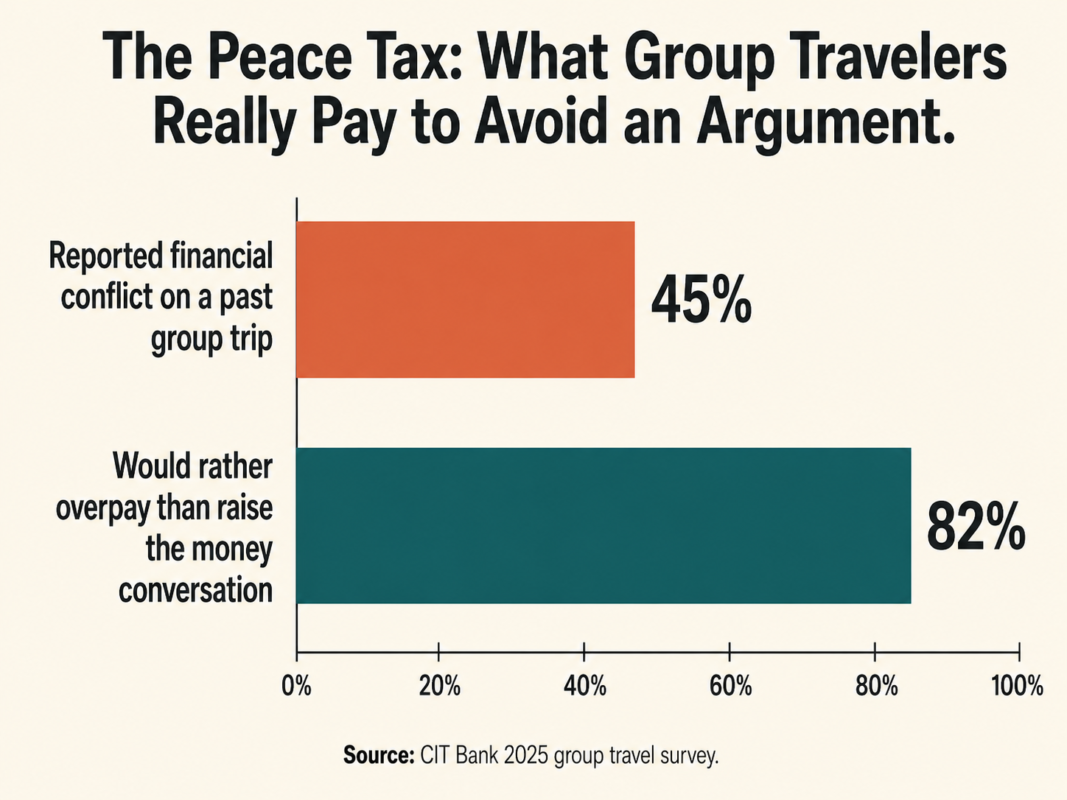
Here’s the number that should change how you plan your next family trip: 45 percent of group travelers report real financial conflict on a past group trip, according to a 2025 CIT Bank survey. And 82 percent said they’d rather overpay their own share than raise the money conversation at all.
That’s not a communication problem either. That’s an entire category of families quietly overpaying to avoid an argument, every single trip. Call it the peace tax: the extra money people hand over just to skip a conversation they’re dreading. It’s real, it’s common, and almost nobody names it out loud before booking.
The fix is the same shape as the pace problem: make the plan carry the weight instead of a conversation nobody wants to start. Try this prompt:
Draft a simple cost-split plan for a family trip with [number] people across three generations, covering lodging, meals, activities, and transportation. Assume grandparents want to contribute but not cover the full cost. Present it as a table with a per-person estimate.”
Once you have that draft split, run the total through the site’s Trip Budget Calculator before anyone books a single flight. It takes the AI’s rough numbers and pressure-tests them against a real trip budget, so the money conversation happens on paper, days before you leave, instead of in the rental car on day two.
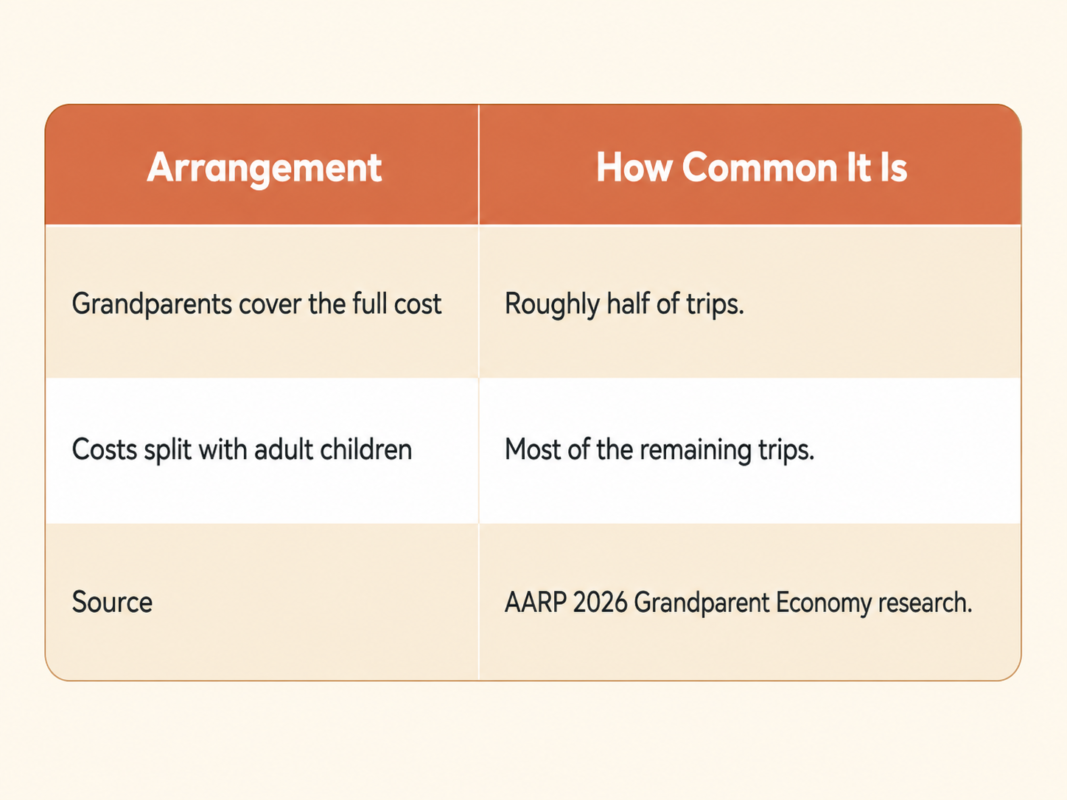
According to AARP’s 2026 “Grandparent Economy” research, grandparents cover the full cost of the trip in roughly half of multigenerational family vacations, and split costs with their adult children on most of the rest. Neither arrangement is wrong. The problem is only ever when nobody agreed on which one you’re doing.
If you want a deeper framework for the budget side specifically, How to Budget For Travel After 50 and How to Afford Travel in Your 50s both go further into stretching a travel budget without cutting the trip short.
Which AI Tool Actually Helps at Each Stage of Planning
You don’t need five different apps for this. You need two jobs done well: the itinerary job and the budget job.
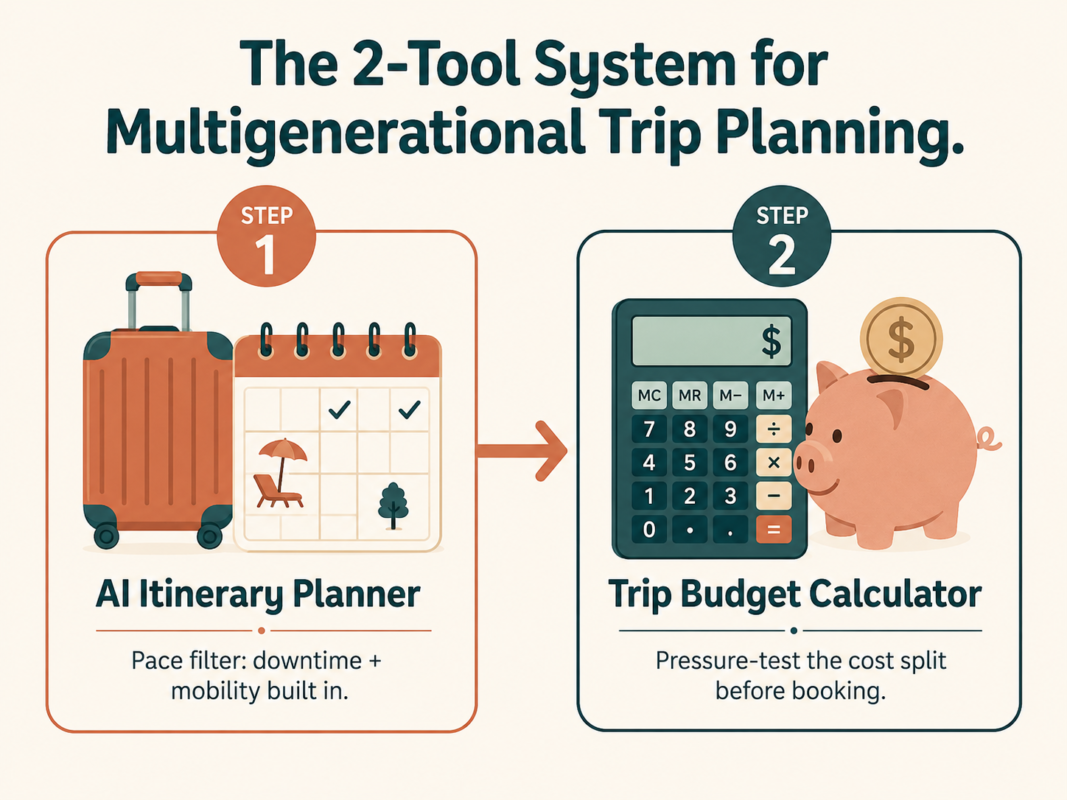
For the itinerary, look for a free AI trip planner with a named accessibility or easy-pace filter, or just use the ChatGPT prompt above if you’d rather not sign up for another tool. For the budget, the site’s own Trip Budget Calculator does the pressure-testing once AI has drafted a rough split.
You don’t need a project management app, a shared spreadsheet six people forget to update, or a group chat that turns into a debate. You need one plan for the schedule and one plan for the money, agreed on before anyone packs a bag.
It helps to think of this as two separate jobs instead of one big planning project. The itinerary job is about pace: how much walking, how much downtime, how many stops in a day. The budget job is about money: who’s paying for what, and whether the total actually fits what everyone can afford.
Most families try to solve both at once in a single group conversation, which is exactly why the conversation goes badly. Split the two jobs, let AI draft a first pass at each one, and the actual family conversation gets a lot shorter.
If AI planning tools are new to you entirely, AI for Beginners Over 50 walks through getting comfortable with a tool like ChatGPT before you try to use it for something as high-stakes as a family trip.
The 10-Minute Conversation That Prevents Most of the Drama
AI can draft the itinerary and pressure-test the budget, but somebody still has to say the plan out loud before booking. This is the part every competing article skips past with a line like “communicate early.” Here’s what that actually looks like in practice.
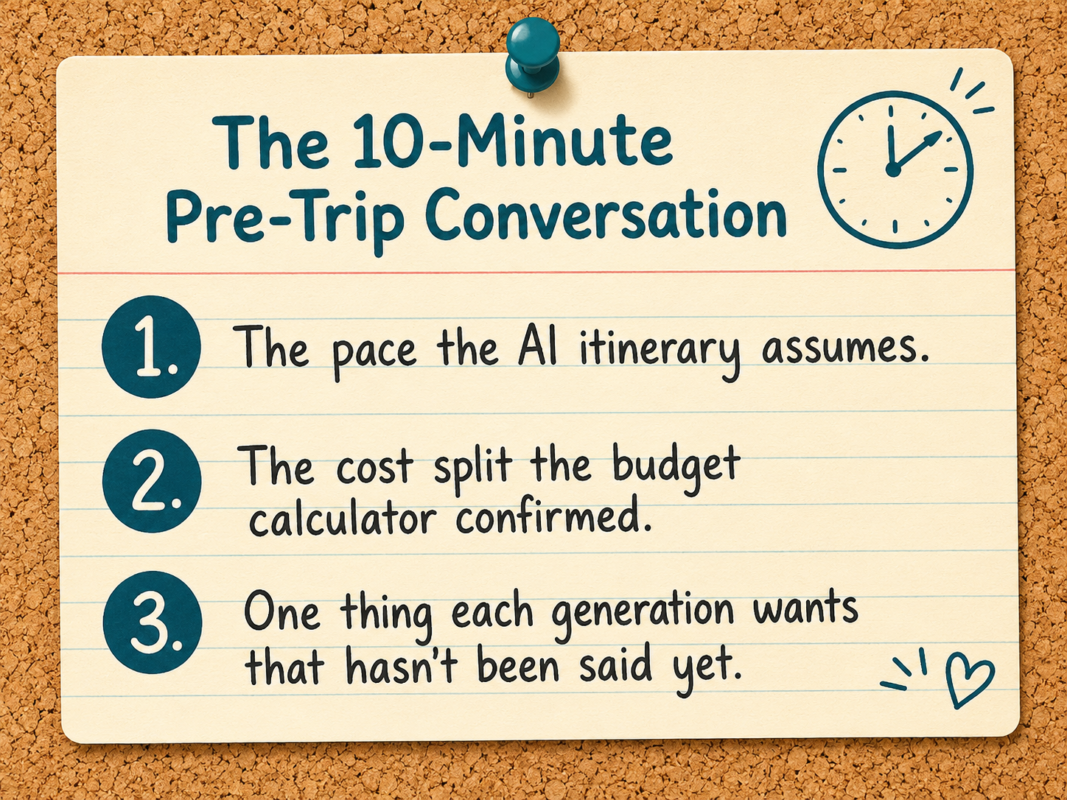
Set aside 10 minutes with whoever’s coming, ideally before any deposits go down. Walk through three things: the pace the AI-built itinerary assumes, the cost split the budget calculator confirmed, and one thing each generation wants that hasn’t been said out loud yet. That’s it. You’re not negotiating the whole trip. You’re just making sure nobody discovers the plan for the first time on day one.
A simple way to open it: “Here’s the rough plan the AI put together, here’s what the budget calculator says our share looks like, and I want to check both against what everyone actually wants before we book anything.” That one sentence does more work than most families manage in a week of group texts, because it puts the plan on the table instead of a vague promise to “figure it out.”
Framed this way, nobody has to be the “difficult” one who brings up pace or money. The AI tools already did that work. The conversation is just confirming what the plan already assumes.
The Bottom Line
AI can’t referee family dynamics and it won’t make grandma enjoy a hike she never wanted to take. What it removes is the logistics excuse: the itinerary that ignores everyone’s pace, and the budget nobody pressure-tested before booking. Build both with AI, confirm the split with the Trip Budget Calculator, have the 10-minute conversation, and the trip gets an honest shot instead of a predictable blowup on day two.
Run your own numbers through the Trip Budget Calculator before you book the next one. It takes five minutes and it’s the same tool that pressure-tests the split above.
What’s the one thing that almost derailed your last family trip: pace, money, or plans nobody actually agreed on?
Frequently Asked Questions
How do you plan a family trip that works for grandparents, parents, and kids all at once?
Start with a shared itinerary that has an easy-pace option built into each day, agree on the total budget and how costs will be split before anyone books, and leave real unscheduled time so no generation feels dragged along, per AARP’s guidance on multigenerational trips.
Who usually pays for a multigenerational family trip?
Grandparents cover the full cost on roughly half of multigenerational trips and split costs with their adult children on much of the rest, according to AARP’s 2026 “Grandparent Economy” research, so it’s worth agreeing on the split explicitly rather than assuming.
Can AI actually help plan a trip for three generations?
Yes. Several free AI trip planners now include filters for lower-intensity, easier-paced activities, and a simple ChatGPT prompt can turn a rough idea into a day-by-day plan that blocks in downtime for anyone who needs it.
How common are money disagreements on group family trips?
Common. A 2025 CIT Bank survey found 45 percent of group travelers reported some financial conflict on a past trip, and 82 percent said they’d rather overpay their own share than have the money conversation at all.
How many families are actually taking multigenerational trips right now?
About one in four family trips now include three generations traveling together, and more than 40 percent of grandparents say they’re likely to take a multigenerational trip within the next three years, per AARP research.