

Table of Contents
Pull up any job board today and it looks nothing like it did the last time you searched, maybe ten or twenty years ago. Somewhere behind that “Apply Now” button sits software deciding whether a human being ever reads your resume at all.
That is the specific fear a lot of job seekers over 50 carry into a search. Not just that they will look out of touch, but that an algorithm will filter them out before anyone reads a word they wrote. Learning how to use AI to prep for a job interview after 50 turns out to solve both problems at once. The same technology that makes hiring feel unfair can also help you get past the screen and walk into the room ready.
This is not a roundup of ten AI tools to try over the weekend. It is a specific workflow: get your resume past the automated screen, build a bank of interview stories you can actually tell, practice them out loud until they stop feeling stiff, and know exactly where AI’s usefulness runs out.
Please note this page may contains affiliate links. If you purchase something through these links, I’ll receive a commission at no extra cost to you. Affiliate links help to support my website/blog and I only recommend products I love.
Why More People Over 50 Are Turning to AI for Job Search Help
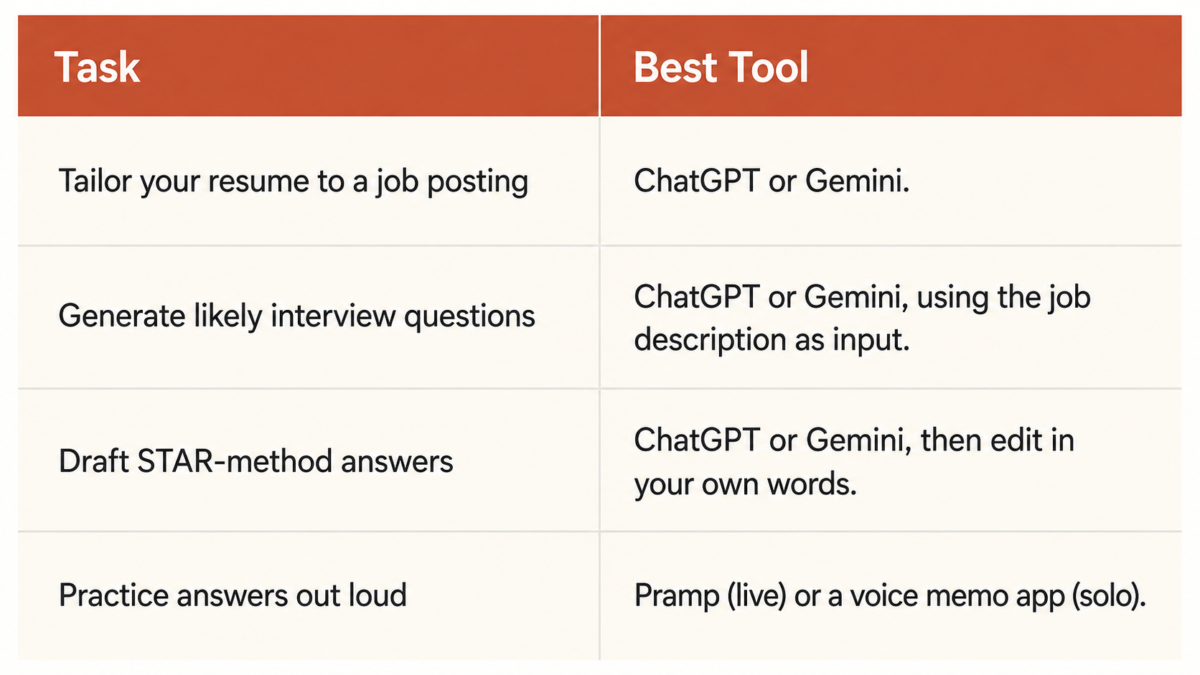
Start with the short version. Use a free AI tool like ChatGPT or Gemini to generate likely interview questions from the job posting, draft STAR-method answers in your own words, then practice them out loud with a tool like Pramp or a plain voice memo. Run your resume through the same tool first to catch outdated formatting or missing keywords before you apply. The rest of this post walks through each piece.
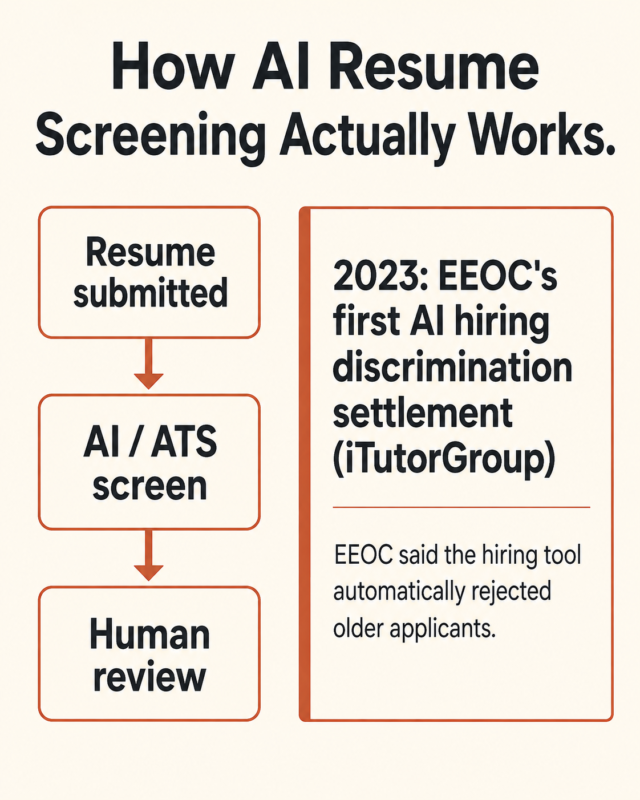
Automated resume screening is not a rumor. It is common enough now that most mid-size and large employers use some form of applicant tracking software before a human ever opens a resume. That software is not neutral.
In 2023, the Equal Employment Opportunity Commission settled its first case involving AI hiring discrimination against iTutorGroup, a company whose screening software was programmed to automatically reject female applicants over 55 and male applicants over 60, according to the EEOC’s own reporting on employment discrimination and AI. That is not a hypothetical worry. It is a documented, enforced case.
Here is the reframe worth sitting with. The same category of tool that can be programmed to work against older applicants can also be turned around and used on your side of the desk. That is a version of the same shift we wrote about in our piece on using AI to reinvent yourself after 40: the tool is not the problem, how it gets pointed is the problem, and you have more control over your half of that than it feels like at first.
How to Use AI to Prep for a Job Interview After 50: Start With Your Resume
Timing helps explain why this matters more now than it did a few years back. AI-driven applicant tracking systems used to be a large-company thing. They have spread down into mid-size and even small employers over the past few hiring cycles, which means more of the postings you are applying to, not just the big-name ones, run some kind of automated first pass before a person opens your resume. Treating that as background noise instead of a real filter is the mistake this whole workflow is built to avoid.
AARP’s own reporting on AI and job search after 50 makes the same point from the other direction: readers who use AI tools for resume help and interview prep consistently report saving real time, not just feeling better prepared. Before you touch interview questions, get the resume itself past the first gate.
Paste your resume and the job description into ChatGPT or Gemini and ask it to flag keyword gaps between the two. Automated screeners are largely matching language, not judgment, so this step alone catches a lot of easy misses.
Format matters as much as wording. Most career coaches recommend showing roughly the last 10 to 15 years of experience and leading with your current tools, certifications, and results, rather than a full career timeline that reads as decades long. Dropping graduation dates is a small edit that removes an obvious age signal without hiding anything about your qualifications.
One caution: do not let AI rewrite your voice into generic corporate language. Ask for gaps, suggestions, and a tighter structure, then edit the actual sentences yourself. A resume that sounds like it was written by a chatbot is its own kind of red flag to a hiring manager, and you already know how to talk about your own work better than a language model does. Using a few of the everyday ChatGPT habits we covered in an earlier post for editing and tightening text applies directly here.
Building Your Interview Story Bank With AI
Once the resume is in shape, shift to the conversation itself. Paste the job description into ChatGPT or Gemini and ask it to generate the ten most likely interview questions for that specific role, not generic questions pulled from a listicle. That single prompt does more to focus your prep than an hour of scrolling through “common interview questions” articles.
From there, draft answers using the STAR method: Situation, Task, Action, Result. Let AI produce a rough first draft of each answer based on a story you describe, then rewrite it in your own words and your own rhythm. The AI draft is scaffolding, not a script to memorize word for word.
This is also where decades of experience stop being a liability and start being the actual advantage. A 28-year-old competitor for the same role has not lived through a product launch that failed, a team reorganization, or a client relationship that had to be rebuilt from nothing. You have.
Those are the stories worth building into the bank first, and our honest answer on whether it is too late to start over in your 50s goes deeper into why that experience carries real weight, not just sentimental value.
Aim for a bank of five or six stories before you stop, not just one polished answer to the “tell me about a challenge” question. Interviewers ask the same underlying question in a dozen different wordings: a conflict, a failure, a time you led without the title, a decision you would make differently now.
A handful of strong, well-practiced stories can flex to answer most of them, which matters more than having a perfect answer to one specific phrasing.
Practicing Out Loud Without the Embarrassment
Writing an answer and saying it out loud are two different skills, and the gap between them is exactly where interviews go sideways. A story that reads well on a screen can come out halting, over-long, or flat the first time you actually speak it. Practicing out loud, even alone in a kitchen, closes that gap faster than another round of editing ever will.
Two free options make this easier. Pramp pairs you with another job seeker for a live mock interview at no cost, which forces real back-and-forth instead of a monologue. If practicing with a stranger feels like too much on day one, a voice memo app works nearly as well: record yourself answering a question, then listen back and notice where you rambled or lost the thread.
A simple routine beats a vague intention to “practice more.” Try this for one week before an interview:
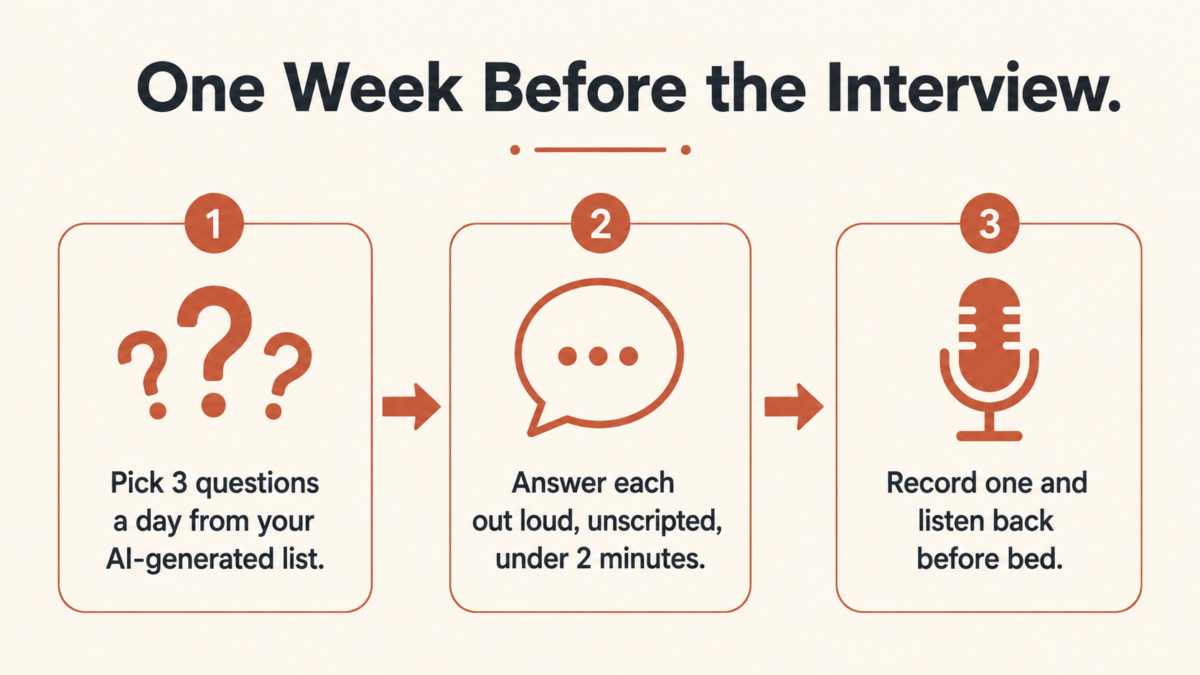
By the end of a week, the questions you dreaded on day one usually feel routine, and the ones that still trip you up tell you exactly where to spend the remaining prep time.
What AI Can’t Do for You (And Where Ageism Still Matters)
AI tools can sharpen a resume and rehearse an answer, but they cannot fix a hiring manager’s bias, and it is worth being honest about that instead of pretending a chatbot solves everything. The U.S. Bureau of Labor Statistics Employment Situation report has tracked, release after release, that workers over 55 who lose a job tend to stay unemployed longer than younger workers searching for the same type of role.
That pattern predates AI hiring tools. AI screening can make it worse if it is built carelessly, which is exactly what the EEOC’s iTutorGroup case demonstrated.
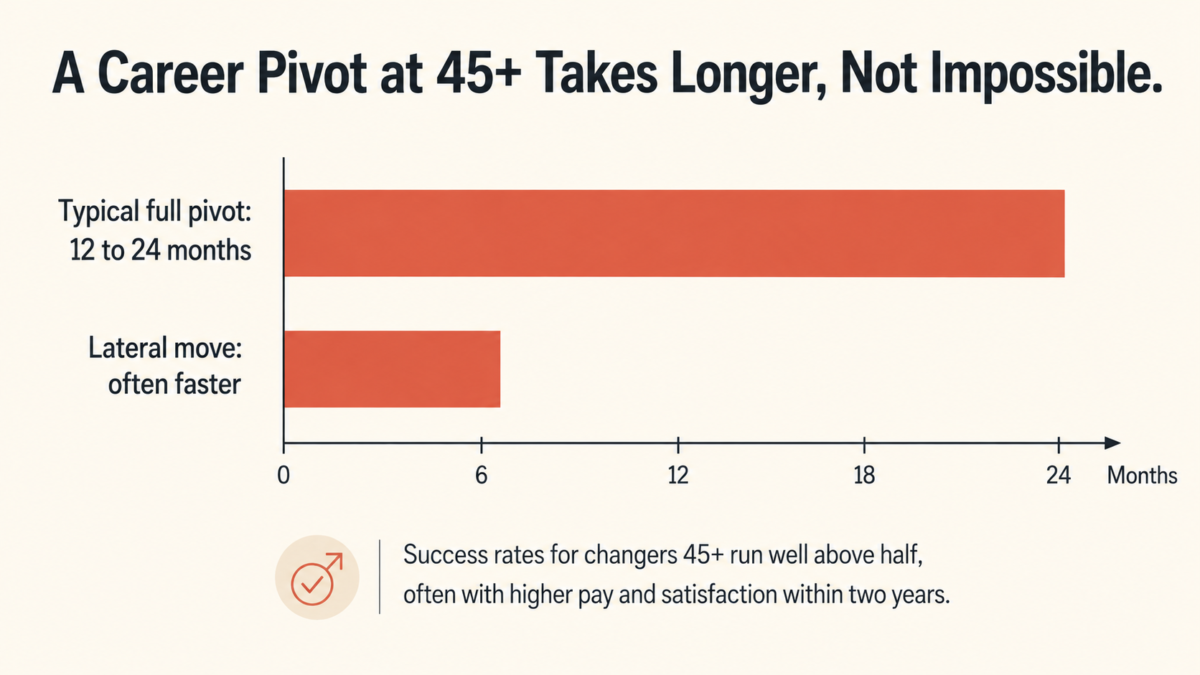
None of that means it is too late. Career changers 45 and older regularly report success rates well above half, often with higher pay and more satisfaction within two years of the move. It typically takes longer than a search at 30, usually somewhere in the 12 to 24 month range for a full pivot rather than a lateral move, and going in with that expectation prevents the discouragement that makes people quit searching too early.
If age comes up in an interview, naming it strategically beats dancing around it. A brief, confident line about what 20-plus years of experience means for how fast you can contribute, offered on your terms, lands very differently than letting the interviewer wonder about it silently.
Readers who are still building basic comfort with AI tools before any of this feels usable might start with a beginner’s guide to learning AI as an adult or our starting point for AI beginners over 50, both written for exactly this stage.
The Bottom Line
AI is not a shortcut around doing the work of a job search. It is a rehearsal partner and a translator for a hiring system that was not built with a 25-year resume in mind. Use it to get past the screen, build stories worth telling, and practice until they stop sounding rehearsed. The rest, the actual interview, is still yours to walk into.
None of the four steps here require anything you have to pay for, and none of them require becoming an AI expert first. A free ChatGPT or Gemini account and a week of deliberate practice cover the whole workflow. The people who benefit most tend to be the ones who treat it as a routine, a few minutes most days, rather than a single weekend cram session before the interview.
If you want more of this kind of practical, no-hype look at using AI at midlife, join our newsletter and follow along for what we publish next.
What is the one interview question that still trips you up, no matter how many times you have answered it?
Frequently Asked Questions
Can AI really help me get a job after 50?
It can help with preparation, not guarantees. Career changers 45 and older report high success rates when they treat the search like a real project with a routine, and AI tools make that prep faster: generating likely questions, tightening a resume, and giving you a low-stakes way to rehearse before it counts.
Do AI resume scanners discriminate based on age?
They can. The EEOC has already taken enforcement action against an AI hiring tool that automatically rejected applicants over a certain age, so the risk is documented, not paranoia. You can reduce age-coded signals by trimming your resume to the last 10 to 15 years and leading with current tools and certifications.
What is a free AI tool I can use to practice interview answers out loud?
Pramp pairs you with another job seeker for live mock interviews at no cost, and recording a voice memo and listening back works well as a solo option when you would rather practice alone first.
How far back should my resume go if I am over 50?
Most career coaches recommend showing roughly the last 10 to 15 years of experience and dropping graduation dates, so the resume reads as current rather than as a full career timeline.
Is it too late to change careers at 50?
No. Career changers 45 and older report success rates well above half, with many seeing higher pay and more satisfaction within two years. It takes longer, typically 12 to 24 months for a full pivot, but the data does not support “too late.”