
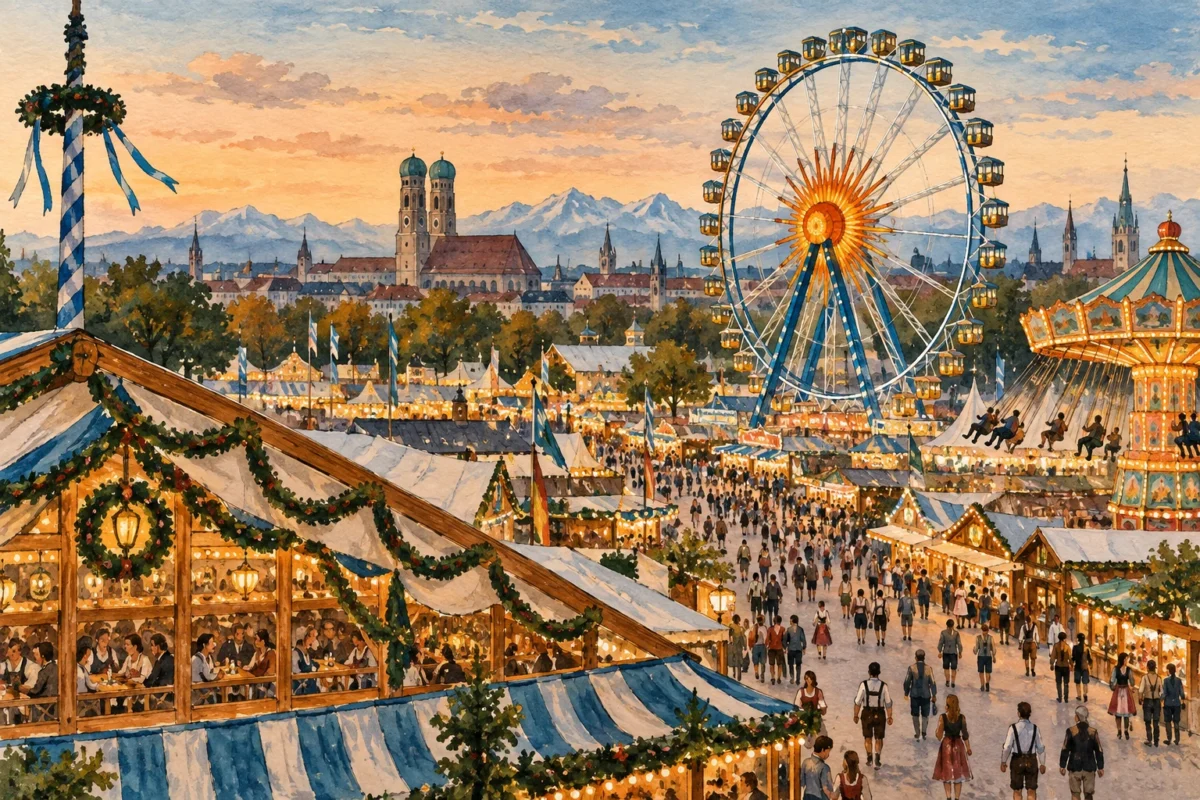
The first thing I ate at Oktoberfest in Munich was a bratwurst sandwich. Heavenly is the word that comes to mind. If you’re looking for advice about Oktoberfest for first timers, that’s where my story starts: with food that brought Germany back to me.
For your first Oktoberfest visit, choose a less busy day, arrive early if you want tent seats, bring cash and a small bag, and leave time for food and rides. You can enjoy the music and shared tables without drinking. Check the current festival dates and each tent’s reservation rules.
Please note this page may contains affiliate links. If you purchase something through these links, I’ll receive a commission at no extra cost to you. Affiliate links help to support my website/blog and I only recommend products I love.
I lived in Germany as a teenager, but I’d never been to Munich or Oktoberfest. In 2025, my wife and I went with our nephew. Germany itself was new to both of them, so I got to return to a place that meant something to me while sharing something none of us had experienced before.
The food, the smells, the history and that old-world feel brought back great memories. The festival gave me new ones: singing with locals, raising a stein with our nephew and looking out over the grounds from the big Ferris wheel. Here are seven things I’d keep in mind when planning that first visit.
Table of Contents
1. Check the dates before building your Munich itinerary
Don’t let the name steer you toward a random week in October. Munich’s official festival website lists Oktoberfest 2026 as September 19 through October 4, at the Theresienwiese. Our visit was in 2025; those dates above are for planning a 2026 trip, not a description of when we went. City of Munich’s official Oktoberfest website.
We chose a Monday and arrived around 1 p.m. to avoid the weekend crowd. That was our plan for a first visit, rather than a guarantee that a weekday afternoon will be quiet or every tent will have room. Check the dates for your own travel year before booking flights or rooms, and look at the festival’s visitor barometer when choosing a day. The official site links the barometer from its visitor information page.
You don’t have to fit the entire festival into one visit. Pick the things that matter to you, whether that’s a tent, traditional food or a ride with a view, and leave some room between them. Oktoberfest for first timers can become a long checklist if you let every recommendation turn into an obligation.
2. Have a flexible plan for finding seats
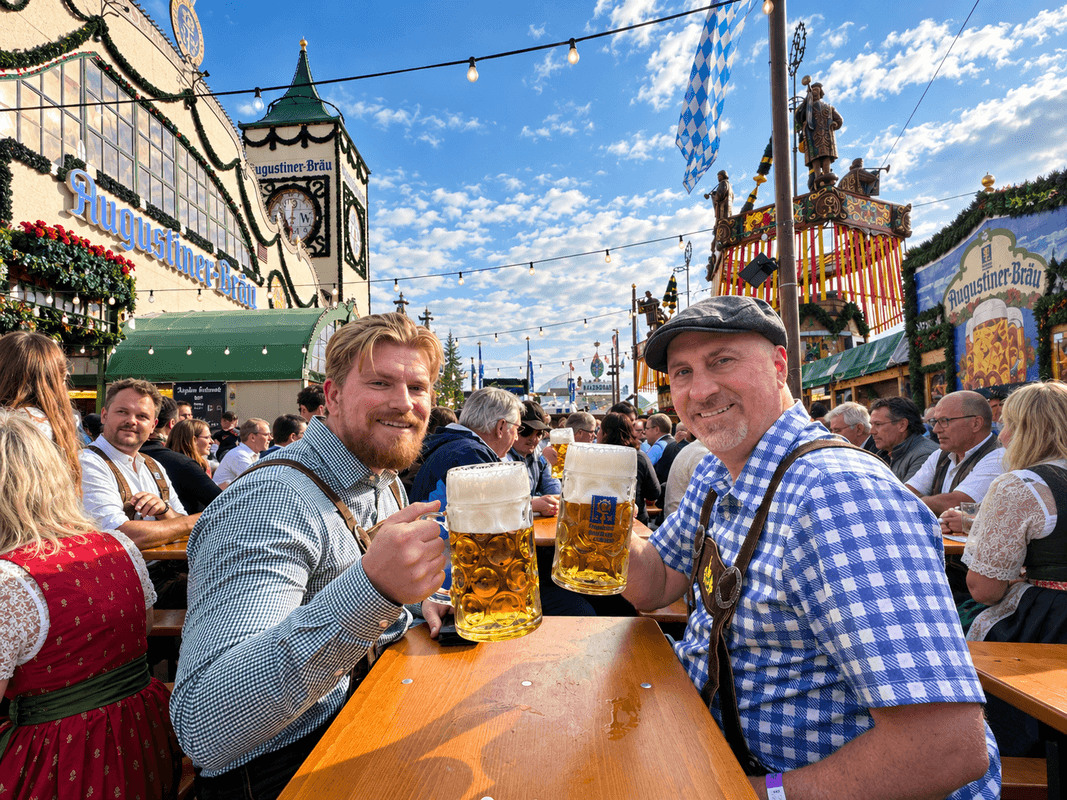
Getting into a tent and finding seats are two different things. We didn’t reserve a table, and the Augustiner tent was already full inside. My nephew and I enjoyed Augustiner beer outside that tent before moving on to the Paulaner tent. Persistence helped us find seats there with locals, even though we’d chosen Monday to avoid the weekend crowd.
The official visitor guidance says the main grounds and tents have free entry, and a reservation isn’t generally required to enter a tent. A full tent can close its doors, though, and walk-in seats can disappear early. Free entry doesn’t promise you a table. Official admission guidance.
If sitting together at a particular time matters to your group, check reservations directly with that tent. If you’re comfortable being flexible, try earlier in the day and have another tent or outdoor festival activity in mind. Ask staff which seats are available rather than assuming an empty space is yours. I’d rather change the plan than spend the whole day waiting outside one door.
3. Leave room for food that brings you back
That bratwurst sandwich was my first bite of the festival, and it set the tone. I wasn’t looking for a fancy meal. I was enjoying something familiar in Germany again, surrounded by an experience that was completely new to me.
Later, I tried German donuts and traditional pork knuckle. Both were delicious. The bratwurst connected me with old memories; the other foods added something new to the day. That mix of familiar and unfamiliar is part of what made Munich stay with me.
My food advice about Oktoberfest for first timers is simple: don’t rush past the stalls on your way to the beer. Let yourself look around. If something catches your attention, ask what it is and decide whether you want to try it. I remember them as German donuts, so I’m not going to pretend I know the exact variety I bought.
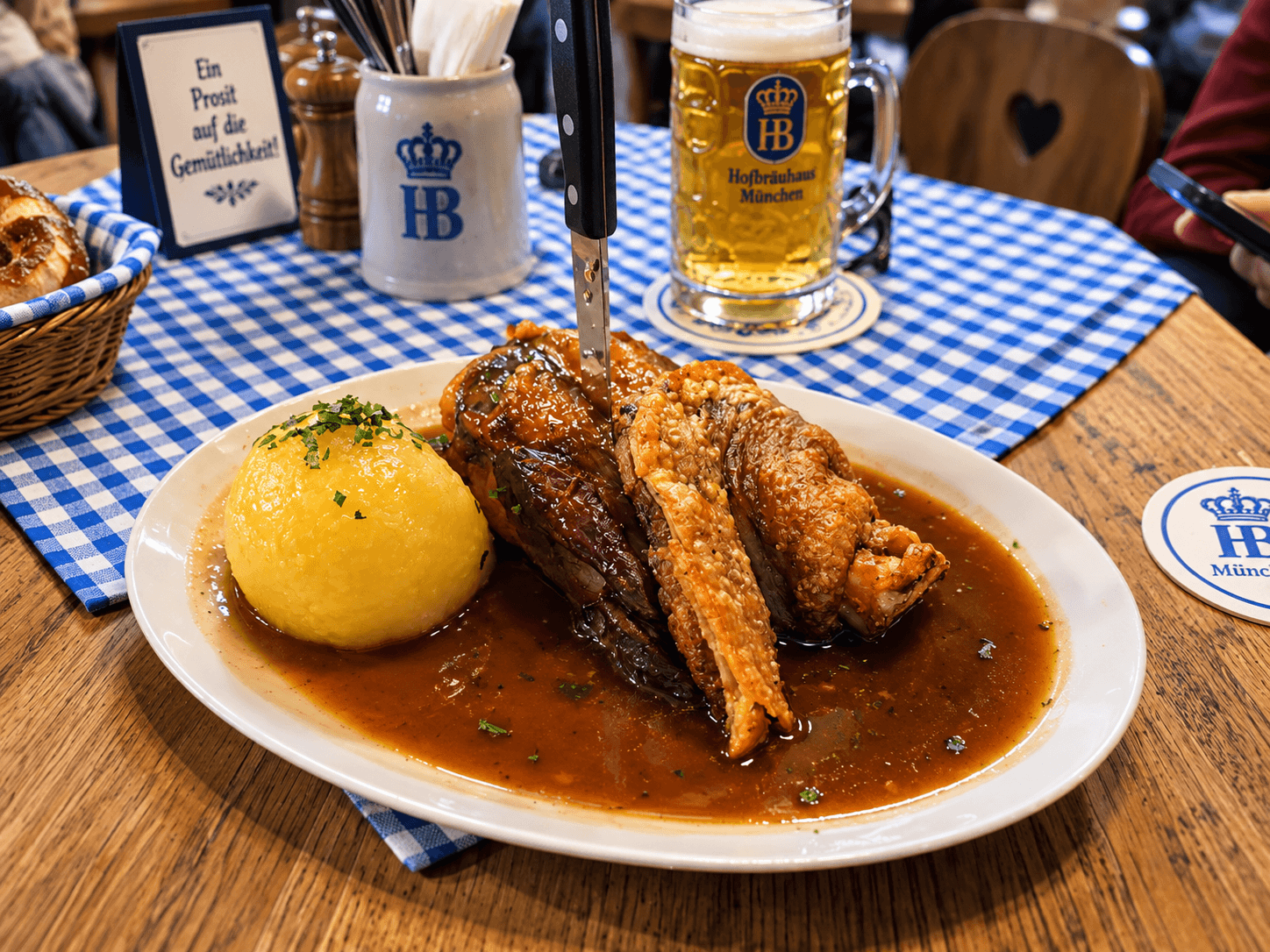
Make room for a proper meal if you’re interested in one, too. A pork knuckle is a different kind of eating experience from a sandwich you can carry. You may want to sit down, check a menu and give that part of the day some time. Ask about ingredients if you have dietary needs rather than relying on a dish’s name.
Food can also give people in your group a shared focus when their interests differ. One person may be keen on beer, another on rides, another on seeing the traditions. Stopping for something to eat gives everyone a chance to pause and decide what comes next. For me, those bites belong in the story every bit as much as the steins do.
4. Share the table, not just the beer
My nephew and I started with Augustiner outside the Augustiner tent, then had liters of Paulaner after finding seats inside the Paulaner tent. I enjoyed both beers, but the people made the experience. Sitting with locals turned into introductions, new friends and joining the celebration around us.
Soon I was standing on a bench, singing songs and raising my stein toward the people nearby. Prost is the word you’ll hear for cheers. There’s something memorable about joining in with people you’ve only just met, even when you don’t know all the words to the songs.
I can’t hand you a formula for finding that same table. Our experience happened because we found seats and stayed open to the people around us. Start with a hello, ask before taking a space and let the conversation develop. You don’t need to manufacture a big moment for the day to be worthwhile.
Follow the staff’s directions and respect the people sharing the table. Standing on benches was part of my experience, but it isn’t something you have to do to belong. Stay seated if that’s more comfortable, and don’t treat our story as permission to climb on furniture wherever you like. You can sing and raise a drink from your seat.
For Oktoberfest for first timers, I’d put sharing the space ahead of sticking to one tent. I was happy we’d tried Augustiner, and changing tents led to the table experience I’d hoped for. If a specific brewery interests you, check which tent serves it and have a second option if your first choice is full. The official Paulaner tent guide is a place to start if you’re considering the tent where we found seats.
5. You can enjoy Oktoberfest without drinking
My wife doesn’t drink. That was part of our trip from the beginning, and the festival still had plenty for her to experience. Food, music, people, Oide Wiesn and the Ferris wheel all belonged to the day, too.
If you’re wondering whether Oktoberfest for first timers works for non-drinkers, I wouldn’t write it off just because the beer gets most of the attention. The City of Munich confirms that nonalcoholic drinks are available. Check the menu where you sit so you can order what suits you. Official visitor FAQ on drinks.
I’d talk about expectations before arriving if your group has a mix of drinkers and non-drinkers. How much time does everyone want in a tent? Which food or rides interest each person? Is anyone likely to want a quieter break? Those are easier conversations before somebody feels stuck following the rest of the group.
Nobody should have to drink to take part, or wait indefinitely while other people do. Make plans that give everyone something to look forward to. The best version of this trip is one each person can enjoy, rather than one person enduring it for the others.
Our visit also reminded me why sharing travel stories matters. One place can mean a return to old memories for one person and a first encounter for another. If you like that kind of travel, with practical lessons alongside the moments that stay with you, you can join our newsletter here.
Want more like this? Join our newsletter and discover more midlife tools and knowledge we’re actually using.
6. Make time for Oide Wiesn and the Ferris wheel
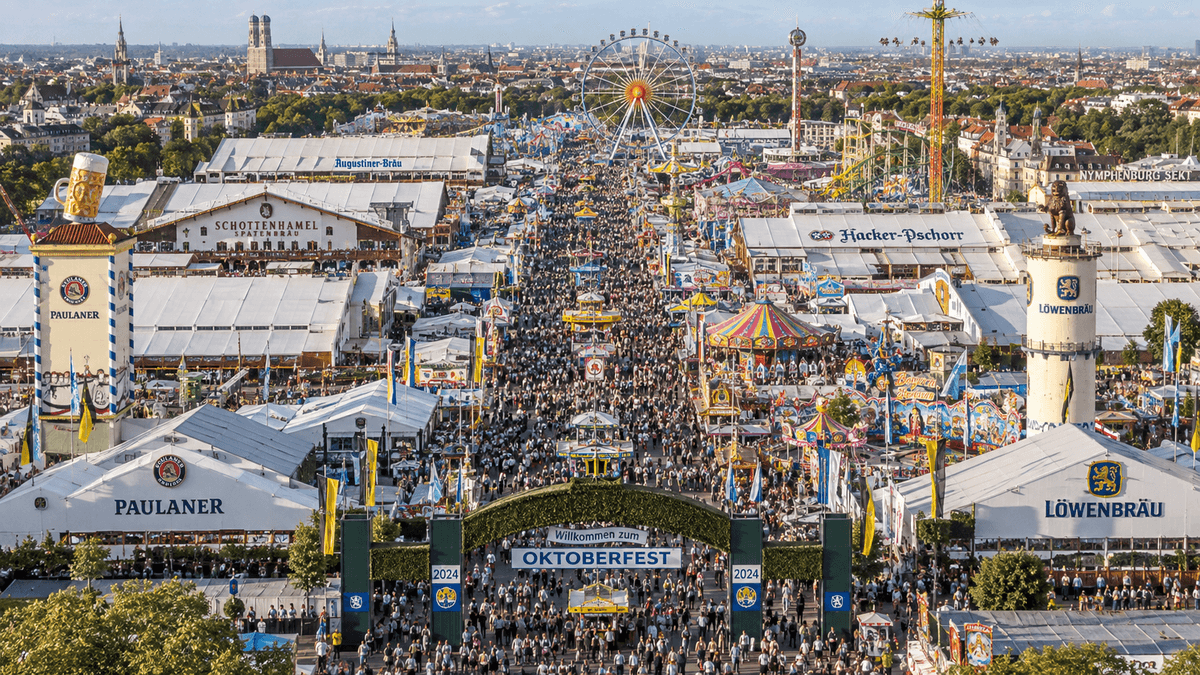
We visited Oide Wiesn, the historic part of Oktoberfest, and rode the big Ferris wheel during our festival visit. I’m keeping those as separate experiences here. The big wheel shouldn’t be read as a ride inside the Oide Wiesn enclosure.
The official festival site describes Oide Wiesn as a separate area in the southern part of the grounds, with historic rides, tents and Bavarian traditions. Its current guidance lists a four-euro admission charge. Check the offering for your travel year before making it a fixed part of your plan. Official Oide Wiesn guide, checked September 15, 2026.
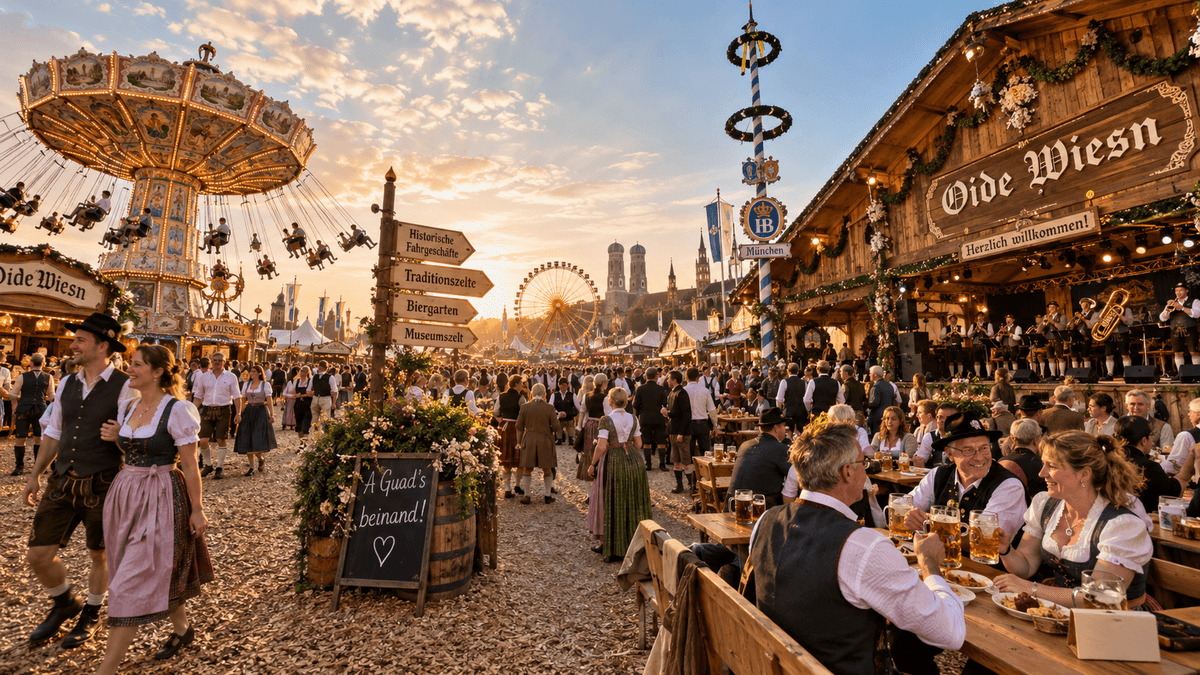
That historic side appealed to me on a trip already full of memories of Germany. It gave me another way to experience the festival beyond our time in the beer tent. If the older traditions interest you, put it on your list and give yourself time to wander.
The Ferris wheel offered an aerial view of the entire festival. From the ground, you’re close to whatever is immediately in front of you. Going up gave us a different perspective on how much was happening across the grounds. It was one of those experiences I’m glad we made time for.
You can choose your own version of that wider view. If heights aren’t for you, there’s no need to force the ride. Look at the festival map, explore another stretch of the grounds or stop somewhere you can watch the activity. Advice about Oktoberfest for first timers should help you choose, not convince you to do every attraction.
7. Plan a comfortable day and a realistic budget
Before leaving for the festival, check your bag. The official security rules allow a maximum volume of three liters and dimensions no larger than 20 by 15 by 10 centimeters. Glass bottles aren’t allowed. Leave bulky travel luggage elsewhere and check the current rules rather than guessing at the gate. City of Munich’s festival rules.
I’d wear shoes I can comfortably walk and stand in, and check the forecast before choosing layers. Think about where you can take a break, too. There’s no prize for finishing the day with sore feet because you tried to keep moving through every part of the festival.
Bring cash, but don’t assume every business has the same payment policy. Munich’s current visitor FAQ lists Augustiner among the cash-only tents, while other tents accept various cards. Check your chosen tent’s policy and carry enough for the things you intend to buy. That’s more useful than discovering a payment mismatch after ordering.
Plan how you’ll get back before the day starts. The city’s festival rules suggest alternatives to the busy Theresienwiese station, including Goetheplatz and Poccistraße. Check the route that fits your accommodation and the transport information for your travel date. Agree on a meeting place if your group separates, and keep your lodging details handy.
Your budget should include more than beer. Think about accommodation, transport, food, rides and any extras you want to bring home. Free admission to the main grounds doesn’t make the whole trip free. Our guide to budgeting for travel after 50 can help you think through the bigger picture.
If Munich is one stop in a longer trip, leave some breathing room around it. You can read how we approached planning our Europe trip for that wider planning conversation. I wouldn’t pack the next morning with commitments just because the calendar has an empty space.
A day of old memories and new ones
I went to Munich with memories of living in Germany as a teenager. I left with a day I’ll never forget: a heavenly bratwurst sandwich, delicious new foods, Augustiner and Paulaner with our nephew, new friends and songs shared across a table.
That combination is what I hope you’ll find on your own trip. Make a plan that helps you feel comfortable, then leave room for the experience to surprise you. Oktoberfest for first timers doesn’t need to be a perfect performance of everything you’ve seen online.
And if you’re thinking about what to bring home, consider what will help you remember the day. Our thoughts on meaningful travel souvenirs go beyond buying something just to say you were there. The memories of food, music and people are the things I keep returning to.
If you were planning one day at Oktoberfest, which would you make time for first: the food, a shared table or the view from the Ferris wheel?
FAQs about Oktoberfest for first timers
Do you need a reservation for Oktoberfest?
You generally don’t need a reservation to enter the main festival grounds or a beer tent. A reservation can help with a planned table visit, but walk-in seats depend on availability and full tents can close. Check the rules directly with the tent you want to visit.
Can you enjoy Oktoberfest without drinking alcohol?
Yes. Nonalcoholic drinks are available, and you can enjoy food, music, shared tables and festival rides without drinking beer. My wife doesn’t drink, and our Munich visit included experiences beyond the beer tent. Plan the day around what everyone in your group wants to do.
When is Oktoberfest in Munich in 2026?
The official Munich Oktoberfest website lists the 2026 festival from September 19 through October 4 at the Theresienwiese. Our personal story comes from a 2025 visit. Always check the official dates for the year you’re booking.
Is Oide Wiesn the same as the main Oktoberfest grounds?
No. Oide Wiesn is the separate historic area in the southern part of the festival grounds. The official guide currently lists a four-euro admission charge, while entry to the main grounds is free. Check its availability and details for your travel year.