Table of Contents
You’ve probably stared at the red record button on your phone more times than you’d like to admit. You open the camera app, frame the shot, take a breath, and then close it without pressing anything. Maybe you tell yourself you’ll do it tomorrow, or once you buy a better camera, or once you figure out exactly what you’d say.
Here’s the truth nobody says out loud: starting a YouTube channel after 40 has almost nothing to do with cameras, lighting, or algorithms. It has everything to do with the fear of being seen and judged, plus a handful of avoidable mistakes that cause most new channels to quit before they ever get going.
This post walks through what actually stops people at this stage of life, what we wish we’d known before hitting record on our own channel, and a realistic starting point that doesn’t require new gear, a new personality, or a content calendar you’ll abandon by week three.
Please note this page may contains affiliate links. If you purchase something through these links, I’ll receive a commission at no extra cost to you. Affiliate links help to support my website/blog and I only recommend products I love.
Starting a YouTube Channel After 40 Works in Your Favor
Is it too late to start a YouTube channel at 40? No. According to Pew Research Center, 85% of adults ages 50 to 64 already use YouTube regularly. The audience for midlife creators is already there and growing. The real barrier isn’t age. It’s getting past the fear of hitting record.
It’s tempting to picture YouTube as a platform for twenty-somethings dancing in front of ring lights. That image is years out of date. The fastest-growing audiences on the platform now include people well into their 50s and 60s, looking for exactly the kind of content someone who has actually lived through something can offer.
Starting later also means you’re not starting from nothing. You’ve spent decades figuring things out, raising kids, building a career, maybe starting over more than once. That’s raw material a 22-year-old simply doesn’t have yet. If you’ve ever gone through the same identity shift that drives a lot of midlife reinvention, you already know how to sit with discomfort long enough to get good at something new. Starting a YouTube channel after 40 is just one more version of that.
The algorithm itself doesn’t care how old you are. It cares whether people watch, and whether you keep showing up. Both of those are things you control. The thing that actually stops most people is something else entirely, and it’s worth naming directly.
The Real Reason Most People Never Hit Record
So what’s actually stopping you? It’s rarely a lack of information. Most people who think about starting a YouTube channel have already watched a dozen videos about how to start one.
What stops people is the fear of being seen and judged. Recording yourself talking to a camera feels exposed in a way that writing a journal entry or sending a text never does. You’re not just sharing an idea. You’re sharing your face, your voice, and every mannerism you’ve spent your whole life being a little self-conscious about.
Here’s the part most people get wrong: they imagine an audience of everyone they already know watching critically. In practice, the people most likely to find your videos are strangers searching for the exact thing you’re talking about, not your old coworkers or your in-laws. The people you’re most worried about judging you are usually the least likely to ever see it.
A reframe that helps: instead of asking “will I look dumb,” ask “who might this help.” Somewhere out there is a person dealing with exactly the situation you’ve already been through, whether that’s downsizing a house, navigating a health scare, or figuring out what to do with the next 30 years. Your awkward first video might be the most useful thing they watch all week.
This is the same doubt that shows up any time you’re weighing whether it’s too late to start over at this stage of life. The honest answer is the same one each time. It’s not too late. It’s just uncomfortable, and discomfort fades a lot faster than most people expect.
What You Actually Need to Get Started (Less Than You Think)
Here’s where most people get stuck before they even start: gear. They convince themselves they need a proper camera, a ring light, a microphone, and editing software before they can record video number one. None of that is true.
Your Phone Is Enough for Video One
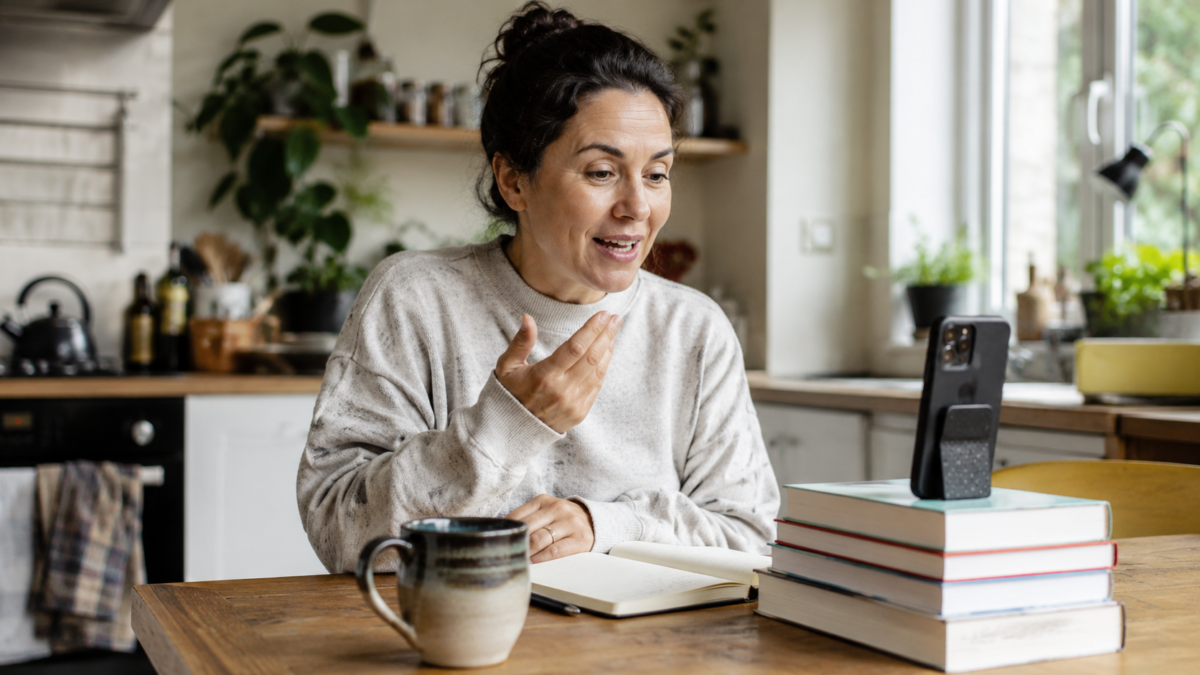
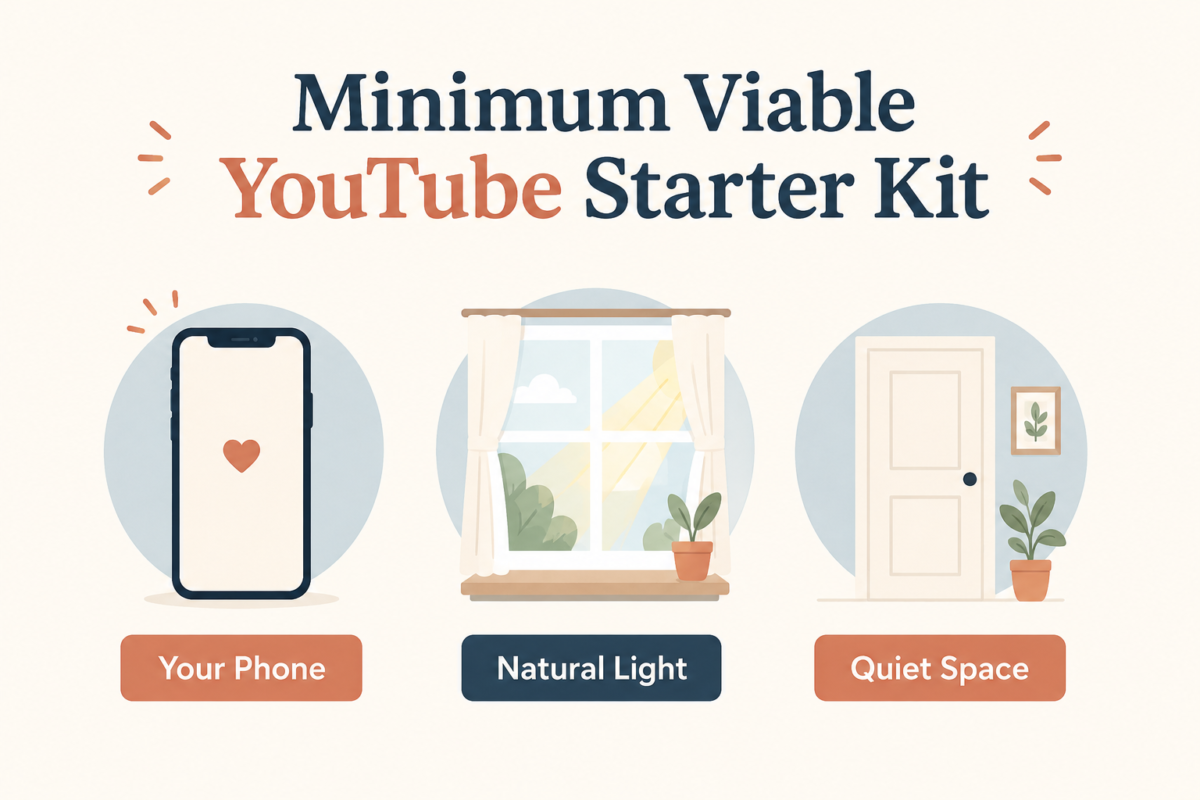
The phone in your pocket right now can record video that looks better than what professional YouTubers used five years ago. For your first several videos, that’s all you need.
What actually matters more than the camera is light and sound. Film near a window during the day, and your video will look noticeably better than something shot in a dim room under overhead lighting. For audio, find the quietest room in your house and close the door. A good picture with bad sound is hard to watch all the way through. A mediocre picture with clear sound is fine.
Editing doesn’t require expensive software either. Free, built-in tools on your phone or computer can trim clips, add captions, and cut out the long pauses where you forgot what you were going to say. Save the paid software for later, if you ever need it at all.
What to Upgrade Once You Know You’ll Keep Going
Once you’ve made five or ten videos and you know this is something you want to keep doing, that’s the point to think about upgrades, not before.
If you decide to invest, our breakdown of beginner-friendly YouTube gear covers the basics without pushing you toward anything expensive. For the camera itself, our review of the DJI Osmo Pocket 3 covers the camera we ended up using for most of our own videos, a small gimbal camera that’s far more portable than a traditional setup. On the audio side, our review of the DJI Mic Mini covers a wireless mic system that doesn’t take a film degree to figure out.
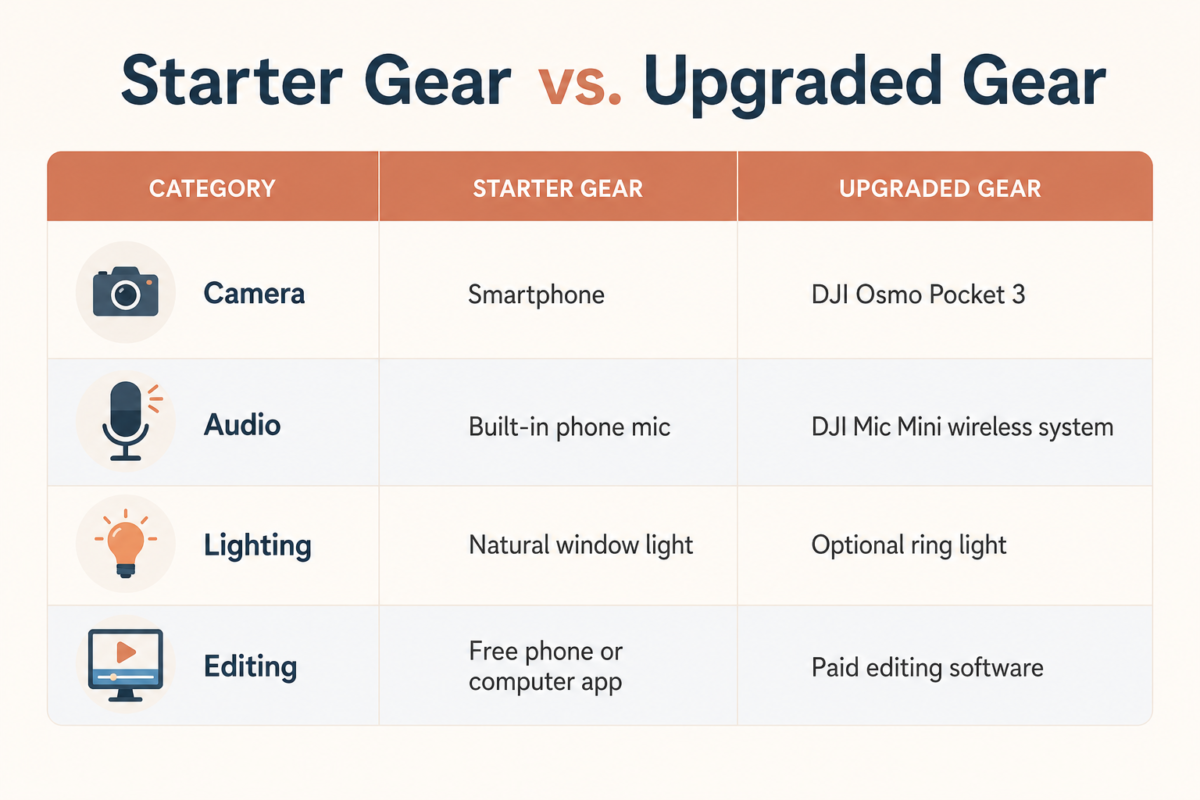
The point isn’t to buy any of this on day one. It’s to know it exists for when you’re ready, so you’re not guessing or overspending the moment you decide to level up.
Finding Your Niche When You’ve Already Lived a Whole Life
A lot of advice about finding your niche tells you to research trending topics and pick whichever one has the least competition. That’s backwards for someone starting after 40.
You don’t need to invent a niche. You need to notice the one you’re already standing in. Think about what people already ask you about in real life. Friends ask how you planned a trip. Family asks how you’re managing a health change. Neighbors ask about a hobby you’ve gotten unreasonably good at over the years. That list, the one that already exists in your life, is your starting point.
This is the same shift that happens when you start paying closer attention to the small, ordinary moments in your own life instead of waiting for something dramatic to happen before it feels worth sharing. The everyday stuff, explained clearly by someone who’s actually lived it, is exactly what’s missing from a lot of YouTube content made by people half your age.
Pick one of those topics. Just one. Don’t try to cover all of them in your first video, and don’t worry yet about whether it’s “big enough” to build a channel around. You can always branch out once you’ve made a few videos and have a better sense of what you actually enjoy talking about on camera.
The Mistakes That Make People Quit by Month Two
Most channels that quit don’t quit because the content was bad. They quit because of a handful of avoidable mistakes that drain motivation fast, usually within the first few weeks.
- Overproducing video one. Spending three weekends editing a five-minute video before you’ve even confirmed you enjoy making them.
- Fix: give yourself a one-hour cap on editing your first few videos, even if they’re rough.
- Waiting for “good enough.” There is no version of your first video that will feel ready.
- Fix: post it anyway. The second video will already be better, and the tenth will look nothing like the first.
- Posting inconsistently, then disappearing. A channel with one short video a week for three months will outperform a channel with twenty videos posted in random bursts over a year.
- Fix: pick a frequency you can sustain even on a busy week, and treat that as the real commitment.
- Comparing yourself to creators years ahead of you.
- Fix: go watch the very first video from a channel you admire. Almost every established creator has an awkward, low-quality first upload still sitting on their channel. That’s the actual starting point, not the polished version you see now.
Pick the one of these that sounds most like you, and decide right now how you’ll handle it differently.
What Happens If It Actually Works
Say you stick with it. You post consistently for six months, your content gets a little better with each video, and people start finding it. What happens next, realistically?
To join the YouTube Partner Program, the program that lets channels start earning money from ads, you need 1,000 subscribers and 4,000 valid public watch hours in the past 12 months, according to Google’s official YouTube Help documentation. Some channels also qualify with 10 million Shorts views in the last 90 days instead.
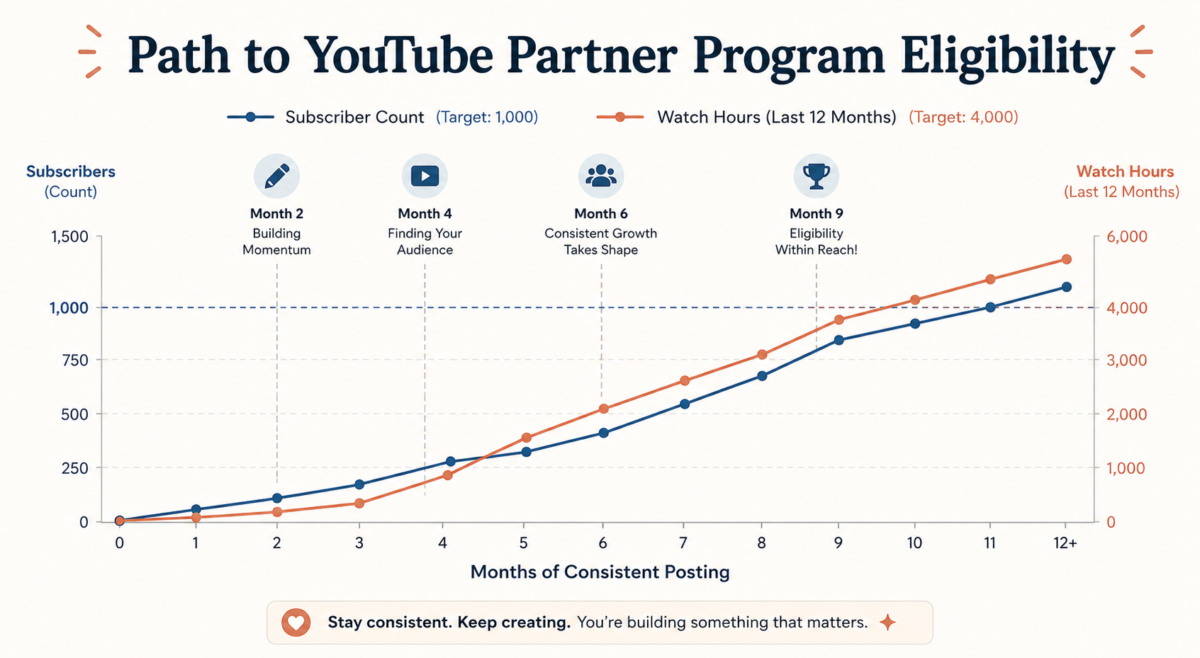
Those numbers can sound discouraging if you’re picturing your first upload sitting at three views. But they’re a realistic target for a channel that posts consistently over months, not years. Most people who reach those milestones didn’t get there by going viral. They got there by showing up regularly long enough for the right people to find them.
There’s also value here that has nothing to do with ad revenue. The same video can become a blog post, a podcast topic, or a newsletter essay, which is part of why we treat our own channel as one piece of a bigger picture rather than the whole plan.
A YouTube channel is a slow build for almost everyone, including channels that eventually do well. Treat it that way from the start, and the slow part won’t feel like failure. It’ll just feel like the plan working.
The Bottom Line
At the end of the day, starting a YouTube channel after 40 isn’t really a technology decision. It’s a decision about whether you’re willing to be a beginner again, in public, at a stage of life when most people expect you to already have things figured out.
You don’t need better gear. You don’t need a content calendar mapped out for the next year. You need one video, made with what you already have, about something you already know.
If you’re working through this kind of midlife shift, whether that’s picking up something new or wondering if it’s worth starting over at all, that’s exactly what we write about here. Join our newsletter and follow along as we keep figuring this out ourselves.
What’s the video idea you’ve been sitting on the longest, and what’s actually stopping you from making it?
Frequently Asked Questions
Is it too late to start a YouTube channel after 40?
No, and in some ways it’s an advantage. You have more specific experience and stories to draw from than most creators starting out, and according to Pew Research Center, 85% of adults 50 to 64 already watch YouTube regularly. The audience is already there. The harder part isn’t the platform. It’s getting past the fear of hitting record the first time.
What equipment do I need to start a YouTube channel?
Your phone is enough for your first several videos. Focus on finding good light, a window during the day works well, and recording somewhere quiet before you spend any money on gear. Upgrades make sense once you know you’ll keep going, not before.
How do I get over being scared to be on camera?
Record a few videos privately before you post anything. Watch each one back once, then stop watching it on a loop looking for flaws nobody else will notice. For most people, the awkwardness fades somewhere around video five to ten, not video one.
How many subscribers do I need to make money on YouTube?
To join the YouTube Partner Program, you need 1,000 subscribers and 4,000 valid public watch hours within the past 12 months, or 10 million Shorts views in 90 days, according to Google’s YouTube Help documentation. It’s a real milestone, and for most channels it takes months of consistent posting to reach.
What should I make videos about if I’m over 40?
Start with whatever people already ask you about in real life. That’s usually a stronger starting point than chasing a trending topic with no real connection to your own experience.