
Table of Contents
Most of us don’t think about the meaningful legacy for your children we’re building until something forces the question. A milestone birthday, a parent’s death, a quiet Sunday when you realize the house is emptier than it used to be. Then it hits: the clock is moving, and you haven’t captured any of it yet.
Here’s what nobody tells you: you don’t build a legacy after you’re gone. You build it now, in the ordinary moments you’re still living. The conversations, the choices, the stories you’ve never gotten around to telling, that’s the raw material. And midlife is exactly when most of us finally have the clarity to do something with it.
This post is about what a living legacy actually looks like, why it matters more than the money, and most importantly, what you can start doing this week before the window gets any smaller.
Please note this page may contains affiliate links. If you purchase something through these links, I’ll receive a commission at no extra cost to you. Affiliate links help to support my website/blog and I only recommend products I love.
What Does It Really Mean to Leave a Legacy for Your Children?
Most people hear the word “legacy” and think estate planning. Wills, trusts, assets, life insurance. That stuff matters, but it’s not what your kids will remember.
What they’ll remember is the way you handled hard things. The phrase you always said. The Sunday morning ritual that seemed unremarkable at the time. The story about your dad that you told once in the car on a long drive, and they never forgot it.
A living legacy isn’t what you leave behind when you’re gone. It’s what you’re actively building right now, through your values, your presence, your stories, and your willingness to be known by the people who love you most.
The distinction matters because one of them requires you to be dead, and the other requires you to show up.
Why Midlife Is Exactly the Right Time to Start
There’s a specific kind of clarity that arrives somewhere in your 40s or 50s that you didn’t have before. You’ve been through enough to know what actually matters. You’ve watched parents age or pass. You’ve had at least one experience that reminded you the time is finite.
That clarity is a gift. Use it.
Your kids, whether they’re teenagers still in the house or adults building their own lives, are old enough now to receive what you’ve learned. Not as lectures. As stories. As conversations. As the version of you that existed before they were born.
If you’ve been reading along with us here, you know we talk a lot about not waiting for someday to really live. The same logic applies to legacy. The people who ask “is it too late?” almost always find out it’s not, but it does require deciding to start.
Midlife isn’t the end of your story. It’s the part of the story that’s rich enough to be worth telling.
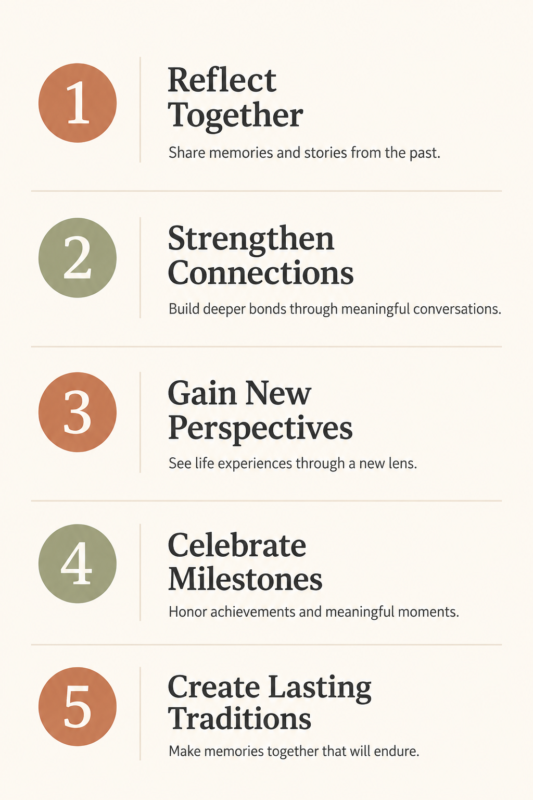
The 5 Things That Actually Make Up a Living Legacy
Money can be spent. Possessions get divided, sold, or lost. What lasts, what actually shapes the people your children become, is harder to hold but more durable than any account balance.
1. Your Values, Made Visible
You can’t lecture values into your kids. You live them and they watch. They notice whether you’re generous when it costs you something, whether you’re honest when lying would be easier, whether you treat the server at the restaurant the same way you treat your boss.
The legacy isn’t in what you tell them to value. It’s in what you model when you think no one’s paying attention, and they are always paying attention.
If intentional living is something you’re actively working on, you’re already building this layer. The goal is to make sure your values aren’t invisible. Talk about them, tell the stories behind them, name them when you see them showing up in your kids.
2. Your Story – The Version They’ve Never Heard
Your children know a version of you. Parent-you. But they don’t know who you were before them. What you were afraid of, what you almost did, who you loved, what broke you and what rebuilt you.
That history is irreplaceable. And once you’re gone, it’s gone.
The good news is you don’t need a memoir or a film crew. A recorded conversation, even a simple one, captures something no photograph or journal entry fully can, your voice, your laugh, the way you pause before you say something that matters. We’ve written about the gear to document life without making it complicated. And Modern Heirloom Books has a solid guide to recording at home that makes the technical side approachable — the barrier is lower than you think.
3. Your Presence – The Kind That Gets Remembered
We tend to overestimate how much our kids will remember the big events and underestimate how much they’ll remember the texture of ordinary time. Road trips. Weekend breakfasts. The way you always stayed up too late talking when they came home for the holidays.
Experience-based living isn’t just about your own fulfillment. Shared experiences become the connective tissue of family memory. The trip you took together. The project you built. The inside joke that’s been running for fifteen years.
These aren’t luxuries. They’re the legacy.
4. Your Wisdom – Passed Intentionally, Not Incidentally
Hard-earned wisdom has a shelf life. Not because it expires, but because if it lives only in your head, it disappears when you do.
The difference between wisdom that gets passed on and wisdom that doesn’t is usually one thing: whether you ever said it out loud, on purpose, in a way someone could receive it.
This doesn’t mean sitting your adult kids down for a lecture. It means writing a letter when you’re moved to. Answering questions you’ve never been asked because nobody knew to ask them. Building goals and intention into the way you live so that the purposeful life you’re constructing is legible to the people watching it.
5. Your Voice – Literally
This one is the most overlooked and the most irreversible to miss.
After someone is gone, what their family would give to hear their voice again, telling a story, laughing, just being present in the room, is profound. We know this. We’ve felt it. And yet almost none of us do anything about it while there’s still time.
Your voice telling your own story is the most personal thing you can leave behind. Not a summary. Not what someone else remembers about you. You, talking about your life, in your own words.
That’s what a legacy interview is, at its core.
The One Thing Most Parents Wait Too Long to Do

Ask anyone who has lost a parent what they wish they’d done differently and a version of the same answer comes back almost every time: I wish I’d asked more questions. I wish I’d recorded it. I wish I’d done it before it was too late.
The regret is so common it’s almost cliché, and yet the behavior doesn’t change, because doing the thing feels awkward, or expensive, or like something you’ll get to eventually.
You won’t get to it eventually. Eventually has a way of not arriving.
A legacy interview is a structured conversation, on video or audio, where you or someone you love answers questions about your life: where you came from, who shaped you, what you believe, what you wish you’d known, what you want future generations to understand about the family they came from.
It’s not a documentary. It doesn’t need to be polished. It just needs to exist.
If you’ve been part of the reinvention happening for so many people over 40, you already understand that waiting for the perfect moment is how things don’t happen. The legacy interview is the same. The perfect time is now, while everyone is healthy, while the memories are intact, while you still have the chance to ask.
How to Start Creating Your Meaningful Legacy for Your Children
You don’t need to do everything at once. You just need to start.
This Week
- Write down three stories from your life your kids have probably never heard, one from childhood, one from your 20s or 30s, one from a hard season. Don’t edit it. Just write it.
- Pull up your phone’s voice memo app and record yourself answering this question: What do I want my children to know about who I am that they’ve never thought to ask? Ten minutes. Unscripted.
- Send a text or leave a voicemail for one of your kids that has nothing to do with logistics. Just something you’ve been meaning to say.
This Month
- Schedule one conversation, in person or on a call, where the explicit purpose is to share a story or piece of your history. Tell them you want to do this. Most kids will say yes immediately.
- Look at your calendar and ask: are the experiences I’m prioritizing actually worth remembering? Block something that will be.
Want Help Capturing Your Parent’s Story the Right Way?
We created a FREE PDF of “25 Questions to Ask Your Parent Before It’s Too Late” to help get you started.
This is the thing we all mean to do. We’re making it easy to actually do it.
Frequently Asked Questions
What is a living legacy?
A living legacy is the ongoing impact you have on the people around you, your values, presence, stories, and wisdom, while you’re still alive to build it. It’s the counterpart to the inheritance you leave behind after death, and it’s often more meaningful.
How do I start preserving my family’s stories?
Start simple: a voice memo, a video call, a written letter. The goal isn’t a perfect archive, it’s capturing something real before it’s lost. A structured legacy interview is the most thorough approach, but anything is better than nothing.
What should I include in a legacy interview?
The best legacy interviews cover your origin story, the turning points in your life, what you believe and why, what you’ve learned the hard way, and what you want future generations to know about the family. Questions about everyday life, what you ate, where you lived, what you did for fun, often produce the richest answers.
Is it too late to leave a legacy if my kids are adults?
No. In many ways, adult children receive this kind of thing more deeply than young ones. They can ask better questions, hold more nuance, and they’re often at the stage of life where they’re beginning to think about these things themselves.
What’s the difference between a legacy and an inheritance?
An inheritance is financial or material, it transfers assets. A legacy is everything else: the stories, values, and character that shape who your family becomes. Both matter. But only one of them requires you to be intentional while you’re still here.