
Table of Contents
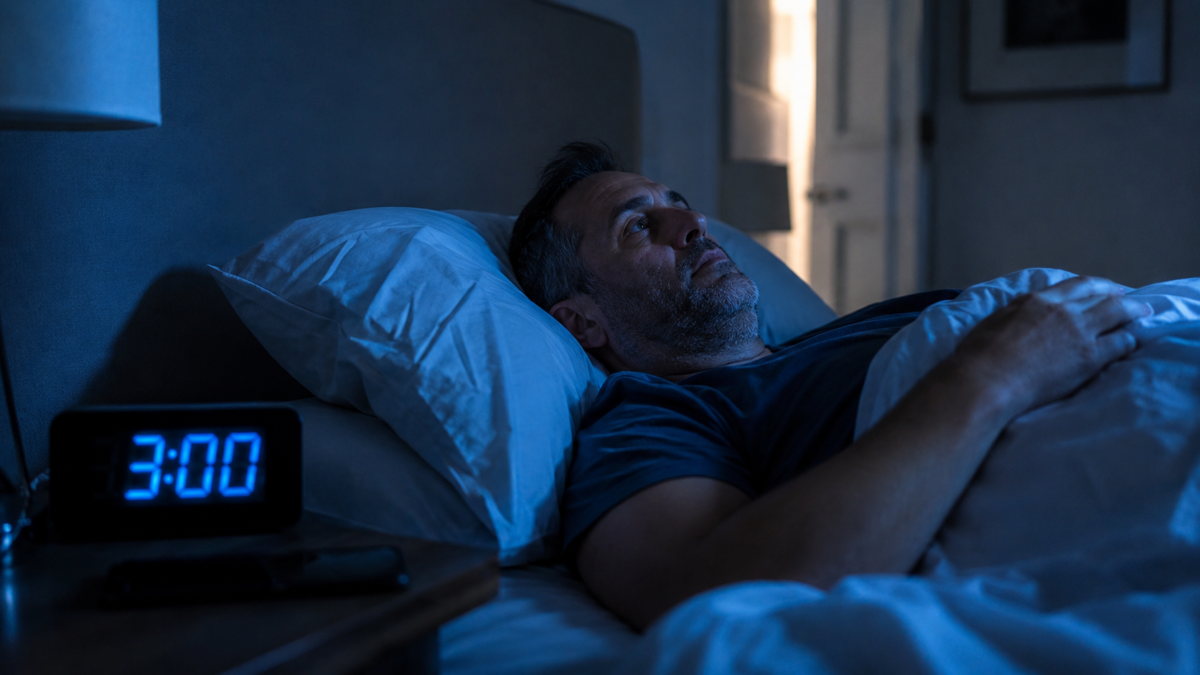
It’s 3am, and you’re wide awake. Your mind is running through a list with no end: your mom’s next doctor appointment, whether your kid is going to be okay, the project at work you can’t seem to care about anymore, and a body that doesn’t feel like the one you had ten years ago. On paper, your life looks fine. At 3am, none of it feels fine.
If that sounds familiar, you’re not imagining it and you’re not broken. Midlife anxiety is real, it’s common, and it behaves differently than the anxiety you remember from your twenties. Back then, anxiety usually had one obvious source: a test, a breakup, a job interview. Midlife anxiety rarely works that way. It shows up as a low hum underneath everything, and most days you can’t point to a single cause.
This post names the four pressures that converge to make anxiety land harder after 40, and walks through a four-part reset you can start today. None of it requires quitting your job, overhauling your life, or pretending you have more time than you do.
Please note this page may contains affiliate links. If you purchase something through these links, I’ll receive a commission at no extra cost to you. Affiliate links help to support my website/blog and I only recommend products I love.
Midlife Anxiety Is More Common Than You Think
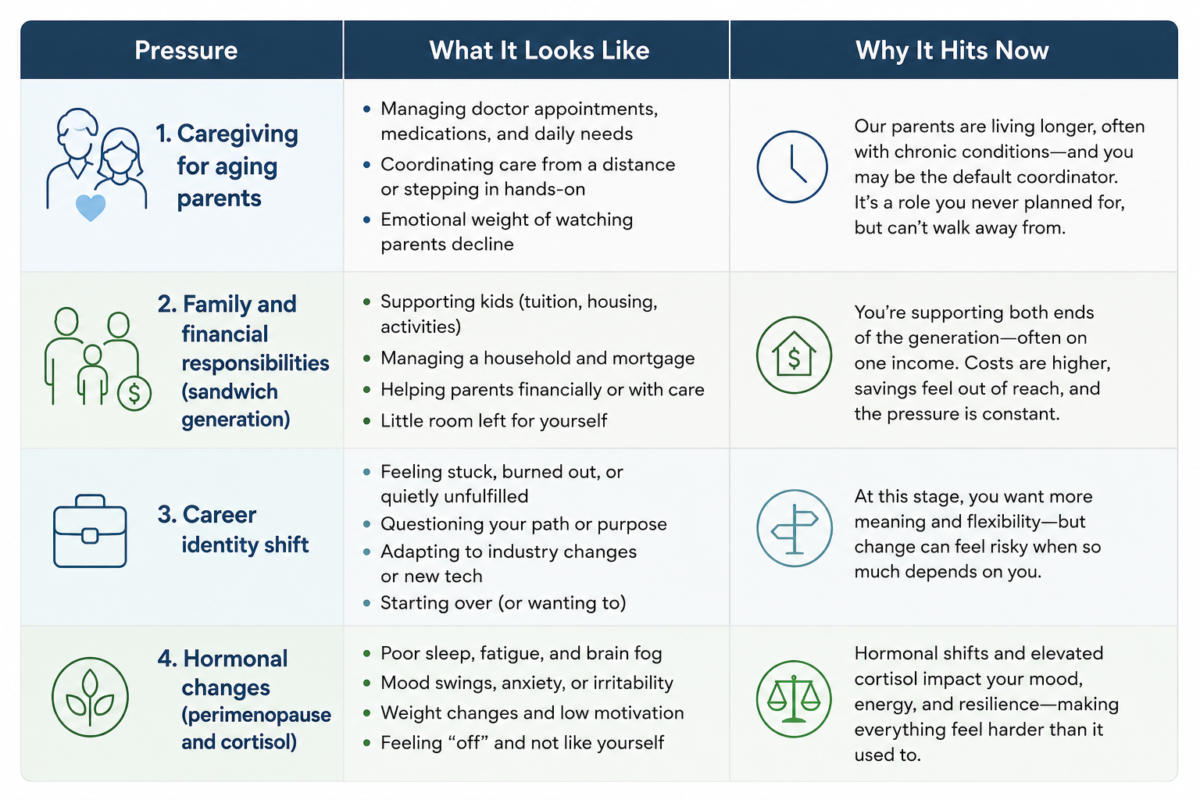
Here’s the short version: anxiety often gets worse in midlife because several pressures converge at once. You’re caregiving for aging parents, supporting kids (younger or grown), navigating a shift in career identity, and dealing with hormonal changes like perimenopause that affect your body’s stress response. It’s the combination, not any single piece, that makes it feel so much harder to manage than it used to.
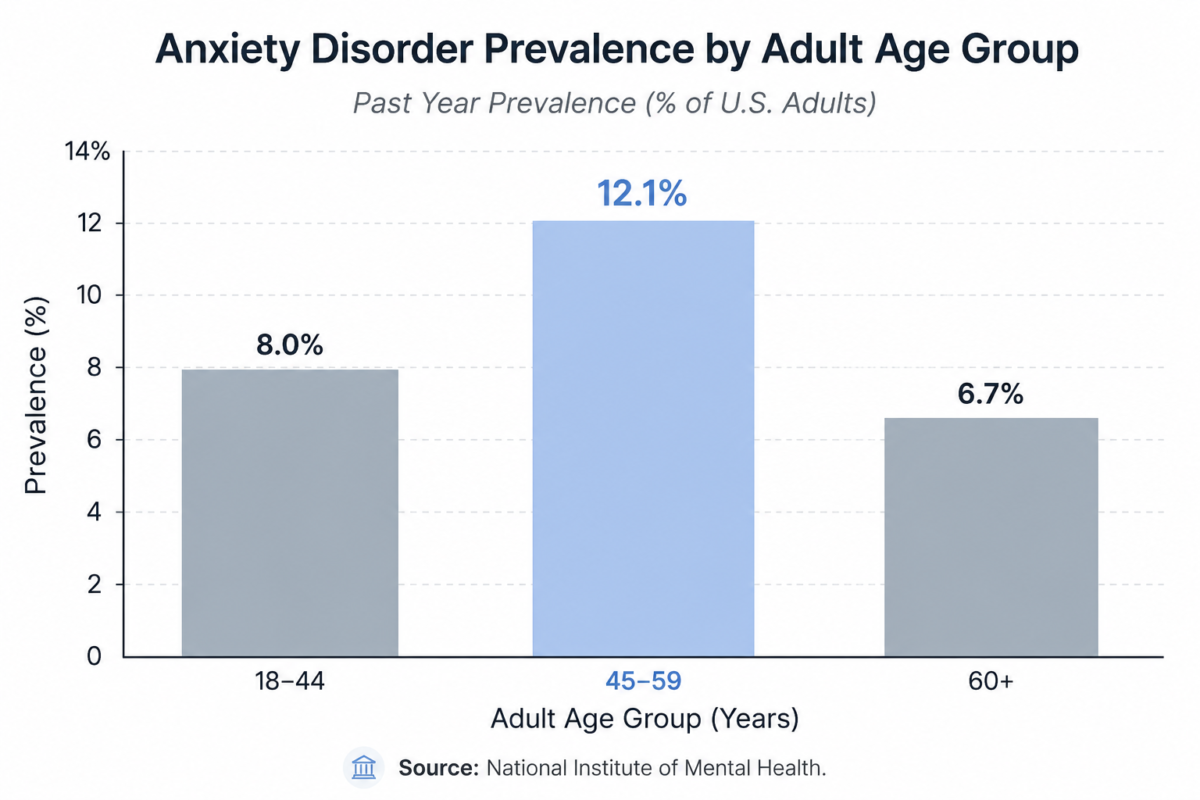
According to the National Institute of Mental Health, anxiety disorders remain common among adults in the 45-59 age range, and plenty of people experience new or noticeably worse anxiety during this stretch of life even without any history of it before. If you’ve never dealt with anxiety before and suddenly find yourself dealing with it now, you’re part of a much bigger group than you’d think sitting alone with it at 3am.
There’s a difference worth naming here. This everyday version, the kind this post is about, shows up as racing thoughts, tight chest, trouble winding down, and a general sense of dread that doesn’t match anything specific happening that day.
A diagnosable anxiety disorder is more persistent, interferes with daily functioning for weeks at a time, and often comes with physical symptoms a doctor should look at. We’ll come back to that distinction in the last section, because knowing where that line sits matters.
For now, the point is simple. What you’re feeling has a name, it’s common at this stage of life, and it’s not a sign that something is wrong with you personally. It’s a sign that several things are happening to you at once.
The Sandwich Generation Squeeze
One of the biggest reasons this feels different from the anxiety you’ve felt before is the sandwich generation squeeze, and it’s bigger than most people realize. Pew Research Center found that roughly 23% of U.S. adults are caring for an aging parent while also raising or financially supporting their own kids. That’s nearly one in four adults carrying two full sets of responsibilities at the same time, often while also working full time.
Previous generations mostly didn’t deal with this in the same way. People had kids younger, parents didn’t live as long, and the financial and caregiving timelines didn’t overlap nearly as much. Now they do, and it changes the shape of midlife completely. You’re not just managing your own life. You’re managing pieces of two other generations’ lives too, and there’s rarely a day off from any of it.
This squeeze often shows up alongside something else: a quiet identity shift. The career that defined you for twenty years might feel less like “you” than it used to, or you might be wondering what comes next once the caregiving demands ease up.
If that sounds like where some of your anxiety is actually coming from, it’s worth reading about the bigger identity shift that’s often driving the anxiety in the first place, because naming that shift is often the first step toward feeling less stuck inside it.
The sandwich generation squeeze isn’t something you can fix by trying harder or being more organized. It’s a structural reality of this stage of life for millions of people. Naming it for what it is takes away some of the “why can’t I just handle this” guilt that makes the anxiety worse.
What’s Actually Happening in Your Brain and Body
Midlife anxiety isn’t only situational. Something is also changing physically, and understanding that part makes the whole picture less confusing.
For many people going through perimenopause, hormonal shifts are directly linked to new or worsening anxiety. Research published through the National Library of Medicine has documented this connection, separate from whatever else is going on in someone’s life at the time. That means even if your circumstances stayed exactly the same, the hormonal changes alone could be enough to turn up the volume on anxious feelings.
Then there’s the cumulative effect of chronic stress itself. When stress runs in the background for years instead of weeks, the body’s cortisol response recalibrates. The system that’s supposed to spike during a real threat and then settle back down stops settling back down as easily.
Over time, that makes everyday situations feel more threatening than they actually are, which is part of why a normal Tuesday can suddenly feel overwhelming for no clear reason.
Sleep plays a huge role here too. Anxiety disrupts sleep, and poor sleep makes anxiety worse, which creates a loop that’s hard to break without addressing both sides. If your sleep has been off for a while, it’s worth looking at getting your sleep rhythm back on track, because a lot of what feels like “just anxiety” is partly a sleep problem wearing an anxiety costume.
None of this means you’re stuck. It means your brain and body are responding normally to a set of changes that are genuinely harder than the ones you dealt with at 25. That’s useful to know, because the reset below is built around working with your body’s stress response instead of against it.
The 4-Part Reset That Actually Works
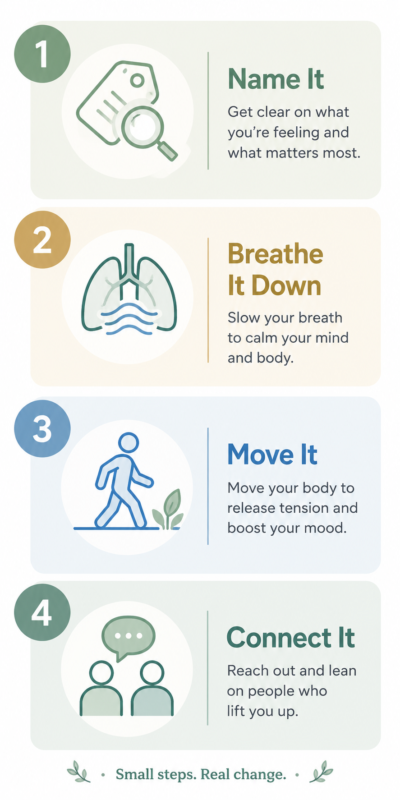
This reset has four parts. None of them take more than a few minutes, and none of them require you to clear your schedule or become a different person. The goal isn’t to eliminate midlife anxiety completely. It’s to give you something concrete to do the next time it shows up, instead of just riding it out.
Part 1: Name It
When anxiety hits, most of us experience it as one big undefined wave. The first step is breaking that wave into pieces. Take two minutes and ask yourself: is this about a parent, a kid, money, or my body? Usually it’s one or two of those, not all four at once, even though it feels that way.
This sounds almost too simple, but there’s a reason it works. Vague anxiety feels bigger and more permanent than specific anxiety. “Something is wrong with everything” is terrifying. “I’m worried about Mom’s appointment on Thursday” is a problem you can actually do something about, even if that something is small.
Part 2: Breathe It Down
A 2023 study from Stanford Medicine compared several breathing techniques and meditation against a specific pattern called cyclic sighing, and found it reduced anxiety and improved mood more effectively than the alternatives they tested. The pattern is simple: take a normal inhale through your nose, then a second smaller “top-up” inhale on top of that, then a slow, extended exhale through your mouth, longer than the inhale felt.
Firve minutes of this, especially right after naming what’s actually bothering you in Part 1, gives your nervous system a physical signal that the threat has passed, even if the underlying situation hasn’t been resolved yet. It won’t fix the situation with your mom’s appointment or the tuition bill. It will get your body out of fight-or-flight mode long enough to think clearly about it.
Part 3: Move It
Movement is one of the fastest ways to burn off the physical charge that anxiety creates in your body. It doesn’t need to be a full workout. A short walk, some stretching, or even a few minutes outside can shift how you feel within minutes.
If you want something with a bigger jolt, a simple cold-exposure reset that calms your nervous system is worth trying, even in small doses like ending a shower with thirty seconds of cold water. The discomfort is brief, and the calming effect afterward is often noticeable the same day.
Part 4: Connect It
The last part is the one people skip most often, and it’s usually the one that matters most over time. Anxiety isolates. It convinces you that nobody else is dealing with what you’re dealing with, which makes everything feel heavier.
A guided meditation practice even skeptics can stick with is a low-pressure way to build in a few minutes of connection to something outside the noise in your head, even if “connection” here just means ten minutes of quiet that isn’t spent scrolling. For some people, that’s enough. For others, it’s a starting point that makes it easier to reach out to a friend, a partner, or eventually a professional.
When to Get Outside Help
Everything in this post is meant to help with the everyday version of midlife anxiety: the racing thoughts, the 3am wake-ups, the background hum. But there’s a line where it’s worth talking to a doctor or therapist instead of just managing it on your own.
If anxiety is interfering with your sleep, your relationships, or your ability to get through a normal day for several weeks in a row, that’s worth a conversation with a professional. So is anxiety that comes with physical symptoms like chest pain, a racing heart at rest, or panic attacks that feel like they’re coming out of nowhere.
Therapy and, when appropriate, medication are tools, not a verdict on your character or your ability to cope. A lot of people in midlife grew up in households where asking for help with something like this wasn’t really an option. That doesn’t mean it isn’t an option now. Getting support for anxiety symptoms at this stage of life is no different than getting support for a knee that’s been bothering you for months. It’s maintenance, not failure.
The Bottom Line
Midlife anxiety isn’t a personal failing. It’s four real pressures, caregiving, family responsibilities, career identity, and hormonal changes, converging at the same point in your life, often for the first time all at once. None of that means you’re stuck with it.
The 4-part reset (name it, breathe it down, move it, connect it) won’t make those four pressures disappear. What it will do is give you something real to reach for the next time anxiety shows up at 3am or in the middle of an ordinary Tuesday. Small resets, used consistently, add up over time in a way that “just relax” advice never does.
We’re working on more content around managing midlife stress and energy as part of this site’s Health & Energy section.
Which of these four pressures hits hardest for you right now: the caregiving, the family responsibilities, the career identity shift, or the changes in your body?
If this topic is useful to you, sign up for our newsletter below and we’ll let you know as new posts and resources go live.
Frequently Asked Questions
Is it normal to develop anxiety in your 40s or 50s?
Yes. Research from the National Institute of Mental Health shows anxiety disorders remain common among adults aged 45-59, and many people experience new or intensified anxiety during midlife even without a prior history of it.
Can perimenopause cause anxiety?
Research published through the National Library of Medicine links perimenopausal hormone changes to an increased risk of anxiety symptoms, separate from any other life stressors happening at the same time.
What is the “sandwich generation” and how does it relate to anxiety?
The sandwich generation refers to adults caring for aging parents while also raising or financially supporting their own kids. Pew Research Center found about 23% of U.S. adults fall into this group, and that dual responsibility is a major driver of midlife stress.
What is cyclic sighing and how does it help with anxiety?
Cyclic sighing is a breathing pattern: a normal inhale, a second smaller “top-up” inhale, then a slow, extended exhale. Stanford Medicine studied this pattern in 2023 and found it reduced anxiety and improved mood more than some other breathing or meditation techniques tested.
When should midlife anxiety be treated by a professional?
If anxiety is interfering with sleep, relationships, or daily functioning for several weeks or more, it’s worth talking to a doctor or therapist. Therapy and, when appropriate, medication are effective tools, not signs of failure.