Table of Contents
Somewhere in a box or on an old hard drive, most people have almost nothing of their own parents or grandparents actually talking. A few photos with dates scribbled on the back. A story retold secondhand so many times nobody is quite sure it happened exactly that way. Your own kids are headed toward that same gap unless somebody records something first.
A legacy video for your children doesn’t mean interviewing your aging mother about her childhood, and it doesn’t mean hiring a production company that charges thousands of dollars to turn your living room into a documentary set. It means turning the camera the other direction and recording something of yourself, in your own words, for your kids to watch someday.
This guide covers what one actually looks like, what to say when a blank screen feels intimidating, an honest look at doing it yourself versus paying a professional, and a simple way to record one this weekend using nothing but your phone.
Please note this page may contains affiliate links. If you purchase something through these links, I’ll receive a commission at no extra cost to you. Affiliate links help to support my website/blog and I only recommend products I love.
What a Legacy Video for Your Children Actually Is (And Isn’t)
One of these is a recorded message, memory, or set of stories you create for your kids to watch now or in the future. Unlike a legacy interview, which captures someone else’s life story, this one is made by you, in your own words, using nothing more than a smartphone.
That distinction trips a lot of people up. A legacy interview points the microphone at a parent or grandparent, usually while there’s still time to ask. This points it at yourself. Nobody has to interview you. You decide what gets said, in what order, and how much.
It also isn’t a home movie. A home movie captures what happened: a birthday party, a beach trip, a graduation. This captures who you were while it happened. Think of it as a letter to your kids that you recorded instead of wrote, except you don’t have to wait for a birthday or a milestone to send it.
This isn’t a fringe idea, either. StoryCorps, the nonprofit oral history project that has recorded hundreds of thousands of conversations since 2003, built an entire program called StoryCorps Legacy around the idea that ordinary people, not just public figures, have stories worth preserving in their own voice.
Recording something for your own kids is the same instinct, just aimed at your own family instead of a public archive.
That framing removes most of the pressure. You aren’t building a highlight reel or auditioning for anything. You’re talking to your kids the way you would if they walked into the room right now and you had five honest minutes with them.
Why Now, Instead of Someday
Legacy work has a habit of getting filed under someday, right next to the trip you’ll take once things calm down and the garage you’ll finally organize. It runs into the same someday trap that keeps people from ever getting around to the things that matter most, and the conditions for starting never really arrive on their own.
Waiting carries a specific cost here. Your voice changes over the years. Memory of small details fades faster than expected: what a house smelled like, the exact words someone said, why a particular year mattered. Health changes too, sometimes without warning.
None of that is meant to sound grim. It’s just true, and it’s why people who do get around to recording one almost always say the same thing afterward: they wish they’d done it years earlier, not that they wish they’d waited longer.
Psychologists have a name for the pull that makes this kind of project feel more urgent in your 40s, 50s, and 60s: generativity, the drive to invest in and guide the next generation.
The University of Wisconsin’s long-running MIDUS study on adult development has linked stronger generativity to better psychological well-being in midlife and beyond, which lines up with what most people report after actually finishing one. It tends to feel like relief, not a chore.
Midlife tends to be exactly when legacy starts to feel urgent instead of theoretical, and once that shift happens, this stops feeling like a nice-to-have project and starts feeling like something you’d genuinely regret skipping.
What to Actually Say (So You’re Not Staring at a Blank Screen)
The single biggest reason these never get made isn’t lack of time. It’s staring at a blank screen with no idea where to start, so the phone goes back in the pocket and the idea gets filed away again. A handful of prompts fixes that faster than overthinking ever will.
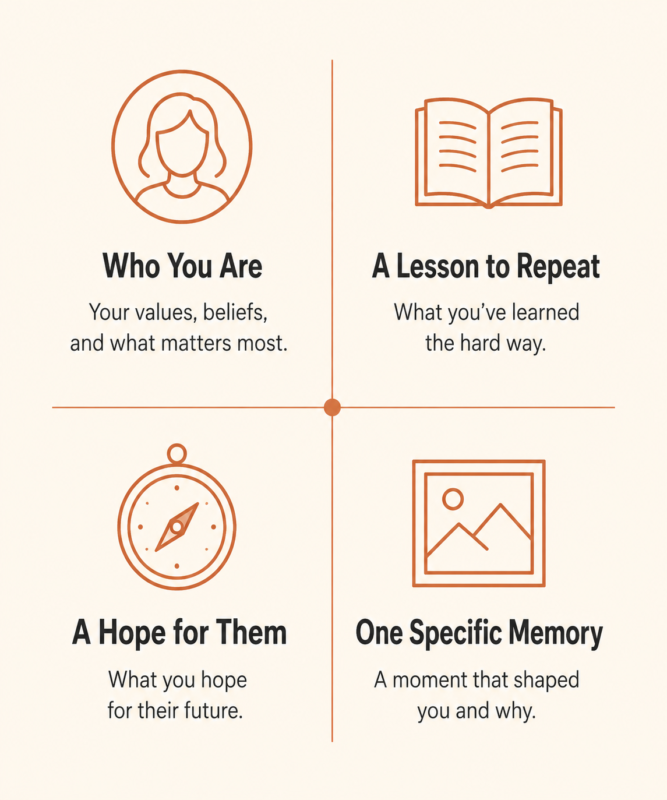
Four categories cover almost everything worth saying.
Who you are, in plain terms. Not your job title or your accomplishments, but how you actually see yourself: what you value, what makes you laugh, what you’d want them to know about you as a person rather than just as a parent.
A lesson you want repeated. Something you learned the hard way, something you wish someone had told you at their age, or something you already catch yourself saying often enough that it’s worth making official.
A hope for who they become. Specific enough to matter, not so specific it turns into a script for their life. The difference between “I hope you’re happy” and “I hope you keep asking questions even when it’s easier not to” is the difference between forgettable and worth rewatching.
One specific memory, tied to them by name. Not a general sentiment about loving your kids. An actual moment: the drive home from the hospital, a fight you still think about, the first time they genuinely surprised you. Specificity is what separates this from a greeting card.
You don’t need all four in one sitting. Pick one prompt, say what comes to mind for two or three minutes, and stop there. A short, specific recording beats a long, vague one every time, which is really the whole idea behind leaving something more meaningful than money without turning it into a production.
Doing It Yourself vs. Hiring a Professional
Professional legacy video services exist, and for the right situation, they’re worth it. Pricing for full production packages, typically including a formal on-camera interview, editing, and a finished multi-chapter video, generally runs from around $6,000 up to $25,000 or more depending on length and complexity.
That range buys real value: a crew, professional lighting and sound, and a polished final product that plays like a documentary.
For most parents recording something for their own kids, none of that is necessary. The DIY version costs nothing but your time and whatever small equipment upgrade you choose to make. That’s the honest trade-off: professional production buys polish and hands-off convenience, while doing it yourself buys immediacy and authenticity at zero cost.
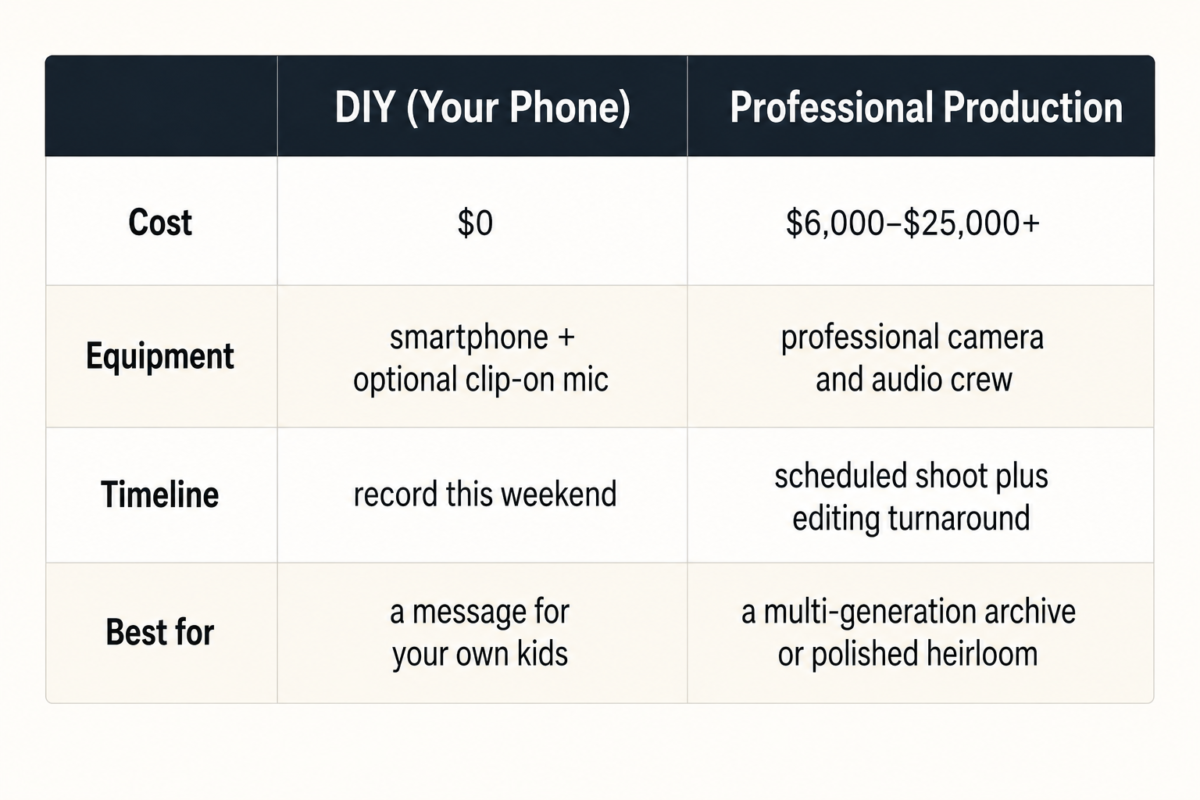
Professional production tends to make more sense for large, multi-generation archive projects meant to cover an entire extended family, situations where a health diagnosis makes time genuinely limited and a guided process actually helps, or when the specific goal is a polished heirloom meant to premiere at a milestone like a wedding.
For a video that’s really just you talking to your kids, the phone already in your pocket is enough, the same way a simple, low-cost way of keeping old memories close can outperform a more elaborate solution nobody actually uses.
How to Record One This Weekend
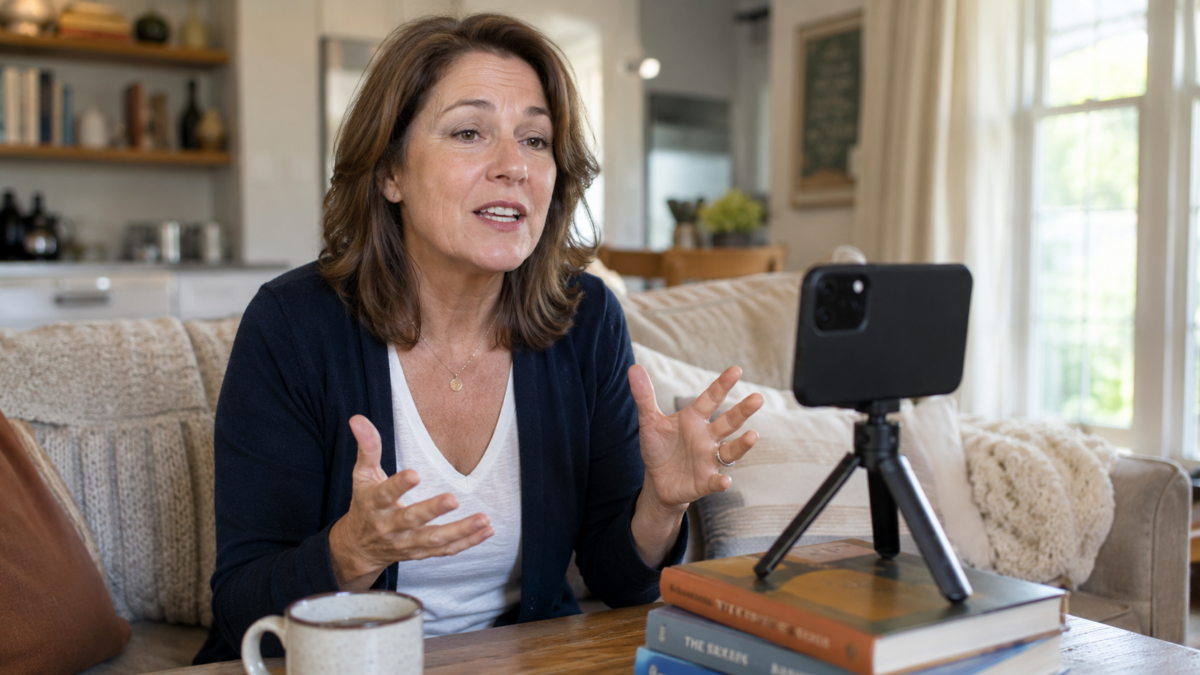
Equipment doesn’t need to go beyond what you already own. A smartphone, a quiet room with decent natural light, and, if you want one small upgrade, an inexpensive clip-on microphone. Audio quality matters more than video quality here. Viewers forgive a slightly shaky shot. They don’t forgive not being able to hear you.
You have two format options, and neither one is wrong. One is a single sit-down recording, fifteen to twenty minutes, covering a few prompts from earlier in one go. The other is several short recordings spread across milestones over months or years, a few minutes at a time, compiled later into something longer.
If the idea of one long recording feels like too much pressure, start with the short version. A two-minute recording that actually exists beats a twenty-minute recording that stays a someday project.
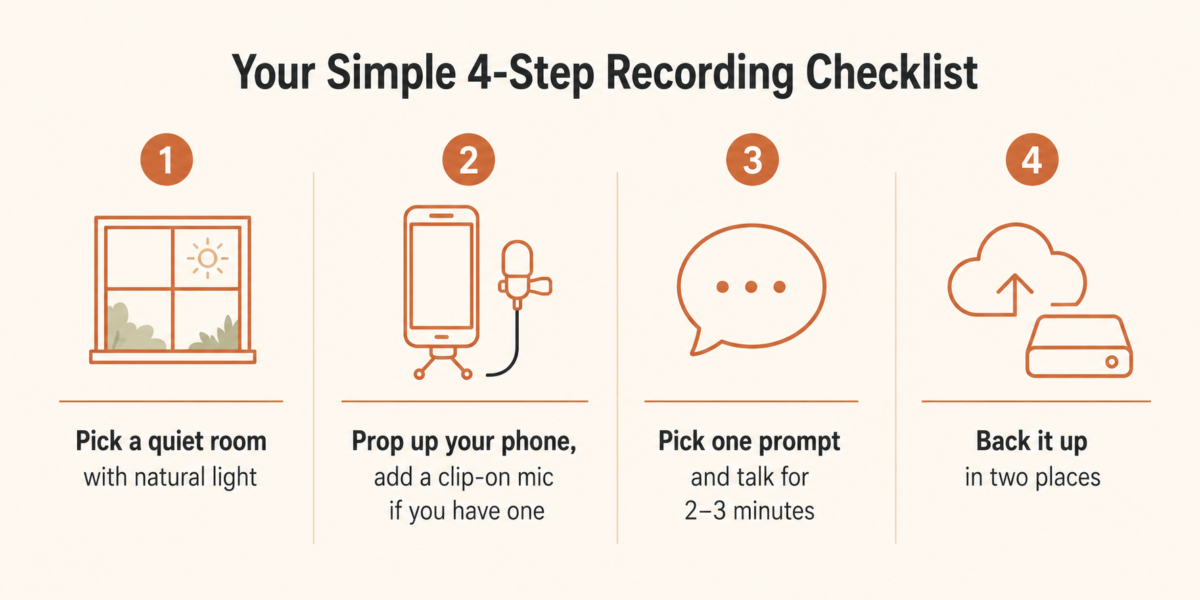
Once it’s recorded, decide on delivery. Some parents hand it over right away. Others save it for a future date: a wedding, a graduation, the day their kid becomes a parent themselves. Either way, back it up in at least two places.
The Library of Congress’s own guide to preserving family stories recommends keeping copies in different locations and formats, which in practice means a cloud backup plus a physical drive you actually check every year or two, not just the phone it was recorded on.
The tools here are identical to the ones used for interviewing a parent about their own life story. Only the direction of the camera changes.
The Bottom Line
None of this requires a script, a studio, or thousands of dollars. It requires deciding your kids are worth five honest minutes on camera, then actually hitting record instead of filing the idea away for later.
If you want a running start, the free 30 Living Legacy Questions PDF gives you a full set of prompts built for exactly this, and many of them work just as well pointed at yourself as they do pointed at a parent.
What’s one thing you’d want your kids to hear directly from you, in your own words, instead of piecing it together after the fact?
Frequently Asked Questions
How is a legacy video different from a legacy interview?
A legacy interview usually means someone else asks you questions about your life, often an aging parent being interviewed by an adult child. This kind of video is one you create yourself, on your own terms, specifically for your own kids to watch.
Do I need professional equipment to make one?
No. A smartphone, a quiet room, and decent lighting are enough. Audio quality matters more than video quality, so a simple clip-on microphone is a worthwhile small upgrade if you have one on hand.
What should I actually say?
Start with specifics: a memory tied to them by name, a lesson you want repeated, and one honest hope for who they become. General statements matter less than the details only you know.
Should I record one long video or several short ones?
Either works. Some parents record one sit-down conversation. Others record short videos tied to milestones like birthdays or graduations, then compile them later.
How much do professional legacy video services cost?
Professional legacy video production typically runs from around $6,000 to $25,000 or more, depending on interview length, editing, and whether it’s built as a multi-chapter documentary. A DIY version costs nothing but your time.