
Picture lunch eaten over the kitchen sink, another coffee, and an afternoon spent wondering why your waistband feels tighter. When digestion gets uncomfortable, it’s tempting to decide that your body has suddenly become difficult. Gut health after 40 can start with a less dramatic question: what actually changed?
Gut health after 40 starts with gradual fiber changes, adequate fluids, regular movement, and paying attention to symptoms. There is no universal reset or age deadline. Make one modest habit change at a time, and seek medical advice for persistent symptoms or warning signs such as bleeding, severe pain, or unexplained weight loss.
Please note this page may contains affiliate links. If you purchase something through these links, I’ll receive a commission at no extra cost to you. Affiliate links help to support my website/blog and I only recommend products I love.
The idea here is to make your ordinary day easier to understand. You don’t need to buy a cupboard full of supplements before you can notice that lunch has become rushed or your bathroom routine has disappeared.
This guide gives you a practical starting point, a short note you can actually keep, and clear reasons to get help. It offers general education about everyday habits. A new digestive problem still needs its own explanation.
Table of Contents
Gut health after 40 starts with noticing what changed
Forty is not an expiration date for comfortable digestion. The National Institute of Diabetes and Digestive and Kidney Diseases, or NIDDK, describes several possible contributors to constipation, including medicines, changes in routine, food, fluids, activity and medical conditions. That is a more useful starting point than blaming a birthday.
First, describe what you mean by a gut problem. Is it gas after meals, hard stools, painful bowel movements, diarrhea, or a new pattern you can’t explain? Those experiences are different, even when an advertisement puts them all under the same gut-health label.
The NIDDK constipation guide, reviewed in May 2018, includes hard or difficult-to-pass stools in its description. Counting bathroom visits alone can miss what is bothering you. Write down the actual symptom, in ordinary words.
Some gas is part of digestion. NIDDK explains that swallowed air and the breakdown of carbohydrates can both contribute, so gas by itself does not identify an unhealthy microbiome. Its gas symptoms guide also advises discussing symptoms that bother you or change suddenly with a doctor.
For some people, perimenopause belongs in this conversation. In a Cleveland Clinic discussion of digestion during menopause, obstetrician Catherine Caponero describes digestive concerns that can overlap this stage of life. That gives you a question to bring to an appointment, not a reason to assume hormones explain every symptom.
Think about the wider timeline, too. A new prescription, an iron supplement, travel, a different work schedule or a change in meals may be relevant. For gut health after 40, a clear description is more useful than a confident guess about the cause.
Start with food, and add fiber gradually
If constipation is part of the problem, fiber is a sensible place to review your routine. NIDDK’s food and nutrition guidance for constipation, reviewed in May 2018, recommends adding fiber gradually. Going from very little to a large amount overnight is not the goal.
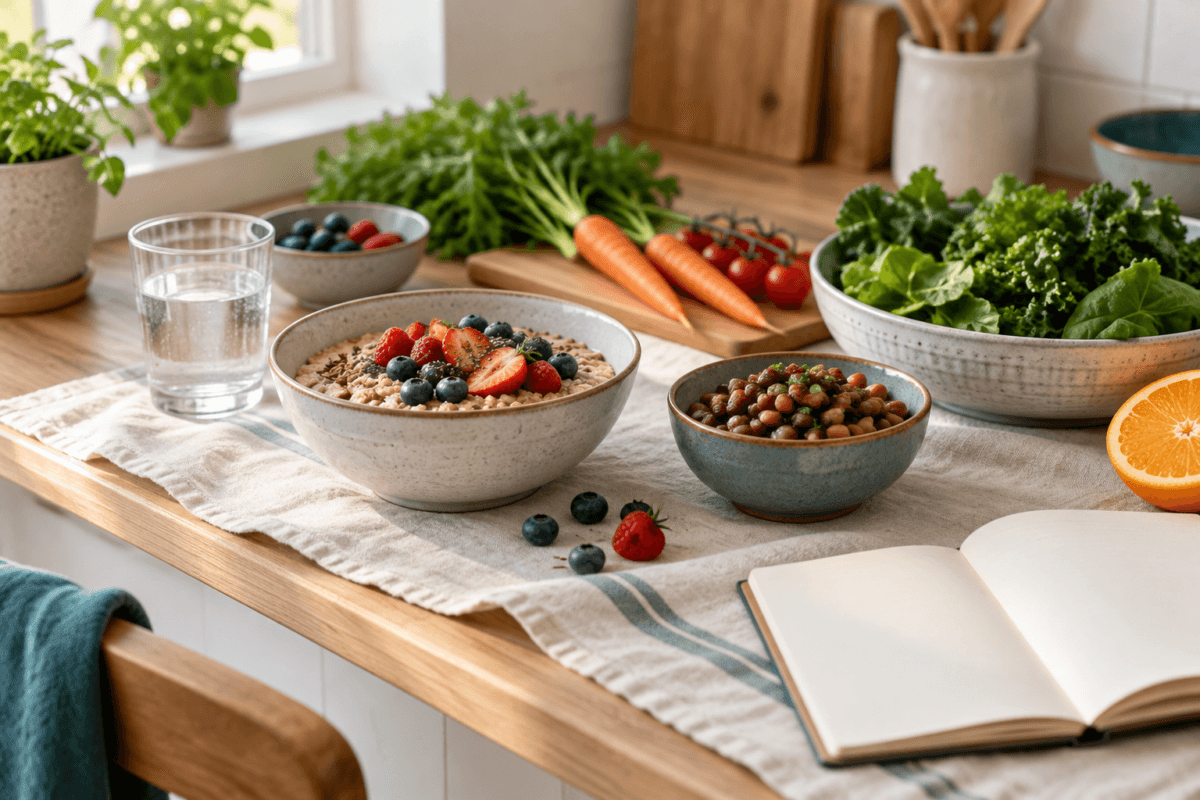
That can be wonderfully ordinary. Look at foods such as oats, beans, berries, vegetables and whole grains that NIDDK identifies as fiber sources. Choose a familiar option you like, rather than designing an impressive breakfast you will abandon by Thursday.
Imagine someone who normally eats toast in a hurry. A modest change might be adding a small serving of a familiar fruit, rather than replacing breakfast with a huge bowl of bran, seeds and unfamiliar powders. This is an example of keeping a change manageable, not a meal prescription or a promise about symptoms.
Fluid belongs in the picture, too. NIDDK explains that adequate fluids help fiber do its job, while individual needs differ. If a clinician has given you fluid restrictions or a specific eating plan, follow that advice rather than a water target from a blog.
Gut health after 40 also doesn’t require turning fermented food into homework. Johns Hopkins’ five ways to support gut health, reviewed by gastroenterologist Gerard Mullin, discusses foods such as yogurt and kefir. They can be options if you enjoy and tolerate them; you do not need to force yourself to eat something that makes you uncomfortable.
Food and a probiotic supplement are different decisions. The National Center for Complementary and Integrative Health, or NCCIH, explains that probiotic usefulness and safety depend on the situation and the product. A general gut-health label is not enough to tell you which strain, if any, would help your particular problem.
If you’re considering a supplement because symptoms persist, bring the question to a health professional. That matters especially if you have a serious underlying illness or a weakened immune system. Keep the conversation focused on what is happening, rather than how many products you can add.
Give digestion a less rushed day
Your day may offer a smaller place to start than your shopping list. NIDDK’s guidance on eating and gas includes eating more slowly and looking at habits that increase swallowed air. Sitting down for lunch might be a more realistic first experiment than rebuilding every meal.
If fizzy drinks seem connected to discomfort, make a note of when you have them. Don’t turn one uncomfortable afternoon into a permanent food rule. A pattern is something to discuss and investigate, not a verdict after one meal.
Regular movement and a bathroom routine can also support constipation care, according to NIDDK’s treatment guidance. Give yourself time to use the bathroom and avoid routinely ignoring the urge. A packed morning can make that surprisingly difficult, even when you know better.
For movement, start with something that fits the day you actually have. Our walking after 40 guide offers ways to build a manageable walking routine. A comfortable walk belongs in a broader routine; it is not a guaranteed fix for a digestive condition.
In his realist’s guide to longevity habits, J describes wanting to carry his own luggage and get up from the floor with grandchildren. That is a concrete reason to care about everyday health. Gut health after 40 can fit that same practical aim: feeling well enough to participate in your life.
Sleep and stress deserve a look without becoming another assignment. Johns Hopkins includes both in its general advice for supporting gut health. Notice whether late nights, tense days or rushed meals cluster around uncomfortable days, while remembering that an association does not explain the cause.
For gut health after 40, the useful question is where your routine has become hard to maintain. Perhaps you need a lunch break you actually take, or a little more breathing room in the morning. Pick the part you can realistically change.
Use a seven-day note, not a seven-day cure
A week gives you a convenient place to organize observations. It does not prove that your gut has healed, and it is not a reason to delay care. The note below is an everyday planning tool, not a diagnostic test.
NIDDK suggests a food-and-symptom diary as something that can help a doctor understand gas symptoms. You can keep yours brief enough to use without tracking every mouthful. The aim is to arrive with clearer information, not to police yourself.
- What happened: Describe the symptom and roughly when it appeared.
- What the day looked like: Note relevant meals, drinks, movement, sleep, travel or changes in routine.
- What changed: Record the one modest habit you chose, plus any medicine or supplement changes to discuss with your clinician.
For example, an entry might say: “Tuesday afternoon: uncomfortable gas after a rushed lunch and a fizzy drink. Mostly seated today. Went to bed late Monday.” This is a fictional example of useful detail, not evidence that any one item caused the symptom.
Choose one modest change that suits your circumstances. You might sit down and eat lunch more slowly, make room for a comfortable walk, or add a familiar fiber-containing food gradually. Keep the rest of the routine reasonably steady so you can describe what happened.
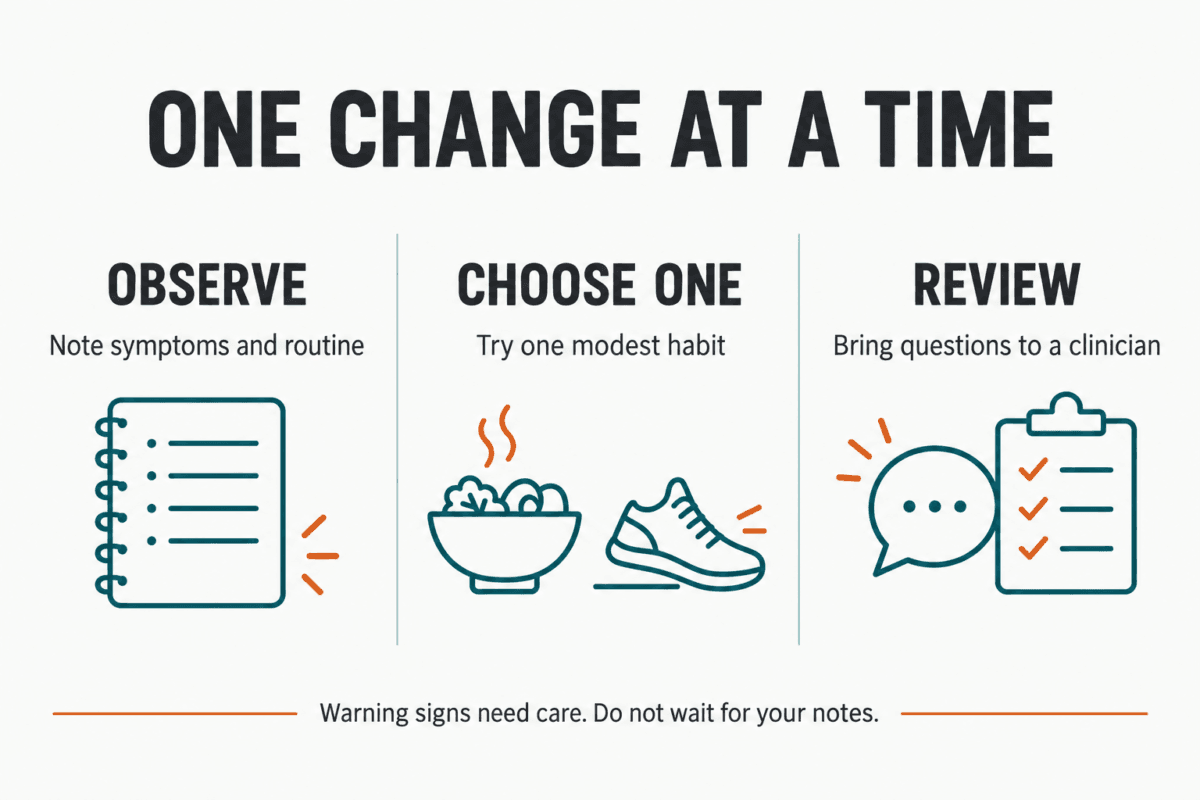
At the end of the week, look for what you can honestly say. Perhaps the habit was easy to keep; perhaps symptoms were unchanged; perhaps the notes raise a question for a clinician. “I don’t know yet” is a perfectly useful finding.
Gut health after 40 becomes harder to understand when breakfast, supplements, exercise and an elimination diet all change together. If you feel different, you won’t know which change mattered. If you feel worse, the same confusion applies.
Avoid calling the week a cleanse. NCCIH’s detox and cleanse guidance, updated in March 2025, describes limited support for detox claims and potential harms from some restrictive or laxative-based approaches. There is no need to add those risks to a simple observation exercise.
If the notes show that sleep, meals and movement all need attention, give yourself permission to choose a starting point. Gut health after 40 does not need to become a second job. The Midlife Energy Audit below can help you think about your broader routine without treating it as a medical assessment.
Find What Is Draining Your Energy
Use the free Midlife Energy Audit to track sleep, movement, stress, connection, and daily rhythm for seven days so you can see what is actually helping and what is draining you.
Know when a habit change is not enough
Warning signs take priority over the plan. NIDDK advises getting medical help right away for constipation with rectal bleeding or blood in the stool, constant abdominal pain, inability to pass gas, vomiting, fever or unintended weight loss. Don’t wait to finish your notes if those symptoms occur.
Other symptoms still deserve a conversation even without that list. NIDDK recommends talking with a doctor about gas that bothers you or changes suddenly, particularly when pain, diarrhea, constipation or weight loss accompanies it. If symptoms persist or self-care is not helping, ask for an assessment.
This is where a concise note earns its place. Say when the problem started, what it feels like, whether the pattern is changing, and which medicines or supplements you take. Our one-page health snapshot can help organize the medication and background information for that visit.
Do not stop a prescribed medicine because you suspect it affects digestion. NIDDK advises discussing medication changes with a health professional. The same conversation is a good place to ask about supplements and any proposed dietary restrictions.
An appointment is not a failure of your habits. Gut health after 40 includes knowing when a problem needs more than a different breakfast. You can pay attention to daily routines and ask for help at the same time.
Build a routine you can live with
Start with a clear description, one manageable habit and enough honesty to admit what you haven’t figured out. Gut health after 40 does not have to mean a strict diet or a shelf of new bottles. It can mean making ordinary days easier to understand, while giving symptoms the attention they deserve.
If your symptoms need care, make that the next step. If a routine change is appropriate, choose one you can keep on an ordinary Tuesday. Which part of your day has become the hardest to make room for: an unhurried meal, movement, or time to use the bathroom?
Questions about gut health after 40
Does digestion always slow after 40?
No. Turning 40 does not explain every digestive change. Diet, activity, medicines, changes in routine and health conditions may contribute, so new or persistent symptoms deserve attention rather than an automatic explanation based on age.
Should I add lots of fiber at once?
No. NIDDK recommends increasing fiber gradually and getting adequate fluids. Start with manageable food changes, and follow any individual eating or fluid guidance your clinician has given you.
Do I need a probiotic supplement?
Not automatically. NCCIH explains that probiotic benefits depend on the condition and the product, and there is uncertainty about which products help particular problems. Discuss persistent symptoms and supplement safety with a health professional.
Can a seven-day reset fix my gut?
A week of notes can help you organize observations, but it cannot prove that a digestive problem is fixed. Use it as a planning tool, avoid cleanse promises, and get care when symptoms need assessment.
When should I get medical help?
Seek help right away for constipation with bleeding, constant abdominal pain, inability to pass gas, vomiting, fever or unintended weight loss. Also discuss persistent, bothersome or suddenly changed digestive symptoms with a clinician.