

Table of Contents
I remember my first real attempt at meditation. I was forty-five. I was running on fumes, stale coffee, and a looming sense of dread about my inbox. I sat cross-legged on the living room rug on a rainy Tuesday. I closed my eyes. I waited for peace.
Instead, I got a loud, looping inventory of my failures. Did I pay the water bill? Is the transmission slipping? Should I have pushed back harder in that meeting? By minute three, my chest was tight. Sitting in silence wasn’t bringing me clarity. It was just giving my anxiety a microphone.
That is when I knew I needed help. I went looking for an effective guided meditation practice that actually made sense for a stubborn, restless brain. What I learned that morning, and what I would share with you over coffee, is this: you don’t need to endure a silent void to find your footing.
Please note this page may contains affiliate links. If you purchase something through these links, I’ll receive a commission at no extra cost to you. Affiliate links help to support my website/blog and I only recommend products I love.
Why I Needed a Guide to Effective Guided Meditation
The problem with the whole “zen” stereotype is the silence. You are told to clear your mind. You are told to let thoughts float by like clouds. But my brain is a highly trained problem-solving machine. Give it a blank slate, and it starts hunting for things to fix.
I was losing the battle. I needed training wheels. I needed someone else’s voice to drown out my own.
A recorded guide acts as a guardrail. When my mind drifted to a stressful email, a calm voice would chime in. It would remind me to notice my posture, or just feel my shoulders drop. It was a tiny shift. But it took the pressure off. I didn’t have to be a monk. I just had to listen.
The Real-Life Benefits (No Crystals Required)
I need to be perfectly clear from the start: I’m not into singing bowls or aligning chakras. My reason for starting this was simply that I was overreacting to minor things in traffic, like a slow driver in the fast lane, and lacking focus at work.
Here is what a grounded practice actually does for you:
- You respond instead of reacting: This is the holy grail. When someone cuts you off in traffic, you get a microsecond of space. You choose your reaction, rather than just exploding.
- You sleep better: Nighttime stops being a highlight reel of your worst mistakes from 2014. You learn how to manually hit the power button on your thoughts.
- You lower your baseline agitation: The daily friction of life just doesn’t stick to you as much. Slow Wi-Fi or a lost set of keys becomes a minor speed bump, not a day-ruiner.
How to Set Up for Success (Without Feeling Ridiculous)
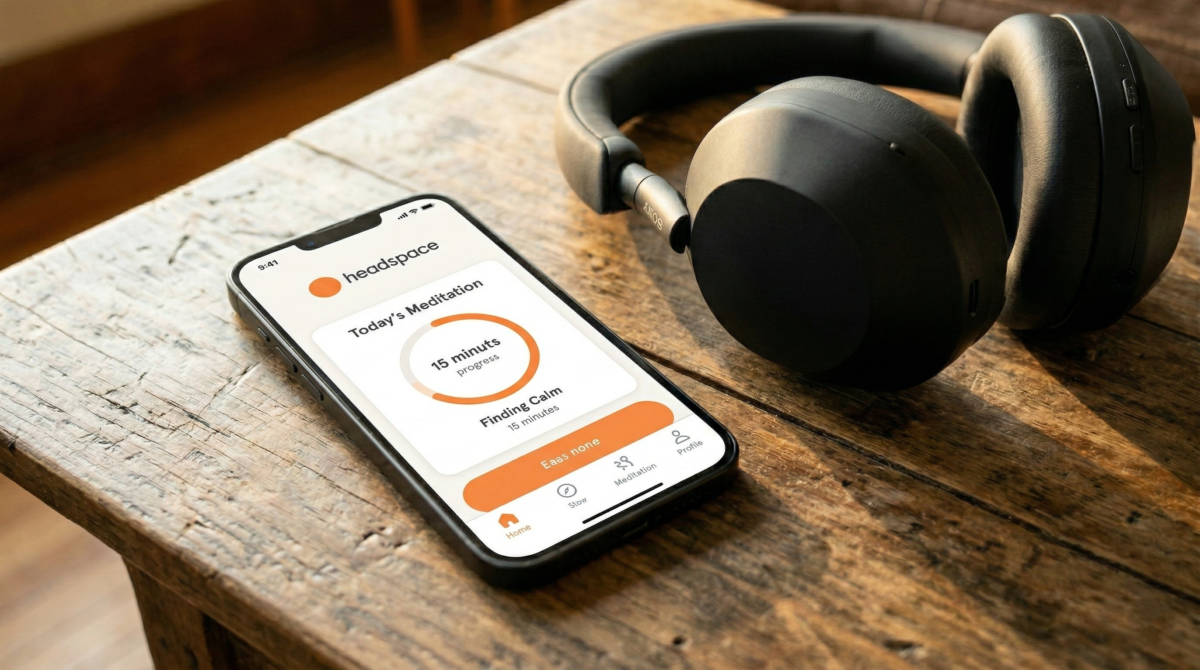
You don’t need a dedicated room for this. You just need ten minutes.
- The Environment: Forget the perfect setup. Some of my best sessions happen in the driver’s seat of my parked truck before getting groceries. A quiet corner of the couch is fine. Just find a spot where nobody will ask you a question.
- The Gear: You need one thing. Good noise-canceling headphones are a game-changer. They block the dog barking and the hum of the fridge. More importantly, they put the guide’s voice right between your ears. I use WYZE Noise Canceling headphones, but standard earbuds work fine if they seal well.
- The Timing: Don’t try for an hour. Start with ten minutes. I do it early in the morning, right after I pour my coffee. If I wait until night, I fall asleep. Link it to something you already do every single day.
Finding the Right Voice for Your Practice

The teacher’s voice will make or break this habit. If they sound breathy or fake, you will hate it. It takes trial and error.
Here is how the options stack up.
- Meditation Apps (Headspace, Calm, Waking Up):
- Pros: Great step-by-step courses. Clean interfaces. Waking Up by Sam Harris is excellent if you want a practical, no-nonsense approach to how the mind works.
- Cons: Subscription fatigue. The good stuff is locked behind a paywall.
- YouTube:
- Pros: Endless options. Totally free. You can search for exact times and styles.
- Cons: The ads will ruin your life. Nothing kills a moment of calm like a blaring commercial for truck insurance. You absolutely need an ad-blocker or premium account to use this route.
- Podcasts:
- Pros: Great for the commute. Easy to throw on while walking the dog.
- Cons: Audio quality is hit or miss. Finding a logical sequence for beginners is annoying.
Dealing with Distractions and “Doing it Wrong”
This is where everyone quits. You sit down. You close your eyes. Ten seconds later, you are arguing with your boss in your head. You get mad. You decide your brain is broken.
Here is the shift. Noticing that you got distracted isn’t failing. It is the whole point.
The second you realize you are thinking about lunch, you have woken up. You broke the trance. Pulling your attention back to the breath is a bicep curl for your brain. You will get distracted. Welcome it. It is just another chance to practice coming back. You aren’t trying to empty the ocean. You are just learning how to sit on the beach and watch the waves.
The Takeaway
Meditation won’t fix your mortgage. It won’t clear your inbox. But it changes how you handle the stress of both. It builds a buffer.
If you are skeptical, I get it. But give it three days. Grab your headphones. Sit in your car. Just listen and breathe. You might be surprised by what ten quiet minutes can do. If you want the research behind why this works, the science of meditation goes deep on that. And if you’re working through bigger questions about direction and purpose, discovering what you actually want from this phase of life is worth sitting with.
Comments are closed.