

Table of Contents
The Los Angeles Times once reported a number that stops most people cold: the average American home holds around 300,000 things. The figure comes from professional organizer Regina Lark, and while nobody has run a formal inventory to confirm the exact count, anyone who has opened a garage after twenty years in the same house knows it is not far off. That is the household you are staring down when a move is on the calendar.
If you are figuring out how to use AI to declutter before a move after 50, you already know the standard advice by heart. Start early. Sort room by room. Keep, donate, sell, trash. It is not wrong, it is just useless when you are the one standing in a closet full of decades and no idea where to start. What that advice never tells you is which tool actually removes any of the mental load.
This post is not another generic checklist. It matches specific AI apps and prompts to the actual stages of a move: sorting a room, pricing what is worth selling, planning where things will fit in the new place, and handling the boxes you cannot make yourself open yet. By the end, you will know exactly which app to open first.
Please note this page may contains affiliate links. If you purchase something through these links, I’ll receive a commission at no extra cost to you. Affiliate links help to support my website/blog and I only recommend products I love.
Why Downsizing After 50 Feels So Much Harder Than It Should
There is a reason clearing out a college apartment feels nothing like clearing out the house you raised kids in. Items pick up sentimental weight the longer they sit in your life. The worry was never really about losing the object. It is about losing the story attached to it: the table where you signed divorce papers or wedding invitations, the dresser your mother gave you, the box of school papers nobody has opened since the kid who wrote them left for college.
A retirement research study from Merrill Lynch and Age Wave found that among retirees who relocated after retiring, 51 percent moved into a smaller home. That is a lot of households compressing decades of belongings into a fraction of the space, on a deadline, usually while also managing a home sale, a new mortgage or lease, and everything else retirement is supposed to simplify.
Generic moving guides handle the logistics. What they skip is the specific, practical question underneath all of it: how do you actually decide, item by item, without spending three months doing it? That gap between “start early” and an actual decision is exactly where knowing how to use AI to declutter before a move starts to matter.
If sorting through belongings has you thinking harder about what “enough” even means, our deeper look at what minimalism actually means digs into that question separately from the move itself.
How to Use AI to Declutter Before a Move: The Apps That Sort For You
Here is where the actual answer to how to use AI to declutter before a move starts: with the apps built to make the keep-or-go decision for you, room by room.
Declutter: AI Home Organizer works from a single photo. Point your phone at a room, and it analyzes what is there, suggests a cleaning plan broken into small, achievable tasks, and shows what the space could look like once it is sorted.
It is built around a version of the 4-box method: every item gets sorted into Keep, Relocate, Donate or Sell, or Trash, which turns “clean out the guest room” from an overwhelming blob of a task into a list of forty small decisions instead of one enormous one.
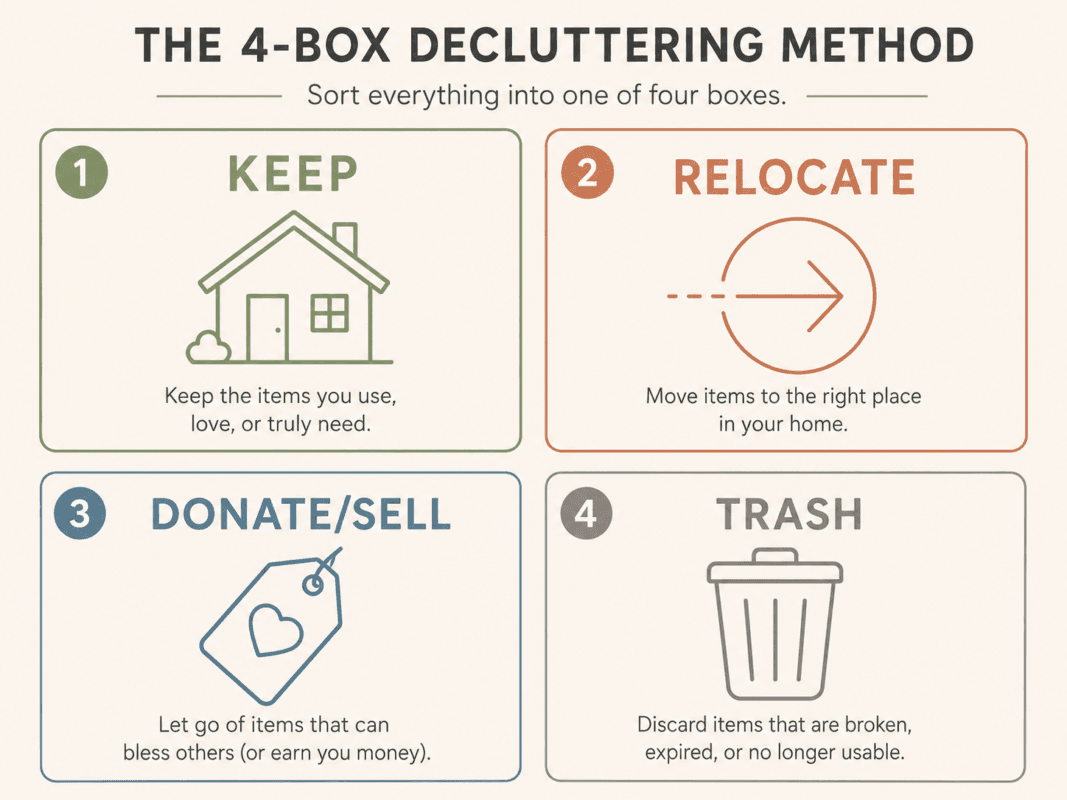
Let ChatGPT Build Your Room-by-Room Plan
If you already use ChatGPT for anything else, it can generate a customized sorting plan without downloading a new app at all. Describe a room, how much time you have, and ask it to build a checklist using the KonMari method, the 20/20 rule (if you could replace an item for under 20 dollars in under 20 minutes, it does not need to survive the move), or a straightforward 5-box system.
How to Use ChatGPT in Everyday Life: 25 Examples has more prompts if this is the first time you have thought about ChatGPT as anything other than an email-writing tool.
Let AI Tell You What Your Stuff Is Actually Worth
Deciding what to sell is only half of how to use AI to declutter before a move. Pricing it is the part that eats an entire Saturday, and it is the part AI handles best.
ResaleScan works by photo: point your camera at a lamp, a dresser, a set of dishes, and it compares the image against current and recently sold listings to estimate a realistic asking price in seconds instead of the twenty minutes you would spend scrolling eBay’s sold listings yourself. DeClutter goes a step further and automates the whole listing process.
It identifies the item, writes the title and description, prices it from real resale comps, and posts it across eBay, Vinted, Depop, and other marketplaces at once, which matters if selling everything on a single platform sounds like a part-time job you do not have time for.
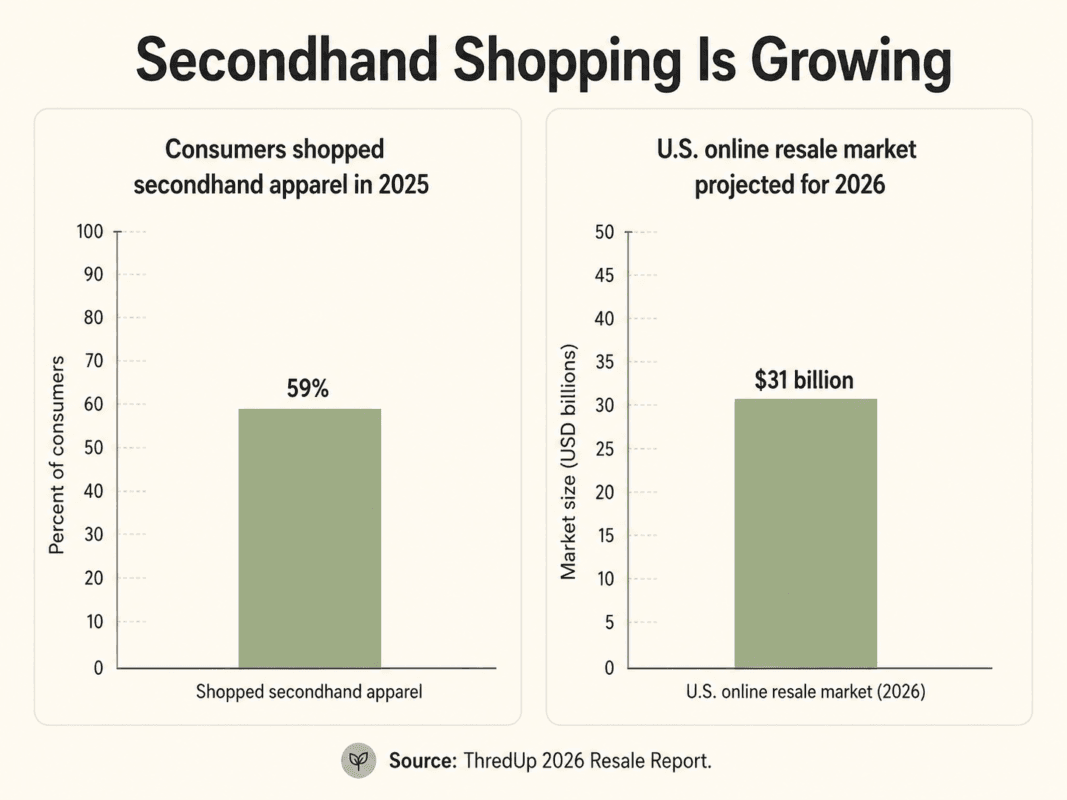
That listing speed matters more than it used to. ThredUp’s 2026 Resale Report found that 59 percent of consumers shopped secondhand apparel in 2025, up sharply over the past three years, and projects U.S. online resale will reach 31 billion dollars in 2026.
There is a real, active market waiting for the things you are ready to let go of. It is just a matter of getting them listed instead of piled in the garage for six months. For a system to track what has sold, what got donated, and what is still sitting in the “figure out later” pile, How to Build a Personal Knowledge Base With AI After 40 walks through setting one up.
Use AI to Plan the Space You’re Moving Into Before You Pack a Box
Most downsizing advice tells you to picture your new place before you start packing. Almost nobody tells you how to actually do that with any precision, which is why “picture it” usually turns into guessing. This is another place where knowing how to use AI to declutter before a move pays off.
Planner 5D and similar AI layout tools let you build a scaled floor plan of the new space and test furniture arrangements before moving day, so “will the sectional fit” stops being a question you answer with a tape measure and a prayer.
Remodel AI takes a single photo of an empty room and generates a photorealistic redesign in about ten seconds, which is useful for visualizing what a smaller space could actually look like furnished, not just how big it is on paper.
Once you can see the new place with your furniture in it, “what to keep” turns into a concrete fit question instead of an abstract one. That oversized china cabinet either fits against that wall or it does not, and now you know before the moving truck shows up. If any of this is your first real attempt at using an AI tool for anything, AI for Beginners Over 50: How to Start Without Overwhelm is worth reading first.

What to Do With the Sentimental Stuff AI Can’t Decide For You
No app is going to tell you whether to keep your grandmother’s china or your kid’s second-grade art. That decision is still yours, and it is the one that actually slows people down.
Matt Paxton, the downsizing expert behind AARP’s guidance on coping with a move, recommends photographing or scanning sentimental items before letting them go. You keep the memory of the object without keeping the object itself, which sounds like a small trick until you have actually done it with a box of your kids’ old artwork and felt the difference.
AARP’s own coverage of Paxton’s approach also recommends starting with the lowest-stakes rooms first, the laundry room, the junk drawer, the garage shelf nobody has touched in years, before you tackle anything with real emotional weight attached. Momentum built on easy decisions makes the hard ones easier when you get there.
This is where AI genuinely cannot help, and that is fine. A scanning app can digitize a photo of the item once you have decided to let it go. It cannot make the decision for you, and it should not try to. If the whole idea of owning less still feels tangled up with what you are willing to give up, Embracing Minimalism: How We Found Freedom by Letting Go of Materialism covers that side of it directly.

A Simple Week-by-Week AI-Assisted Downsizing Timeline
Most moving guides recommend starting two to three months out, and that estimate holds up. Sorting and packing take longer than anyone expects, every single time. Here is roughly how the tools above fit into that window:
- Weeks 1-2: Run Declutter: AI Home Organizer or a ChatGPT-generated sorting plan on the lowest-stakes rooms first: laundry room, garage, junk drawers.
- Weeks 3-5: Move into bedrooms and living spaces. Start scanning items with ResaleScan and listing through DeClutter as you go, rather than saving all the selling for the end.
- Weeks 6-7: Use Planner 5D or Remodel AI to test furniture arrangements for the new space, so you know what is actually making the trip.
- Weeks 8-9: Handle the sentimental boxes last, once the rest of the house is already lighter. Photograph what you are letting go of.
- Final 2 weeks: Pack what remains, finalize sold and donated items, confirm the new space one more time against your layout plan.
Nothing about that timeline requires doing everything alone or doing it perfectly. It requires doing a little each week instead of all of it the weekend before the truck arrives.
The Bottom Line
That is really the whole answer to how to use AI to declutter before a move: it removes the logistical friction, what is worth selling, what fits in the new place, how to sort a room without staring at it for an hour first. What it cannot do is the emotional work of deciding what a life’s worth of belongings actually means to you. That part was always going to be yours, and it is supposed to take some time.
If you are staring down a move and do not know where to start, pick one low-stakes room this week and try one tool from this list. That is the whole trick. Not doing it all at once, just doing the next room.
Want more of this kind of practical, no-fluff guidance on the tools that actually make midlife easier? Join our newsletter to follow along for more posts like this one.
What’s the one thing you know you’re dreading having to decide about when it’s time to downsize?
Frequently Asked Questions
Can AI really help me decide what to keep when I’m downsizing?
AI apps cannot make the emotional decisions for you, but they can remove the small logistical ones. Photo-based organizing apps suggest keep, donate, sell, or trash using the 4-box method, and resale scanners tell you what is actually worth selling, so your energy goes toward the decisions that matter.
What are the best AI apps for decluttering before a move?
Declutter: AI Home Organizer identifies items in a room from a photo and suggests an action for each one. ResaleScan estimates resale value from a photo, and DeClutter automates listing items across eBay, Vinted, and Depop. ChatGPT can also generate a custom room-by-room decluttering plan using methods like KonMari or the 20/20 rule.
How far in advance should I start decluttering before a move?
Most moving guides recommend starting two to three months before moving day, since sorting and packing always take longer than expected. Starting with low-stakes rooms first, like the laundry room or a junk drawer, builds momentum before you tackle sentimental spaces.
What should I do with sentimental items I don’t have room for?
Take a photo or scan the item before letting it go, so you keep the memory without keeping the object. AARP’s downsizing guidance, based on Matt Paxton’s approach, specifically recommends this for photos, letters, and keepsakes that carry more emotional weight than practical value.
Can AI tell me how much my old furniture or belongings are worth?
Yes. Resale-scanning apps like ResaleScan use your phone’s camera to identify an item and compare it against thousands of current and recently sold marketplace listings to estimate a realistic asking price, which saves the guesswork of pricing everything yourself.