

Table of Contents
We all know the feeling. You step off the plane in a new time zone. You spent 14 hours flying to reach a city, and now you are lying in a pitch-black hotel room. The silence is heavy. You look at the glowing red numbers on the bedside clock. It is exactly 3:14 AM. Your body is convinced it is mid-afternoon, your brain feels like it is running on a low battery, and the street outside is dead silent.
Every time I travel, I look for a magic cure. The truth is there is no magic cure, but over years of trial and error across Europe, Australia, and Asia, I have built practical tips for handling jet lag. It is not based on clinical studies. It is based on real nights spent staring at hotel ceilings.
Please note this page may contains affiliate links. If you purchase something through these links, I’ll receive a commission at no extra cost to you. Affiliate links help to support my website/blog and I only recommend products I love.
The Delirium of Time Travel
There is a specific kind of delirium that comes with crossing oceans. It is that quiet, strange realization that your physical body is standing in tomorrow, but your internal clock is stubbornly anchored in yesterday.
I remember sitting in a small cafe in London at four in the morning. I was the only customer. I ordered a black coffee and just watched the empty, wet street outside. It was exhausting, but it was also surprisingly peaceful. You get to see the city completely still before everyone wakes up and the daily rush begins. That is the reality of time zone hopping. You do not just skip hours. You push them off, and your body eventually demands them back.
Why Most Tips for Handling Jet Lag Are Unrealistic
The experts always tell you to shift your sleep schedule by an hour each night for a week before your flight. I have never met a real person who actually does this.
Who actually has the luxury of doing that? I usually make a detailed packing list. I even get my suitcase zipped up a day or two before the flight. But even with the bags sitting by the door, the mental scramble is very real. I am frantically wrapping up projects at work, trying to clear out my inbox, and making sure every last daily responsibility is handled. We have to do all of this just so we can actually unplug for a week without the stress following us across the ocean.
Here is why the standard advice usually fails:
- It ignores pre-trip anxiety: You are already sleeping poorly because you are worried about missing your flight or forgetting something crucial.
- It assumes a flexible life: Most of us cannot just decide to go to bed at 6:00 PM on a Tuesday because we are flying to Europe on Friday.
- It relies on perfect execution: One delayed connection or crying baby in row 14 throws the whole mathematical sleep formula out the window.
The reality is that you will probably board your flight exhausted. That is okay. Let go of the guilt. The goal is not perfection. The goal is managing the damage. Do not stress about sleep schedules before you leave. Focus on getting to the airport with everything you need. The time zone adjustment can wait until you are in the air.
In the Air: The First Steps of Your Jet Lag Survival Guide
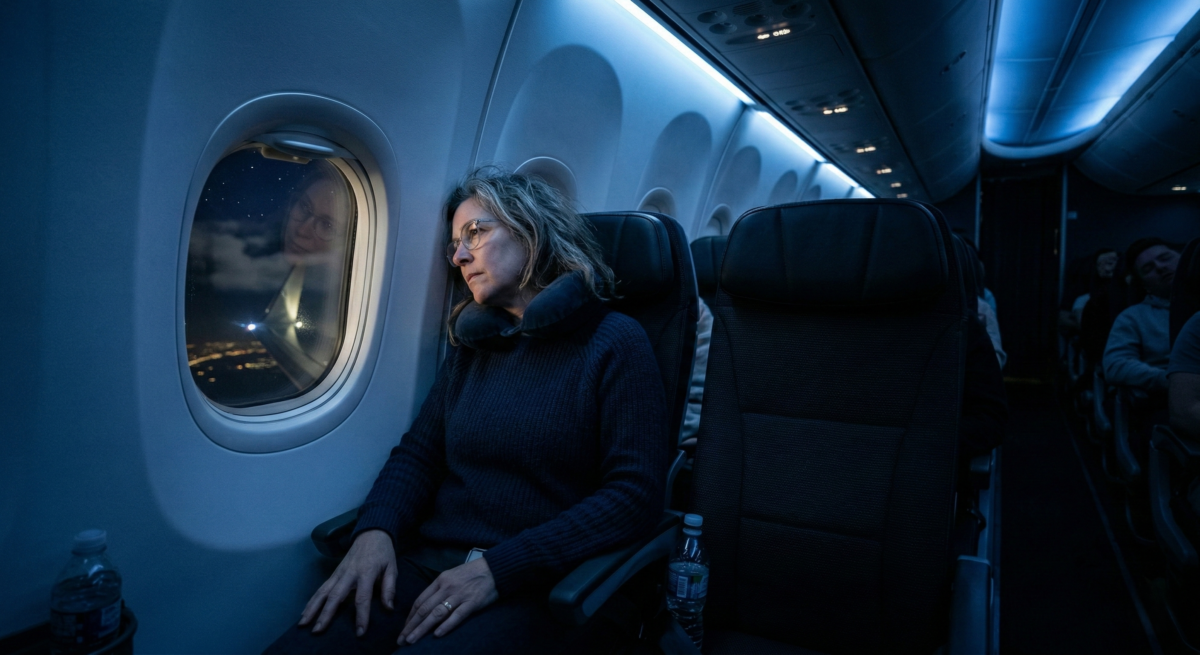
The flight is where the transition begins. The air up there is dry. Your body is confused. I used to fight the airplane environment and twist into pretzels trying to force sleep. Now, I lean into acceptance. If I sleep, great. If I watch three movies in a row, that is fine too.
- Set your watch immediately: The moment you sit down, change your watch or phone to the local time of your destination. Start mentally living in that time zone immediately.
- Drink water constantly: Buy the biggest bottle of water you can find after security. Airplane cabins are essentially flying deserts, and airline cups are simply too small. Drink twice as much water as you think you need. Dehydration mimics and amplifies the symptoms of exhaustion.
- Use noise-canceling headphones: Tools like the Bose QuietComfort, Sony WH-1000XM6, or WYZE Noise Canceling headphones
are absolute lifesavers. They block the engine drone and help lower your physical stress. - Skip the alcohol: A glass of wine feels nice in the moment, but it will ruin whatever poor quality sleep you manage to get.
The First 24 Hours on the Ground (The Danger Zone)

You land. The adrenaline hits you. You navigate customs, find a taxi, and look out the window at a brand new city. The excitement is very real. But a few hours later, right around 3:00 PM local time, the physical crash arrives.
Your body will beg for mercy. The hotel bed will look like the most inviting place on earth. You have to resist. You have to push through until a locally acceptable bedtime.
- Drop your bags and leave immediately: Do not sit on the edge of the bed. The bed is a trap.
- Seek out blinding natural light: Sunlight stops melatonin production. It is the only language your circadian rhythm understands. Walk around, find a park, and let the sun hit your face.
- Keep your body moving: Light, sustained physical activity is your best friend. Walk the neighborhoods to learn the layout. Do not go to a museum where the quiet, climate-controlled environment will put you right to sleep.
- Eat at local times: Force yourself to eat lunch at noon, even if your stomach thinks it is midnight.
- Use coffee as a tool: A lot of travel blogs will tell you to completely avoid caffeine. That is absurd. Have a strong cup in the morning, but cut off all caffeine by 2:00 PM local time.
- The 20-minute nap rule: If you absolutely must sleep, set a hard, non-negotiable alarm for 20 minutes maximum. Anything longer, and you will wake up feeling like you were hit by a bus.
The 3 AM Midnight Rebellion
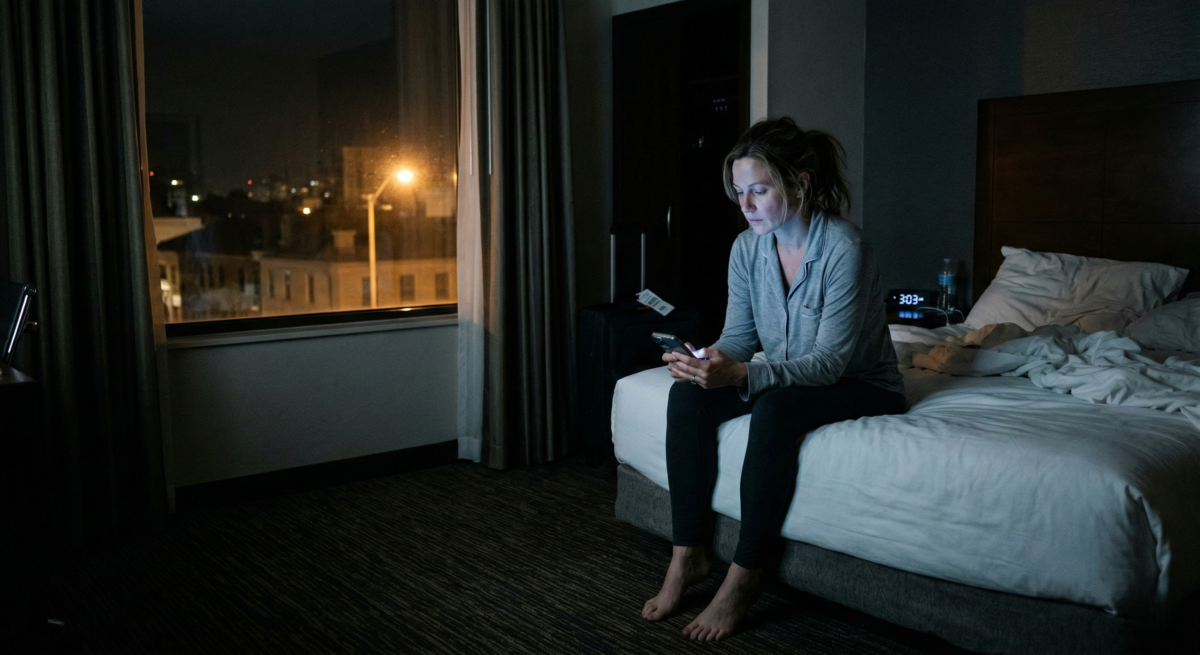
It happens to all of us. You made it to a normal local bedtime. You fell asleep exhausted. Then your eyes snap open. The digital clock on the nightstand reads 3:00 AM. Your body insists it is time for lunch. The rest of the city is perfectly silent.
It can feel incredibly lonely in those quiet hours. I have spent many nights listening to the hum of a hotel mini-fridge, wondering why I chose to travel at all. The worst thing you can do is lie there doing the mental math of how few hours of sleep you are getting. You need a pragmatic plan.
- Accept that you are awake: Sometimes I just surrender to it. Stop fighting the clock.
- Get out of bed: Move to a chair.
- Keep the lights low: If you need to get up, use the bathroom light with the door mostly closed.
- Avoid the blue light: Do not look at your phone. Do not scroll through emails or social media. The light from your screen will tell your brain the sun is coming up.
- Listen to a familiar podcast: Choose something mildly interesting but not overly exciting. I highly recommend history or science podcasts.
- Read a physical book: Bring a paperback. Read until your eyes feel heavy again.
- Embrace the quiet: Use this time to stretch on the floor or mentally map out the next day. It is rare to have an hour where nobody in the world expects anything from you.
The Unexpected Bonus Tip: Creatine for Brain Fuel
Here is a practical, science-backed tactic that nobody talks about. We usually associate creatine with young guys lifting heavy weights in the gym. However, recent research has shown it is incredibly effective for combating the cognitive fog of sleep deprivation, especially as we get older.
A 2024 study published in Scientific Reports found that taking a single, high dose of creatine can act like a backup generator for your brain. When you are sleep-deprived, your brain’s energy stores plummet. Creatine rapidly replenishes those stores.
As we age, our natural baseline of creatine tends to lower. Supplementing it during the immense metabolic stress of crossing time zones gives your older, wiser brain the structural energy it needs to keep up. It does not replace the physical need for sleep, but it drastically improves processing speed, working memory, and mood.
Pack a small bag of Creatine Monohydrate Micronized Powder. Mix about 20 to 25 grams with water, coffee, or tea on your first grueling day. It is a highly effective way to keep your mind sharp while your body catches up to the local clock.
Finding the Rhythm and the Deeper Meaning
Around day three, something shifts. You wake up with the sun. You feel hungry at the right times. Your body finally catches up to your soul. The fog lifts. You smell the fresh bread at the bakery down the street. You feel the natural rhythm of a new culture.
There is something inherently philosophical about jet lag. It is the physical toll of modern convenience. We have built machines that can hurl us across the planet at 500 miles an hour, but we are still biological creatures moving faster than evolution ever intended.
That exhaustion you feel is just your biology trying to anchor you to the earth. It reminds us that we are human, tied to the spin of the planet, the rising of the sun, and the natural rhythm of things. When we defy that rhythm, we have to pay a toll. Acknowledging this makes the fatigue a little easier to bear. It is not a failure of your willpower. It is just the cost of admission to see the world. The friction of the journey is exactly what makes the destination mean so much more.
The Final Word on Crossing Time Zones
You are going to be tired. You are going to have moments where you forget what day it is. That is entirely okay.
Stop stressing about achieving the perfect eight hours of sleep, and start focusing on managing the fatigue with sunlight, movement, and a little bit of strategic brain fuel. The goal is not to eliminate jet lag entirely. The goal is to survive it with enough grace to actually enjoy the incredible place you traveled so far to see.
Comments are closed.