
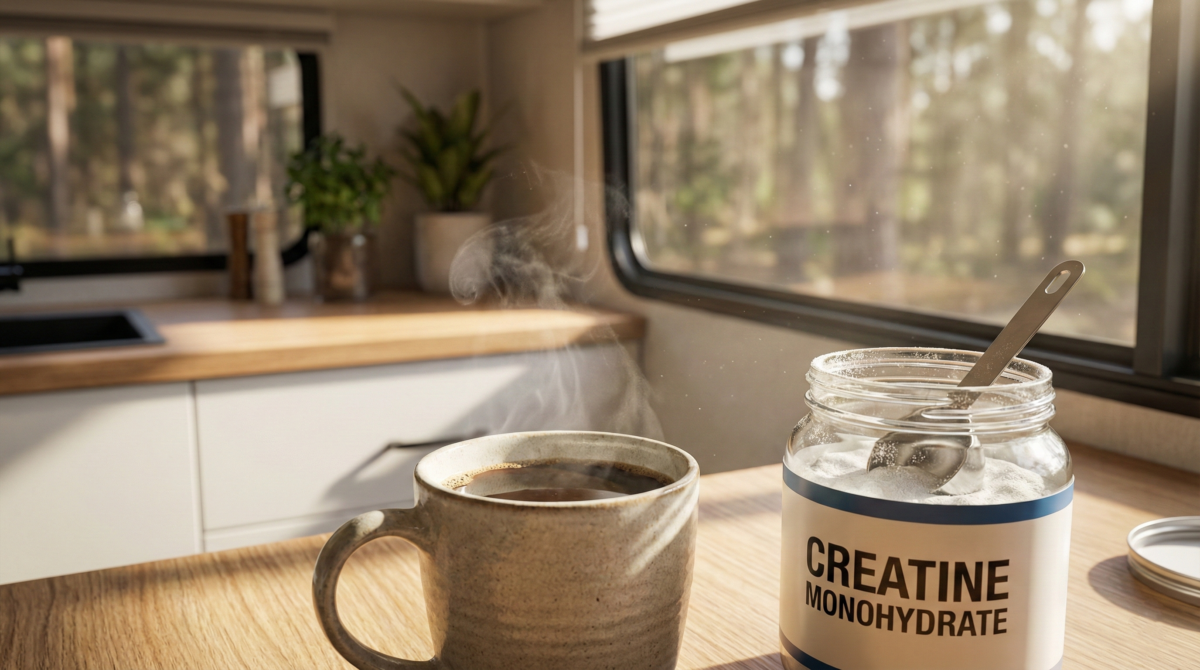
In our late 40s and now early 50s, my wife and I have noticed some brain fog creeping in. It wasn’t debilitating, it was just annoying. I would walk into a room and forget why I was there. Or my wife would be in the middle of a sentence and lose the word she was looking for. We chalked it up to age. We chalked it up to stress.
Then I started reading. I fell down a research rabbit hole, as I often do. I wanted to know if there was something simple, safe, and effective that could help with that mental fatigue. The same answer kept popping up in reputable journals, YouTube videos, and podcasts. It was creatine. But the research wasn’t talking about biceps. It was talking about creatine for brain health.
For decades, I have always associated creatine as a supplement for bodybuilders to help with muscle growth and recovery. It turns out I completely misunderstood this supplement. It is packed with potential as a critical fuel source for the most energy hungry organ in my body, the brain.
Just a quick heads-up: some of the links in this post are affiliate links. As an Amazon Associate I earn from qualifying purchases. This means if you click on a link and buy something, I might receive a small commission at no extra cost to you. I only recommend tools and gear that I’ve actually used in the trenches of travel or that I genuinely believe will help you navigate your own journey. Your support helps keep this site running, and I appreciate it.
The Science of Creatine for Brain Health (Explained Simply)
I am not a biologist, but I needed to understand what I was putting into my body. The explanation that finally clicked for me was about energy currency.
Our cells run on something called ATP (Adenosine Triphosphate). Think of ATP as the cash in your pocket. You spend it to do things—think, move, type, drive. When you run out of cash, you stall. You get tired. You lose focus.
Creatine essentially acts like a quick trip to the ATM. It helps your body recycle “spent” energy back into usable ATP much faster than it could on its own.
When we are young, our systems are efficient at this. But as we age, and when we are under stress or sleep-deprived, our brain’s energy stores deplete faster. Coffee acts like a gas pedal, stimulating the system to go faster. Creatine, on the other hand, acts like the fuel in the tank. It ensures the energy is actually there when you press the pedal.
How We Started Using Creatine for Brain Health
We decided to run an experiment. We are not doctors, and I always tell you to do your own research. But for us, the risk profile looked incredibly low. Creatine is one of the most researched supplements in history. It is cheap. It is generally safe.
We bought a container of Creatine Monohydrate. That is the specific type you want. Don’t get fancy with the expensive blends. Just get the basic stuff.
The first morning, I mixed a scoop into my coffee. I expected it to taste like chalk or chemicals, but it tasted like absolutely nothing. It dissolved, mostly. My wife put hers in her protein shake.
We decided to do a traditional “loading phase” to saturate our systems quickly. For that first week, we aimed for 20 to 30 grams a day. We were smart enough not to take it all at once, though. We broke it up into two to four servings spread throughout the day. After seven days of that high volume, we dropped back down to the standard maintenance dose of five grams daily.
The first week, I didn’t feel smarter. I just felt thirsty. You absolutely have to drink more water when you are loading because creatine pulls fluid from your bloodstream into your cells. If you don’t stay hydrated, you will feel it in the form of headaches or cramping. But if you drink enough, it actually hydrates you better from the inside out.
The Results We Didn’t Expect

By week two, things started to shift. It wasn’t a sudden jolt of energy like caffeine. It was subtle. It was the absence of a negative.
I realized I wasn’t crashing in the afternoon. I could sit down to write or plan our next trip, and the focus was just there. It felt sustainable. My wife mentioned she felt sharper during her conversations. The words were coming easier.
There is also research suggesting that creatine helps with sleep deprivation. We try to sleep well, but travel messes that up. Jet lag is real. Since starting creatine, I feel like one bad night of sleep doesn’t wreck me for the next two days. I can bounce back faster.
There were physical benefits too, of course. We do lift weights. We want to keep our muscle mass as we age because that is the key to longevity. We noticed we could do a few more reps. We recovered faster. But honestly, even if it did nothing for my muscles, I would keep taking creatine for brain health alone.
Breaking the Stigma
We need to rebrand this supplement. We need to stop thinking of it as a gym accessory and start thinking of it as a longevity tool. It is cognitive armor.
If you are in your 40s or 50s, you are probably looking for an edge. You might be looking at expensive nootropics or complicated bio-hacks. Sometimes the answer is the boring white powder that has been sitting on the shelf at the vitamin store for thirty years.
We have been taking it for six months now. We haven’t turned into hulking monsters. We haven’t gained a bunch of water weight that makes us look puffy. We just feel a little more “on.”
Life is complicated enough. Our supplement routine shouldn’t be. For less than the cost of a cup of coffee a day, we found something that actually works. We are sticking with it.