

Table of Contents
You’re fine at 9am. Still functional at noon. Then somewhere around 3pm, your brain starts buffering. The words on the screen stop making sense, your focus slips, and you catch yourself wondering if one more cup of coffee would actually help or just make tonight’s sleep worse.
The 3pm energy crash is real, common, and gets more noticeable after 40. But most advice treats it like a willpower problem. Drink more water. Take a walk. Eat less sugar. That’s not wrong, but it’s incomplete. The real issue is usually four normal biological patterns that compound on each other during your afternoon hours and make the dip steeper than it needs to be.
This post walks through those four causes and gives you a simple 15-minute afternoon reset to test this week. Nothing expensive. Nothing complicated. Just a framework grounded in real biology that you can actually try tomorrow.
Please note this page may contains affiliate links. If you purchase something through these links, I’ll receive a commission at no extra cost to you. Affiliate links help to support my website/blog and I only recommend products I love.
The 3pm Energy Crash Is Not Just in Your Head
There is a reason the afternoon slump hits around the same time every day. It is built into your biology.
The human body runs on a roughly 24-hour alertness cycle, but most people don’t realize there’s also a smaller dip built into that same system, usually landing somewhere between 1pm and 3pm. Sleep researchers call it the post-lunch dip, though it actually occurs whether you eat lunch or not. Your alertness naturally softens during this window. For most adults, it’s a minor slowdown. After 40, when other habits start compounding it, the dip can feel like a full stop.
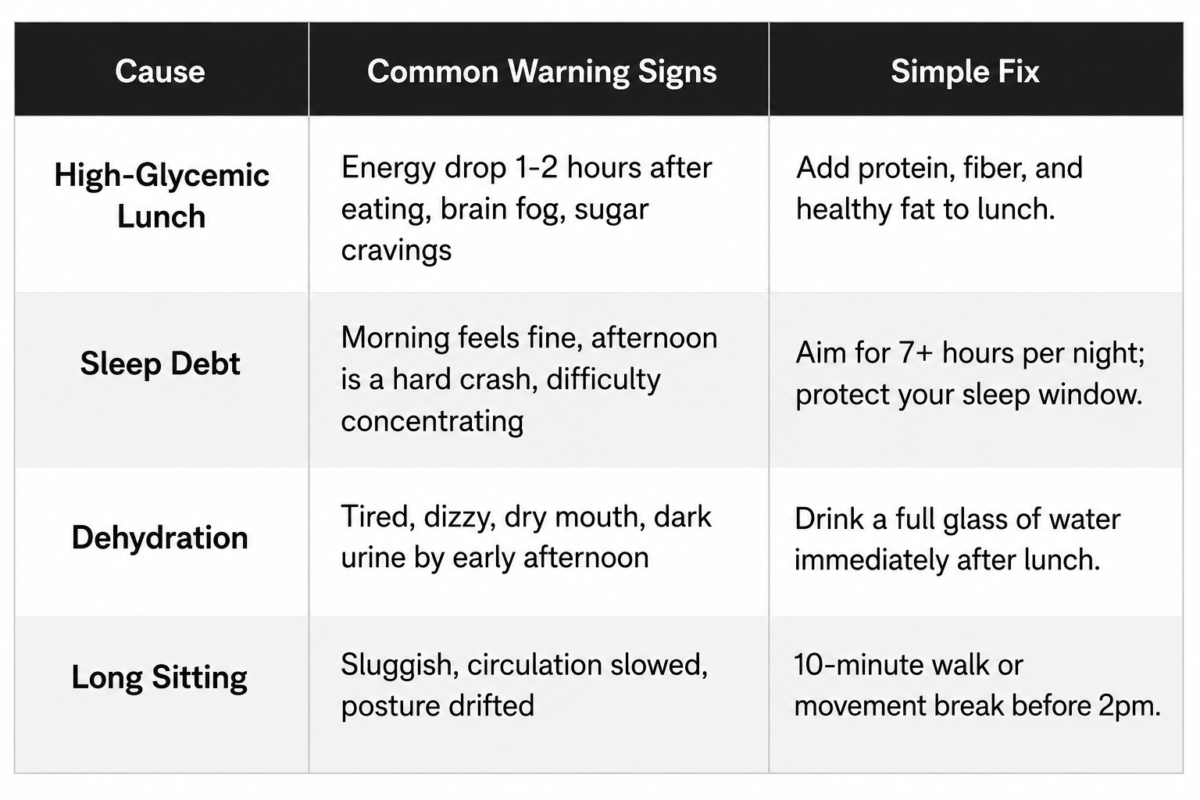
A 3pm energy crash usually happens when your natural afternoon alertness dip gets amplified by poor sleep, a high-glycemic lunch, dehydration, long sitting blocks, or too much stress. After 40, those habits often stack faster. Start with water, a protein-and-fiber snack, and a short walk before reaching for more caffeine.
The good news: this dip is not a sign you’re aging out of productivity. It is a signal that a few specific habits are worth a closer look.
Your Lunch May Be Setting Up the Crash
If you’re hitting a wall around 3pm, the meal you ate two or three hours earlier might have a lot to do with it.
Carbohydrate-heavy lunches without enough protein, fat, or fiber can cause a faster rise in blood sugar followed by a faster drop. Harvard Health Publishing notes that high-glycemic foods produce a quicker blood sugar response, while lower-glycemic options create a steadier curve. That steadier curve is what keeps your energy from tanking mid-afternoon.
This doesn’t mean skip carbs at lunch. It means balance them. A sandwich with protein and some healthy fat handles the afternoon differently than a plate of white pasta or rice with nothing else on the side.
If lunch regularly leaves you feeling sharp for 45 minutes and then flat for two hours, it’s worth looking at the composition, not just the quantity. Building in the habits that actually stick long-term often starts with noticing what your current patterns are doing to your energy in real time.
Sleep Debt Shows Up When the Morning Adrenaline Wears Off
This one surprises most people. You feel okay in the morning. Reasonably sharp. Then 3pm arrives and everything falls apart.
Part of that morning functionality is a slow-release of cortisol and natural waking hormones that help your body ramp into the day. By early afternoon, those hormones have leveled off. If you came into the day already carrying sleep debt from the night before, the afternoon is when the bill comes due.
The CDC recommends that adults between 18 and 60 get seven or more hours of sleep per night, and adults 61 to 64 should aim for seven to nine hours. The downstream effects of consistently missing those numbers include difficulty concentrating, poor memory, mood changes, and disrupted metabolism. Those effects don’t show up evenly across the day. They tend to hit hardest in the early afternoon when the protective morning hormones start to fade.
Getting your sleep rhythm back on track is one of the highest-return adjustments most midlife adults can make. If the afternoon crash is a daily pattern for you, look at actual sleep quality before anything else.
Dehydration and Sitting Make a Small Dip Feel Bigger
Even mild dehydration adds real fatigue on top of whatever else is happening in the afternoon. MedlinePlus lists adult dehydration symptoms as feeling tired, dizziness, dry mouth, and dark urine. Most of us don’t drink water consistently through the morning, which means by 3pm we’ve been mildly dehydrated for hours without realizing it.
Sitting still for long stretches compounds this further. The CDC’s physical activity guidance for adults is direct: move more, sit less. Some physical activity is better than none. But most desk-based workdays involve sitting for four to six consecutive hours without meaningful movement. By mid-afternoon, circulation has slowed, posture has drifted, and the body starts sending signals that feel like tiredness but are really just a request to move.
Neither of these will cause a crash on their own. Stacked on top of the natural afternoon dip and a carb-heavy lunch, though, they turn a small biological slowdown into a full-hour productivity wall. Small changes that protect long-term energy often start here: drink a glass of water after lunch and take a short walk before 2pm.
The 15-Minute Midlife Afternoon Reset
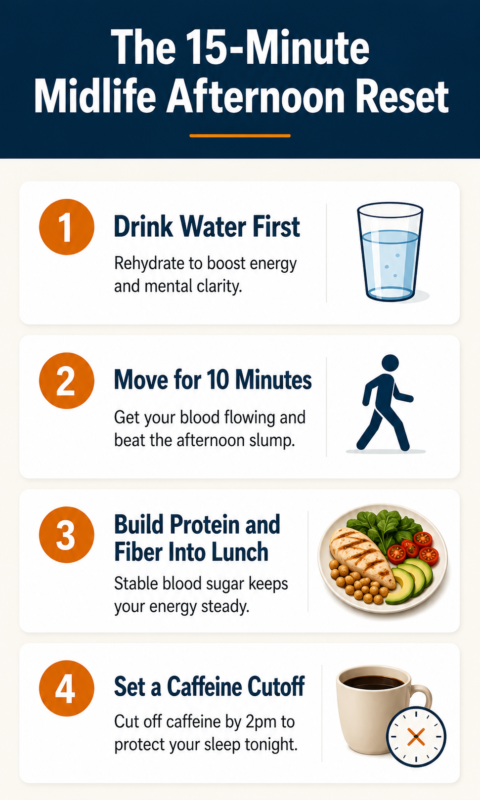
Here is what a practical reset looks like using the four levers above. This is not a protocol or an optimized system. It’s four small adjustments that address the actual causes of the afternoon crash.
Check your water first. Before you do anything else, drink a full glass of water. Not coffee. Water. If you haven’t had water since noon, dehydration is already a factor regardless of what else is happening. This takes 30 seconds and rules out one of the four causes immediately.
Move for 10 minutes after lunch. You don’t need a gym. A short walk around the block, some light stretching, or even standing for 10 minutes helps manage blood sugar response and gets circulation moving. Research covered in Health.com in 2022 noted that even two minutes of walking after a meal can help with post-meal blood sugar levels. Ten minutes is better than two.
Build protein and fiber into lunch. If the crash is consistent, run a one-week test: add protein and fiber to your next few lunches and notice what changes. Eggs, chicken, beans, whole grain bread, a handful of almonds on the side. You’re not overhauling your diet. You’re testing one variable.
Set a caffeine cutoff. This is the one people push back on most. If your fix for the afternoon crash is another coffee, you may be setting up worse sleep tonight, which makes tomorrow’s crash harder. Most research suggests cutting caffeine in the early-to-mid afternoon. The exact time depends on your individual sensitivity, but more caffeine is not a sustainable answer when the root cause is sleep debt.
These four steps address the mechanics. If you want to think about what else is worth building into a midlife maintenance routine, our post on creatine for brain health covers what we’ve been adding; the basics above come first.
When the 3pm Crash Is a Signal to Pay Attention
Most afternoon energy dips are habit-related and respond to the four steps above. Sometimes, though, persistent fatigue has something different behind it.
If the crash is severe, happens daily without improvement, or comes with other symptoms like dizziness, confusion, heart pounding, or shakiness, that deserves a conversation with your doctor. The NIDDK notes that symptoms of low blood glucose can include tiredness, dizziness, confusion, irritability, headache, and shakiness. These overlap significantly with ordinary afternoon fatigue, which is why it’s worth ruling them out before assuming it’s just the usual slump.
This post is about the common pattern, not a clinical diagnosis. If you feel noticeably better after a week of better sleep, water, movement, and lunch changes, the cause was almost certainly habit-related. If the fatigue persists or gets worse, don’t keep troubleshooting it with a walk and some water.
For readers who are also thinking about supplements and recovery, our look at what medicinal mushrooms actually do is a useful companion to the habits covered here.
The 3pm energy crash is rarely one thing. Most of the time it’s a combination of your natural afternoon alertness dip, last night’s sleep debt, a carb-forward lunch, hours of sitting still, and a coffee that helped for 45 minutes and made tomorrow harder.
None of that is complicated to address. It just requires looking at the right levers in the right order.
Try the 15-minute reset this week. Drink water first. Take a short walk after lunch. Adjust what you eat at noon and notice whether the afternoon holds together better. If it does, you found the cause. If it doesn’t, that’s useful information too.
If you’re working on building better midlife health habits and want more of what we’re testing and learning, join the email list. We send one newsletter a week covering health, travel, and the practical side of designing a better second act.
What does your typical 3pm look like right now? Are you fighting through it every day, or have you already found something that helps? Drop it in the comments.
Frequently Asked Questions
Is the 3pm energy crash normal?
A small afternoon dip in alertness is a normal part of the body’s daily rhythm. Feeling completely wiped out every afternoon is a different signal. That’s worth examining in terms of sleep quality, lunch composition, hydration, and how much movement you’re getting during the day.
What should I eat to avoid an afternoon energy crash?
Build lunch around protein, fiber, and healthy fat with slower carbohydrates. Harvard Health Publishing notes that lower-glycemic foods create a slower, steadier blood sugar response, which helps prevent the post-meal energy drop that can make the afternoon feel harder than it should.
Does dehydration cause afternoon fatigue?
It can, and more often than most people realize. MedlinePlus lists feeling tired and dizziness among adult dehydration symptoms, alongside thirst, dry mouth, and dark urine. If you haven’t had water since morning, that alone may be a significant contributor to your afternoon low.
Does walking after lunch help with energy?
Yes. Light walking after meals supports post-meal blood sugar management. The CDC also recommends that adults move more and sit less throughout the day, and a short post-lunch walk addresses both at once without requiring any special gear or extra time.
When should I worry about afternoon fatigue?
If afternoon fatigue is severe, persistent, doesn’t improve after a week of better habits, or comes with dizziness, confusion, shakiness, or heart pounding, talk with your doctor rather than continuing to troubleshoot on your own.