
Table of Contents
Think about the last trip that felt really good. Not just fine, actually good, like you came home feeling like you’d lived something. Now think about the last trip that felt flat, like you spent a lot of money and still somehow missed it.
Here’s what I’ve noticed after traveling to Australia, Paris, London, New York, and Grand Cayman: the gap between those two kinds of trips almost never comes down to the budget. It comes down to how you approached it. Luxury travel on a budget is less about finding cheaper flights and more about developing the habits that make every trip feel like money well spent, no matter what you actually spent.
These 10 habits are the difference. Some of them will save you money. All of them will make the trip better.
Please note this page may contains affiliate links. If you purchase something through these links, I’ll receive a commission at no extra cost to you. Affiliate links help to support my website/blog and I only recommend products I love.
Why Budget Travel Feels Cheap (When It Doesn’t Have To)
Most budget travel advice is about spending less. That’s not what this post is about.
There’s a difference between a trip that costs less and a trip that feels cheap. The first one is a goal worth having. The second one is what happens when you make a series of default decisions: you book the chain hotel because it’s familiar, you take a taxi because the subway feels sketchy, you eat at the tourist-trap restaurant because you don’t know where else to go. None of those decisions are about your budget. They’re about fear and habit.
The numbers make that pretty clear. Use our free trip budget calculator to see what your trip will actually cost before you start optimizing
| What Travelers Are Actually Doing | Data |
|---|---|
| U.S. travelers who list cost as their #1 travel concern | 72% (NerdWallet Summer Travel Report, 2026) |
| Adults 50+ who shop for bargains when they travel | 89% (AARP Travel Trends Survey, 2026) |
| Adults 50+ planning to travel in 2026 | 64%, the highest in recent years (AARP, 2026) |
| People who say vacation memories are priceless, yet plan to cut spending | 1 in 3 (Empower Research, 2025) |
| Americans using cost-saving strategies when they travel | 82% (NerdWallet, 2026) |
Almost everyone is trying to save money on travel. Very few people are thinking about how to make it feel better. That’s the gap these habits fill.
Habit #1 – Decide What Kind of Trip You Want Before You Go
This is the one that makes all the others work.
Before we book anything, my wife and I ask ourselves: what do we actually want out of this trip? Not just where to go, but how do we want to feel when we’re there? Do we want adventure, or do we want to slow down? Do we want to see a lot, or do we want to go deep in one place? Where are we willing to be uncomfortable, and where do we need ease?
The trips that felt flat (and I’ve had a few) were usually the ones that just happened. We picked a destination, booked flights, and figured out the rest later. The trips that felt rich were designed. We knew what we were after before we got there.
This habit doesn’t cost anything. It just requires a real conversation before you book. If you’re over 40 and want to travel better, this is the best place to start, and we go deeper on it in Travel Tips After 40: What Slows You Down (And How to Fix It).
Habit #2 – Let Go of Brand Loyalty in Accommodation
I’m going to tell you something that surprised me when it happened.
On our 2024 Australia trip, we stayed at a hostel in The Rocks district of Sydney. This wasn’t an accident. We chose it deliberately, partly out of curiosity and partly because the price difference was significant. We went in skeptical. We are not 25 years old. We did not expect much.
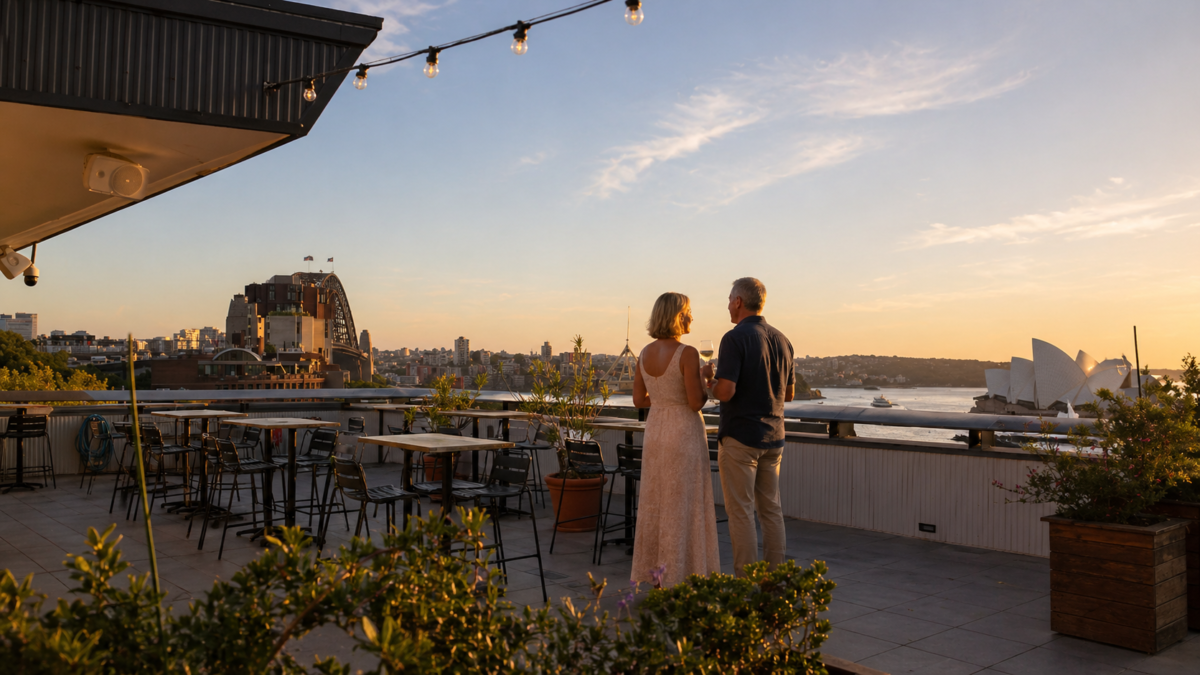
What we found was a café-style lobby, a rooftop terrace with views over the harbor, and a clean, comfortable room that completely exceeded what we thought we were signing up for. Oh, and the building was constructed over an active archaeology dig site, so part of the floor was literally glass over an ongoing excavation. You can’t get that at a Marriott.
That trip permanently changed how we book. We now look at hostels and boutique properties first. Not because they’re always cheaper (sometimes they’re not), but because they’re almost always more interesting. Booking.com is where we start. The filters make it easy to find hostels, boutique hotels, and apartment rentals all in one search.
The brand-name hotel is a safe choice. Safe choices rarely make the best travel stories.
Habit #3 – Build a Food Strategy, Not a Food Budget
“Eat local” is advice. What I’m going to give you is a system.
In Paris, here’s how we handled food: café breakfast with good coffee and a croissant, nothing fancy. A grocery store or boulangerie for most of our meals throughout the day. And then one or two intentional, sit-down lunches at a proper French restaurant. Not dinner, because the lunch menu is a lot cheaper and the experience is identical.
I’m a foodie person. Eating well and trying new foods on a trip matters to me. But that doesn’t mean spending a lot on every meal. It means choosing where food matters and making it count there. We weren’t “saving money on food.” We were being intentional about food.
A good food tour can anchor the whole trip around this habit. GetYourGuide and Viator both have strong options in most major cities. One good food experience, booked in advance, will give you a better sense of the local food scene than a week of wandering into whatever looks appealing.
Habit #4 – Stop Spending Money on Fear
This one costs people more than they realize.
We have friends who visited Paris and New York and refused to take the Metro or the subway. They took taxis and Ubers everywhere, the whole trip. Their reasoning: they’d heard it was dangerous. They’d seen news stories. They weren’t sure.
My take on that is it’s not really about safety. It’s about comfort with the unfamiliar. The London Underground, the Paris Métro, the NYC Subway. They’re part of the experience. We’ve ridden all of them. The fear is almost always bigger than the reality.
I’m not saying there are zero risks with public transit in a foreign city. I’m saying the decision to take a $40 taxi instead of a $3 train ride, repeated five times a day, adds up to hundreds of dollars spent on anxiety rather than adventure. If safety is a genuine concern, get solid travel insurance first. Then ride the train.
For more on navigating safety abroad, we put together a practical guide: 10 Travel Safety Tips You Should Never Ignore.
Habit #5 – Slow Down Enough to Actually Be There
Over-scheduling a trip is one of the most common ways to make it feel cheap even when it’s not.
When you cram six cities into eight days, you spend most of your time in transit, tired, and constantly catching up with a plan. You see a lot of things. You experience very few of them.
Slow travel fixes this. Staying in one place for five or seven days instead of two means you start to feel less like a tourist. You find a coffee shop you like. You figure out which grocery store has the good bread. You stop needing to photograph every moment because you know you’ll be back tomorrow.
Slow travel is also cheaper. Weekly rental rates on apartments are less than nightly hotel rates. Monthly rates are even more economical. If you have the time flexibility (and a lot of people over 50 do, especially if you’re between jobs, semi-retired, or remote), staying longer is one of the smartest moves you can make for both your experience and your budget.
Habit #6 – Travel in Shoulder Season (And Know What That Actually Means)
“Avoid peak season” is advice everyone gives and nobody explains.
Shoulder season is about more than crowds and prices. It’s about the quality of the experience. If you visit the Amalfi Coast in August, you’re standing shoulder to shoulder with half of Europe. If you go in May or October, you get the same views, the same food, the same towns. And you can actually move around in them.
The practical rule: shoulder season is typically two to four weeks before and after the peak. For Europe, that’s May-June and September-October. For ski resorts, early and late season. For beach destinations, late spring or early fall.
The weather is usually still good. The prices are lower. The locals are less exhausted. Honestly, the shoulder season version of most destinations is a better trip than the peak season version.
Habit #7 – Make One Experience the Trip
Here’s a habit that sounds counterintuitive when you’re watching your budget: spend more on one thing.
Not on everything. On one thing. One experience per trip that you go all-in on. A cooking class, a private tour, a unique meal, a once-in-a-lifetime excursion. That experience becomes the anchor memory of the trip. Everything else can be ordinary. That one thing makes the whole trip feel worth it.
We’ve had a lot of those. A whale watching tour off the coast of Sydney. A guided evening walk through the Marais in Paris. They didn’t break the budget because everything else around them was intentional and restrained. But they made those trips feel expensive in the best possible way.
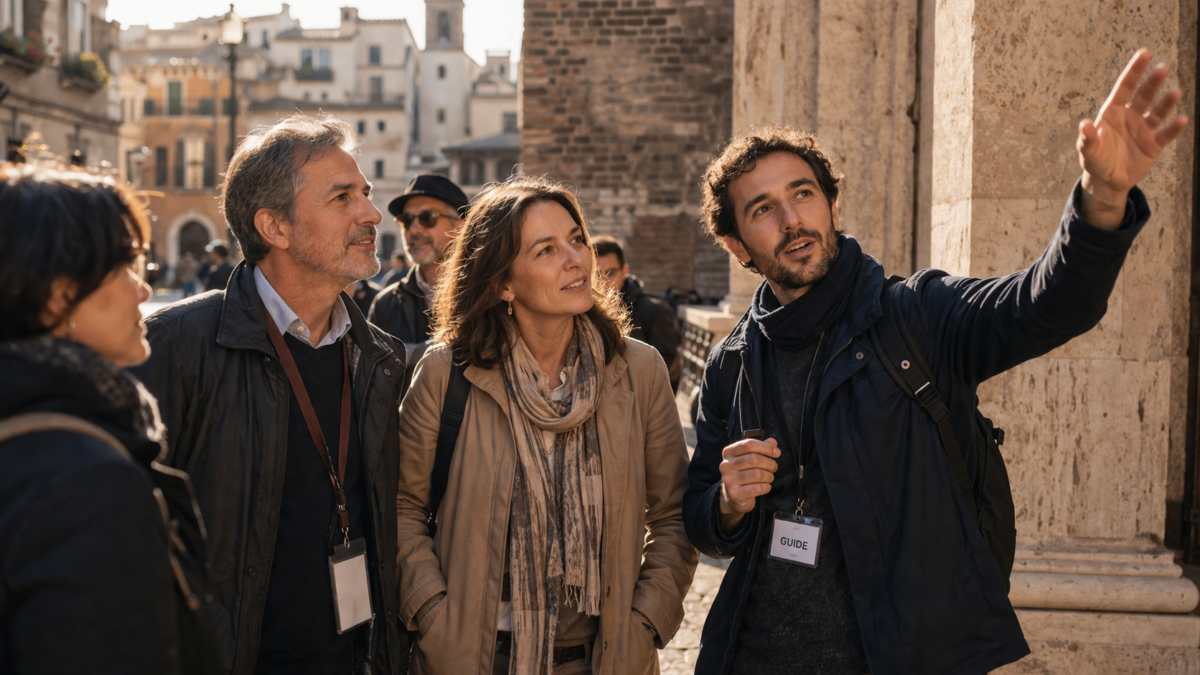
Viator and GetYourGuide are both excellent for this. You can see reviews, compare options, and book without having to coordinate directly with local operators.
Habit #8 – Use Your Mornings Like You Own Them
This is free. It’s also one of the best habits on this list.
Get up before most tourists do. Walk. Find a café nobody put on a list. Go to the market. Sit somewhere and watch the city wake up without any agenda at all.
There’s a version of travel where mornings are spent recovering from the day before and gearing up for the packed itinerary ahead. That version is fine. But the mornings we’ve carved out with no plan, coffee in hand, no agenda, have produced some of the best moments from any trip we’ve taken.
It doesn’t cost anything. It doesn’t require booking anything. It just requires deciding that mornings belong to the place, not to logistics.
Habit #9 – Collect Experiences, Not Souvenirs
I used to spend a meaningful amount of money in airport gift shops and tourist markets. Things I no longer own. Things I cannot picture.
The experiences from those same trips? I can walk you through them in detail.
A PNAS study found that people report higher and longer-lasting happiness from spending on experiences than on material goods. Most of us already know this. We just don’t always act on it.
Reallocate the souvenir budget to one extra activity. You’ll come home with better stories than whatever was on the shelf. We wrote more about this shift in thinking in Embracing Experience-Based Living: Valuing Moments Over Materials.
Habit #10 – Leave Room for the Trip to Surprise You
If you schedule every hour of every day, you leave no room for the best parts.
The best moments from almost every trip we’ve taken weren’t on any itinerary. A conversation with a local who pointed us somewhere we never would have found. A neighborhood we wandered into by accident. An afternoon where we had nowhere to be and the city just unfolded.
Margin in a trip is a luxury. And it’s free. Two or three unscheduled blocks during a week-long trip is all it takes. You don’t have to leave entire days empty. Just leave some hours with no obligation and see what fills them.
The habit of over-scheduling comes from the same place as fear-based spending: discomfort with the unknown. Learning to sit in that discomfort is one of the best things travel can actually teach you, if you let it.
The Bottom Line
Honestly, I’ve watched people spend a lot of money on trips that felt disappointing, and I’ve watched people spend a fraction of that and come home genuinely changed by the experience.
It all comes down to intention. Richness in travel is almost never about the budget. It’s about the decisions you make before you go, and the habits you bring with you when you get there. The Australia hostel that blew us away cost less than most hotel rooms and gave us a story we still tell. The Paris lunches that felt indulgent were mostly the product of a simple strategy we’d thought through ahead of time.
None of this requires being wealthy. It requires being intentional, which it turns out is more powerful anyway.
If you want to think more about why we started prioritizing travel now instead of waiting, we talked about that too: The Someday Trap: Why We Prioritized Travel Before Retirement.
If you like this kind of content, we write about content exactly like this every week, just more personal and raw. Join us on Substack. It’s free.
Which of these habits are you adding to your next trip? Drop it in the comments. I’d genuinely like to know which one hits home for you.