
Table of Contents
I get some version of this question at least a few times a week: Is it too late to start over in your 50s? It shows up in YouTube comments, in DMs, and in emails from people who sound a lot like D and I did a few years ago. People who have done everything they were supposed to do, built a perfectly respectable life, and are now sitting quietly with a question they’re almost embarrassed to ask out loud.
I understand the hesitation. When you’re in your 50s, starting over doesn’t feel like the brave, adventurous thing the internet makes it out to be. It feels like risk. It feels like what if I’m too old, too broke, too set in my ways? It feels like everyone around you is winding down, and here you are thinking about winding up.
I’m not going to give you a motivational speech. What I’m going to do is tell you the truth, the same truth I wish someone had handed me in a plain envelope before D and I sold our house, downsized everything we owned, and moved into our fifth-wheel full-time at 54.
The short answer is no. But the long answer is what matters.
Please note this page may contains affiliate links. If you purchase something through these links, I’ll receive a commission at no extra cost to you. Affiliate links help to support my website/blog and I only recommend products I love.
So, Is It Too Late to Start Over in Your 50s?
Here’s what I’ve come to believe after living through it: the fear that it’s too late is almost never about age. It’s about the cost of being wrong.
When you’re 25 and you blow up your life trying something new, the stakes are relatively low. You don’t own much, you haven’t built much, and time feels infinite. When you’re 52, you’ve got decades of accumulated decisions, a career, a mortgage, a reputation, a retirement account you’ve finally started to take seriously. The idea of risking all of that on something uncertain feels categorically different.
But here’s what I didn’t understand until we actually did it: most of those “stakes” aren’t as fixed as they feel. The house can be sold. The career identity is a story you’ve been telling yourself. The retirement account survives a lifestyle change, and in our case, started growing more predictably once we eliminated the expenses that came with conventional living.
The version of “too late” that actually has merit isn’t about age, it’s about health and time. And that’s exactly the argument for making the leap sooner. Not later.
I’ve watched people retire at 65 healthy and spend their early retirement years genuinely living. I’ve also watched people wait for the “right time” and have that window close on them in ways they didn’t see coming. We don’t get to know which version our story is. That uncertainty is real, and it used to keep me up at night.
It’s part of why we stopped waiting. We realized that choosing a freedom lifestyle over retirement was the only way to guarantee we actually got to live those years.
What “Starting Over” Actually Means in Your 50s
I want to push back on the phrase a little, because I think it creates a false picture.
Starting over doesn’t mean erasing what you’ve built. It doesn’t mean pretending your first 50-some years didn’t happen, or walking away from the people and values that matter to you. That’s not what we did. What we did was look honestly at our life and ask: Is this still the version we want? Or did we just stop asking the question?
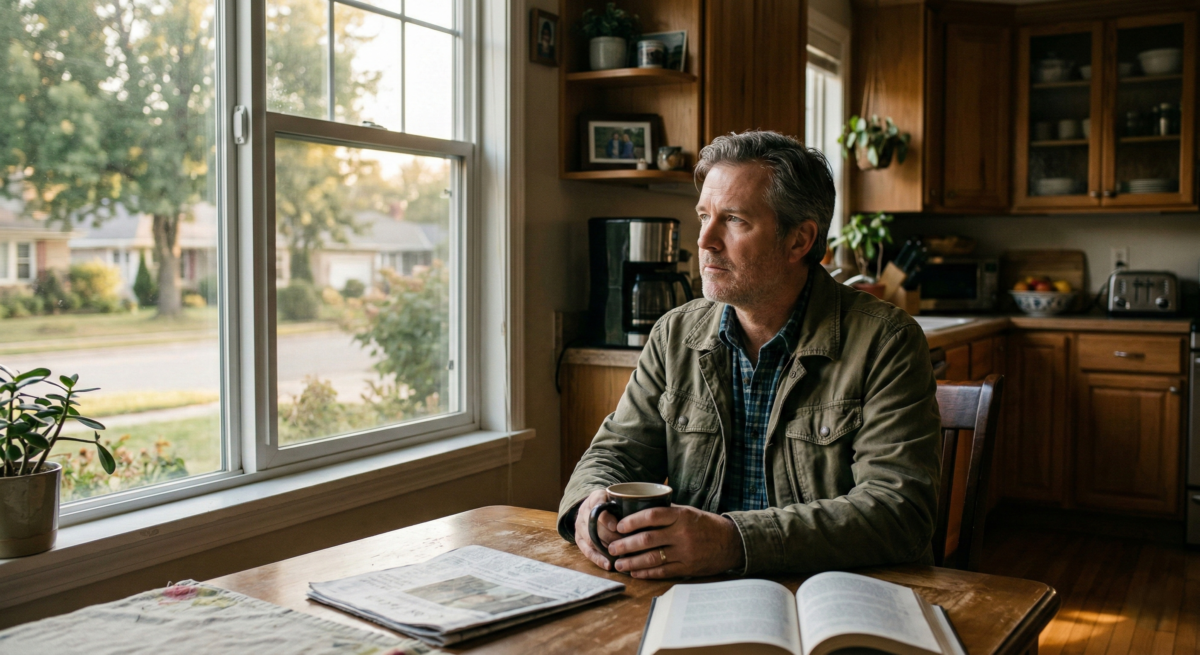
For us, the answer was uncomfortable. We had a good life, but we had also quietly let it become a life of maintenance. Maintaining the house, maintaining the career, maintaining the routine, maintaining the image of what a responsible adult in our neighborhood was supposed to look like.
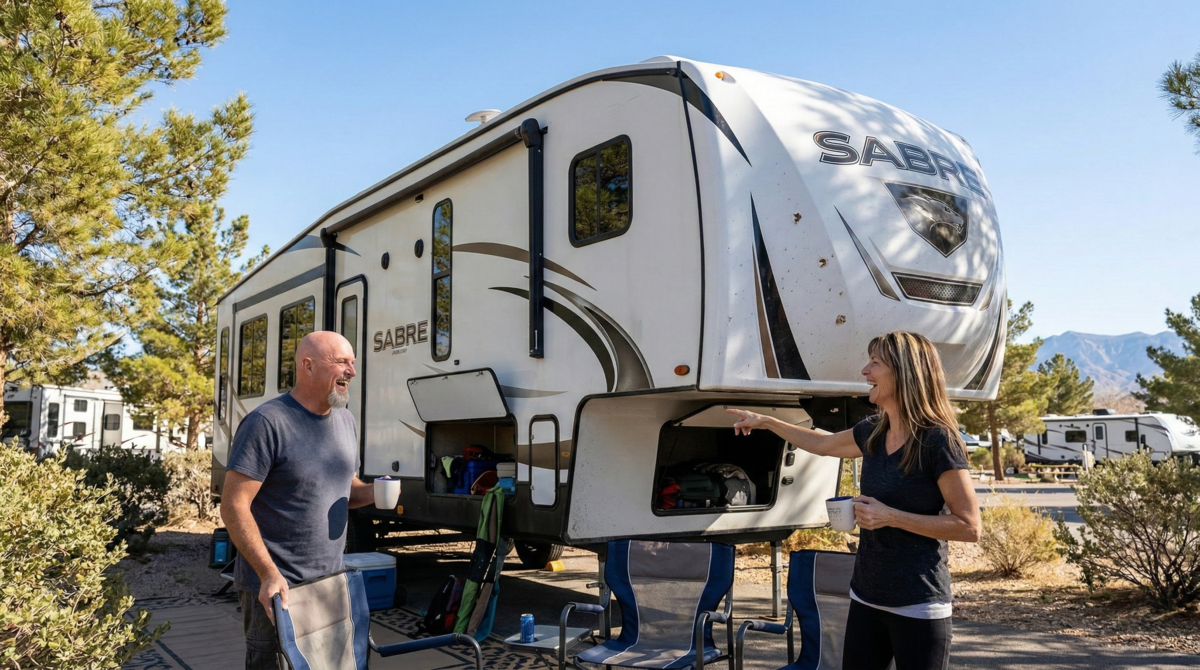
Starting over, for us, looked like this: selling the house we’d lived in for years, donating or selling most of what we owned, buying a fifth-wheel, and committing to a life built around experiences instead of square footage. We still have goals. We still have responsibilities. We still take our health seriously, maybe more seriously than ever. But the container that holds all of that looks completely different.
You don’t have to go that far. Starting over can mean a new career direction, a move to a city that actually energizes you, a commitment to traveling more, a shift in how you spend your time and money. The specifics are yours. The principle is the same: at some point, the life you built for your past self stops fitting your present self, and the question is whether you’re willing to do something about it.
You already have decades of hard-earned experience. Figuring out how AI can accelerate your reinvention simply gives you a modern tool to point that experience in a new direction much faster.
If you look closely at why people over 40 reinvent their lives, it usually comes down to that exact realization. You either update the container to fit who you are today, or you start suffocating in it. We were. And I’d make the same call again without hesitation.
The Things We Were Actually Afraid Of
I want to be specific here, because vague reassurance isn’t useful.
We were afraid of money. The honest version: this was the most legitimate fear we had. D and I sat at our kitchen table more than once running spreadsheets and asking each other hard questions about whether we could pull this off financially. What we found was that the cost of full-time RV life, even with travel, even with international trips, was significantly lower than the cost of maintaining a traditional household. Not for everyone, and not without planning. But for us, the numbers worked. If you’re worried about money, I’d encourage you to actually run the numbers rather than assume they won’t work. You might be surprised.
We were afraid of what people would think. This is embarrassing to admit, but it was real. We worried about looking irresponsible, impulsive, or like we were having some kind of crisis. What actually happened: most people were curious and quietly envious. A handful were skeptical. Almost no one was as invested in our choices as we’d imagined they’d be. People are mostly focused on their own lives.
We were afraid it wouldn’t fix anything. This one is worth sitting with. There’s a real danger in treating a lifestyle change as a cure for internal discontent. If you’re unhappy in a way that’s fundamentally about who you are rather than what you’re doing, moving into an RV won’t solve that, but if what you’re actually craving is space, literal and figurative, to build a different kind of life, that’s something a genuine change can address. We went in clear-eyed about this. The freedom didn’t fix us. It gave us the conditions to actually show up for our own lives.
We were afraid it was too late. And here we are.
What We Gained That We Didn’t Expect
I expected to gain freedom. I expected to gain travel. I expected to gain the particular relief of not being tied to a mortgage and a property tax bill.
What I didn’t expect was how much lighter everything would feel.
There’s a kind of mental weight that comes with maintaining a conventional life, not just the financial weight, but the cognitive and emotional overhead of managing a large home, a full career, a social calendar built around proximity rather than genuine connection. I didn’t know how much of my energy was going toward maintenance until the maintenance was gone.
I also didn’t expect the clarity. When you strip away the noise, it becomes a lot easier to see what actually matters to you. For me, it’s experiences over things. Time with D over time at a desk. Movement and exploration over stability and routine. Those aren’t new values, but they were buried under years of decisions made by default.
And I didn’t expect this: I feel more like myself in my 50s than I did in my 40s. Not younger, I don’t want to be younger, but more intentional. More present. More honest about what I’m here for.
That’s not nothing. That’s actually everything.
Where to Start If You’re Ready to Ask the Question
If you’re reading this and you feel the pull, the quiet discomfort of a life that doesn’t quite fit anymore, here’s what I’d tell you.
Start with an honest conversation. If you have a partner, this is a conversation you have together, not a plan you bring them as a finished proposal. D and I spent months talking before we spent a single dollar. The conversation itself changes things.
Run the real numbers. Don’t assume you can’t afford a different life, actually look. Write down what you spend now, including the invisible costs of conventional living (the house, the car to match the neighborhood, the wardrobe to match the career). Then write down what the alternative you’re imagining might actually cost. The gap is often smaller than it looks.
Give yourself permission to want what you want. This sounds simple and it isn’t. We’re trained from early adulthood to want the approved things, the house, the career, the security. Giving yourself honest permission to want something different, even if it looks strange from the outside, is harder than it sounds and more necessary than almost anything else.
And if you want to watch someone doing it in real time, the real version, not the highlight reel, that’s exactly what D and I are documenting here.
The answer to your question isn’t in someone else’s story. But sometimes someone else’s story is the thing that finally helps you believe yours is possible.
That’s why we’re here.
And if you have a question, something specific about the financial side, the logistics, the relationship dynamics, or the fear, drop it in the comments. I read every one.